
What Is Consultative Selling Approach and Why Banks Need It
Brian's Banking Blog
A consultative selling approach is a customer-centric, needs-based method in which the seller acts as an advisor, using two-way discovery to identify operational problems and recommend specific solutions rather than pitching products. Organizations using this approach report about a 25% higher close rate than traditional product-led pitching, while one consultative sales culture program reported a 3.1:1 return on investment.
That result is counterintuitive for many bank executives. The strongest sales conversation often starts with less talking about the bank's products, not more. A relationship manager who leads with a loan, treasury package, or wealth product may create activity, but a relationship manager who first clarifies the client's operating model, constraints, risks, and decision process can shape a recommendation the buying committee can defend.
For banks, consultative selling isn't a softer version of sales. It's a disciplined operating model for turning fragmented financial and market information into a relevant course of action. The approach matters most when the recommendation carries regulatory implications, affects several stakeholders, or requires the client to compare risk and return across competing priorities.
The Transactional Trap Bank Relationship Managers Face Every Day
Banks leave money on the table when relationship managers sell products before they understand the client's problem. A transactional conversation begins with inventory. The representative explains the bank's lending products, account structures, payment services, or investment options and waits for the buyer to identify a fit. That process may work for a straightforward purchase, but it breaks down when the client's needs are interconnected and the decision involves finance, operations, compliance, treasury, and senior leadership.
The answer to what is consultative selling approach is practical rather than theoretical. Consultative selling is a customer-centric, needs-based approach in which the seller acts more like an advisor than a pitch-driven representative. The seller uses two-way discovery to identify the buyer's operational problem, map it to a customized solution, and reduce mismatch risk, as described in this banking-focused overview of consultative selling.
Why banking magnifies the cost of a poor diagnosis
A commercial borrower may ask for a credit facility when the underlying issue is cash conversion, covenant pressure, expansion timing, or weak visibility into receivables. A business banking client may request a payment product while the actual concern is fraud exposure or fragmented treasury control. A wealth client may ask about returns while the central issue is liquidity, succession, or suitability.
A product-first representative treats the stated request as the complete brief. An advisor tests the request against the broader operating context.
Practical rule: The first recommendation should explain the client's situation more clearly than the client could explain it before the meeting.
The challenge has grown because buyers increasingly research without a representative. They arrive with product comparisons, internal assumptions, and sometimes AI-generated conclusions. A relationship manager who repeats publicly available product information adds little value. The manager earns influence by validating the client's assumptions, identifying gaps, and translating data into a decision that risk and executive stakeholders can support.
What changes in the field
A consultative relationship manager prepares around the client's business model, reviews relevant performance and risk signals, asks targeted questions, and documents the decision criteria. The manager then connects those criteria to a recommendation, including trade-offs and implementation requirements.
That process is slower than a scripted pitch at the beginning of a conversation. It is faster than repairing a mismatched proposal after credit, compliance, procurement, or the client's finance team rejects it.
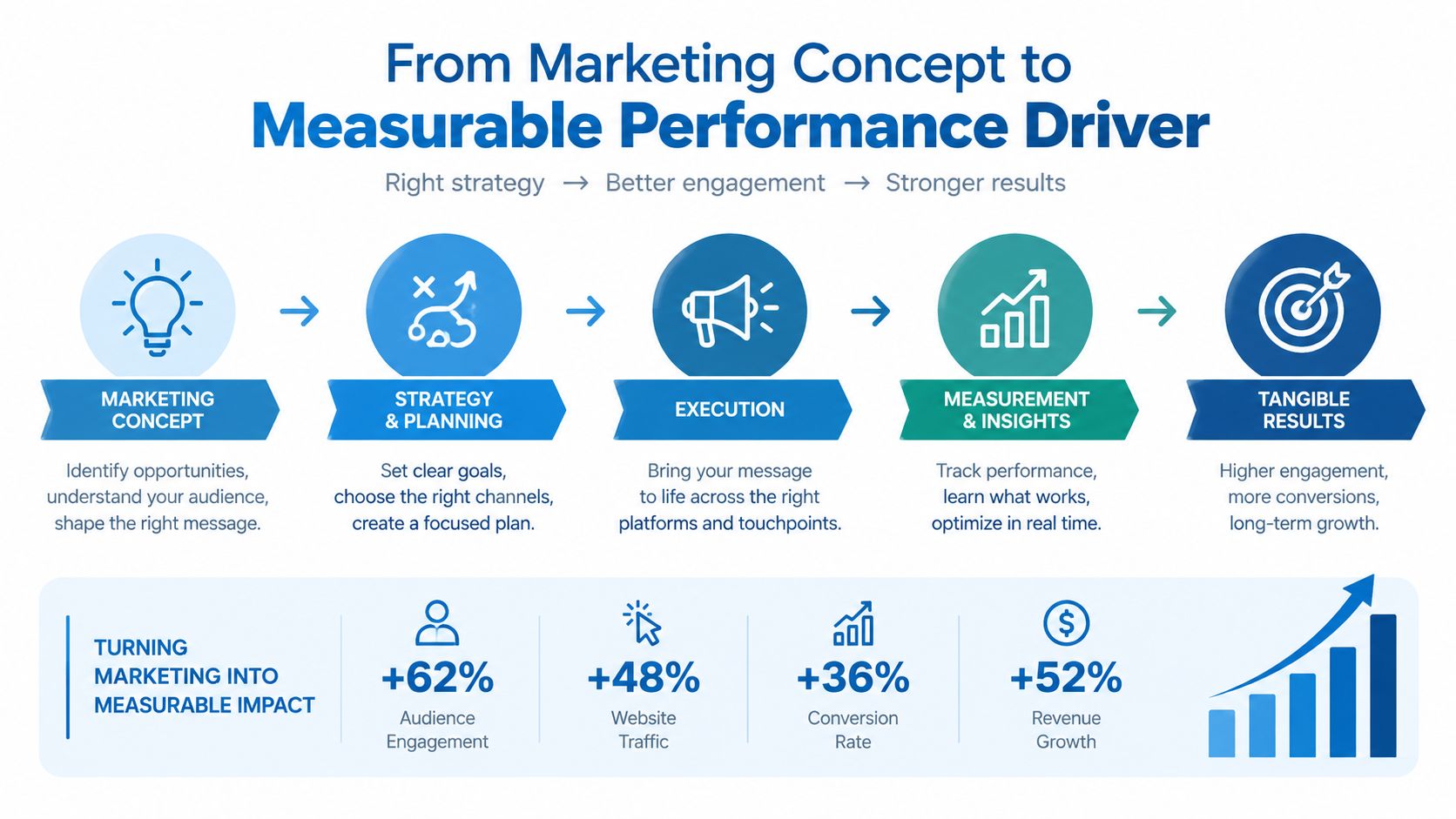
From Marketing Concept to Measurable Performance Driver
Consultative selling emerged in the late 1960s and early 1970s as an extension of the marketing concept. The salesperson's role shifted from product pusher to consultant, with need identification at the center. Instead of leading with features, the seller asked targeted questions, listened carefully, and recommended a solution based on customer requirements. This history is outlined in a brief account of modern sales methodology.
The approach gained a major methodological milestone in 1988, when Neil Rackham's SPIN Selling built on consultative principles and drew on research from 35,000 sales calls, involving 10,000 salespeople across 23 countries. For bank leaders, the important lesson isn't the age of the framework. It's that disciplined discovery can be treated as an operating capability rather than an individual representative's personality.
The economics behind the method
A widely cited 2026 industry compilation reports that organizations using consultative sales approaches see about a 25% higher close rate than organizations relying on traditional product-led pitching. The same research stream says consultative training can improve customer retention and deal quality when paired with enablement, and reports a 3.1:1 return on investment from a consultative sales culture program delivered to roughly 600 sales and marketing employees, or $3.10 returned for every $1 invested. These figures appear in the industry compilation of consultative selling examples.
The banking implications are direct. A higher close rate can indicate that representatives are pursuing better-fit opportunities and presenting more relevant recommendations. Better deal quality can reduce the downstream friction that appears when a proposal satisfies one stakeholder but fails compliance, credit, treasury, or implementation review. Retention improves when the client sees the bank as a continuing source of judgment rather than a supplier of isolated products.
What leaders should measure
Training attendance isn't enough. Bank executives should examine whether representatives:
- Identify the business problem: Discovery notes should distinguish a client's stated request from the operational issue behind it.
- Map stakeholders: A proposal should show who owns the budget, who carries risk, who influences the decision, and who will implement the change.
- Connect recommendations to evidence: The relationship manager should be able to explain why the recommendation fits the client's facts.
- Control the next decision: Each meeting should end with an agreed action, owner, and decision criterion.
Consultative selling produces value when those behaviors enter the sales system, coaching cadence, and opportunity review process.
Transactional Versus Consultative Selling in Banking Decisions
The distinction becomes clearest when executives compare how each approach handles a real banking decision. A transactional representative may treat a commercial lending conversation as a request for pricing. A consultative representative investigates cash flows, growth plans, collateral, risk tolerance, approval requirements, and the internal stakeholders who must support the facility.
Research cited in sales and buyer-behavior analysis reports that 84% of business buyers are more likely to purchase from representatives who truly understand their goals. It also cites a Forrester-reported finding that 80% of business executives are more likely to buy after a consultative sales experience. The proposed mechanism is straightforward, relevance, trust, and active listening reduce friction between discovery and decision. The figures are discussed in this analysis of consultative selling and buyer behavior.
Banking performance comparison
| Metric | Transactional Approach | Consultative Approach |
|---|---|---|
| Close rates | Leads with products and price, which can attract requests that lack a clear business case | Connects the recommendation to the client's goals, with research reporting about a 25% higher close rate than traditional product-led pitching |
| Deal quality | Optimizes for immediate product fit, even when the broader operating problem remains unresolved | Tests requirements, constraints, risks, and implementation before recommending a structure |
| Client retention | Leaves the relationship vulnerable to price comparison and product substitution | Builds continuity around the client's business objectives and evolving needs |
| Time to close | May appear quick at first, then slow when credit, compliance, procurement, or executives raise unanswered questions | Requires more discovery early and can reduce avoidable rework by aligning stakeholders sooner |
| Stakeholder alignment | Often serves the person who initiated contact, while other decision-makers remain unconvinced | Maps decision-makers and gives each stakeholder evidence relevant to their responsibilities |
| Banking application | Presents a loan, deposit account, or treasury service as the answer | Diagnoses the operating issue and selects the appropriate combination of financing, liquidity, payments, or advisory support |
The consultative approach still has trade-offs. It requires preparation, stronger questioning, and managers who coach conversation quality rather than only pipeline volume. It also creates uncomfortable findings. A good discovery process may show that the bank's original product isn't the right answer, or that the opportunity isn't qualified.
For complex technology-led banking decisions, executives can also compare the relationship manager's role with the work of a solution consultant in enterprise SaaS. The useful parallel is not the product category. It's the discipline of translating a buyer's requirements into an implementable solution while coordinating multiple stakeholders.
Why Modern Banking Buyers Expect Validation Not Pitching
Many buyers now complete substantial research before they engage a bank representative. They may compare providers, study regulatory considerations, consult internal specialists, and use self-service or AI tools to form an initial view. A relationship manager who begins with a generic presentation enters the conversation after the buyer has already decided what information matters.
The modern consultative advantage is therefore decision enablement, not questioning for its own sake. Recent coverage suggests that buyers increasingly prefer rep-free research and may want sellers to confirm or challenge findings produced through AI and self-service tools. The coverage of changing sales behavior frames the seller's role around helping stakeholders quantify risk, return, and implementation trade-offs.

Validation is different from rapport
Rapport helps establish a workable relationship. It doesn't prove that a recommendation is appropriate. A bank executive wants to know whether the proposed structure addresses the actual exposure, whether the economics withstand scrutiny, and whether the implementation burden is acceptable.
That means the relationship manager should bring evidence into the conversation without overwhelming the client. For example, a commercial banker discussing a treasury upgrade might compare the client's current process with relevant peer patterns, identify where manual controls create risk, and outline which assumptions still require confirmation. The recommendation becomes a shared decision record, not a polished product presentation.
Data must support a defensible next step
A useful consultative meeting answers three questions:
- What is happening now? Establish the client's operating facts, current providers, constraints, and decision timetable.
- Why does it matter? Connect the issue to liquidity, risk, growth capacity, compliance exposure, cost, or management visibility.
- What should happen next? Define the evidence, stakeholders, and action required to validate the recommendation.
Personalized banking service becomes more than a service promise here. Teams can use personalized banking service principles to keep recommendations anchored in the client's context rather than in a standard product sequence.
A buyer-led market doesn't eliminate the value of relationship management. It raises the standard. The representative must arrive prepared to interpret information, challenge weak assumptions respectfully, and help the buying committee reach a conclusion it can defend internally.
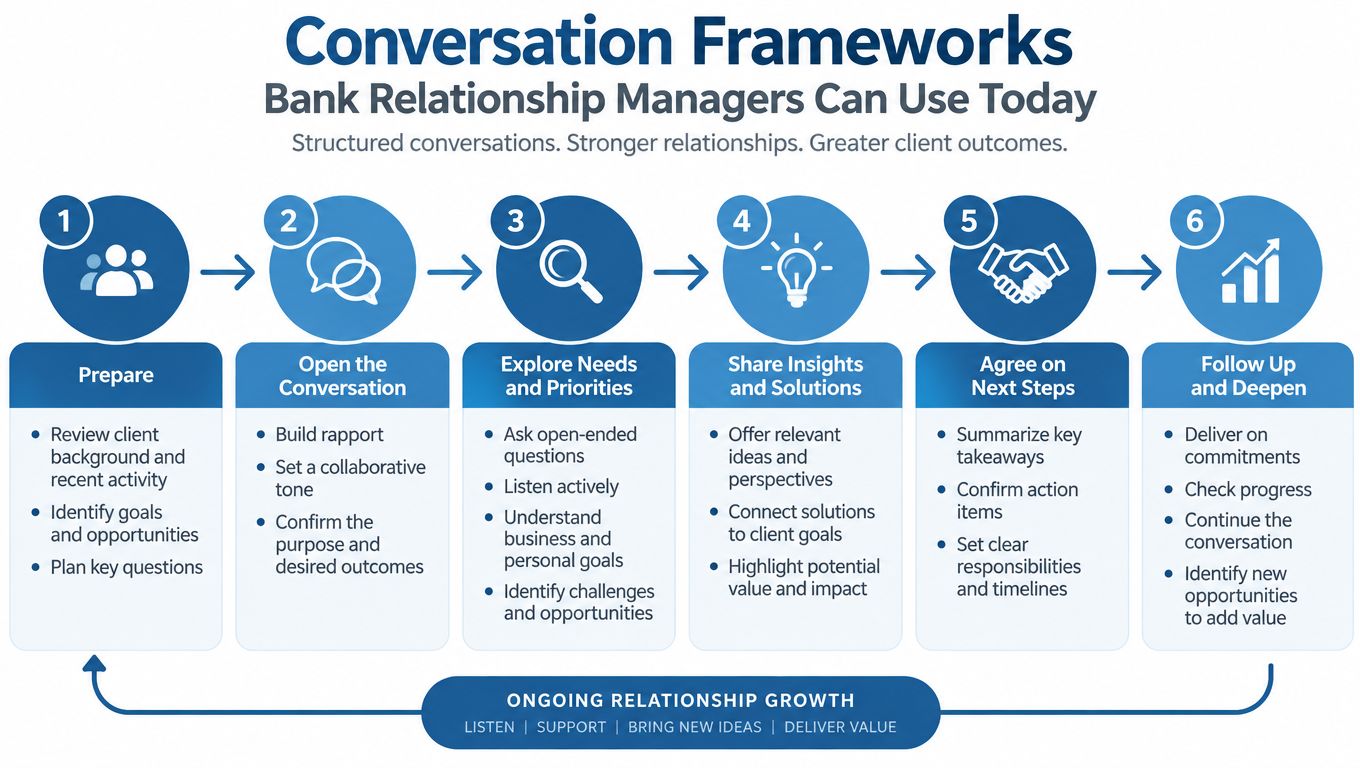
Conversation Frameworks Bank Relationship Managers Can Use Today
Consultative conversations become repeatable when representatives use a structure without sounding scripted. SPIN Selling provides that structure through four question types: Situation, Problem, Implication, and Need-payoff. The sequence moves from context gathering to business impact and value articulation, rather than from product feature to product feature. The framework is described in this guide to SPIN Selling questions.
Adapt the questions to the banking decision
Consider a hypothetical commercial client seeking a $10 million revolving facility to support expansion. The figure is illustrative, not a claim about a specific client or market.
Situation questions establish the operating baseline:
- How do you currently fund seasonal working capital?
- Which teams monitor borrowing capacity and covenant headroom?
- How does the expansion affect receivables, inventory, and payment timing?
Problem questions expose friction:
- Where does the current process create delays?
- Which information does the finance team lack when it requests additional capacity?
- What makes the existing facility difficult to use or manage?
Implication questions make the cost of inaction visible:
- What happens to expansion plans if approval takes longer than expected?
- How would a liquidity shortfall affect suppliers, hiring, or customer commitments?
- Which reporting or compliance concerns could delay a decision?
Need-payoff questions let the client articulate value:
- If the finance team had clearer visibility into liquidity, what decision would it make sooner?
- What would a facility need to provide for the board to approve it confidently?
- Which combination of flexibility, controls, reporting, and price would justify a change?
Turn discovery into a recommendation
The representative shouldn't ask every possible question. The sequence should follow the decision. A treasury management conversation may emphasize process fragmentation and control ownership. A regulatory compliance discussion may focus on evidence, accountability, and auditability. A business expansion conversation may center on timing, liquidity, and the relationship between financing and operating capacity.
Peer data can strengthen the recommendation, but only after the client's requirements are clear. A platform such as the one described through commercial banking relationship management can help a team prepare for those conversations by organizing relevant relationship and market context.
The standard is not to ask more questions. The standard is to ask questions that change the quality of the decision.
End every meeting with a written synthesis. State what the client is trying to achieve, the constraints that matter, the unresolved risks, the stakeholders who must participate, and the evidence needed for the next step. That record gives the relationship manager a foundation for a recommendation built for this client and gives the client a reason to continue the conversation.
Scaling Consultative Selling Across Complex Banking Deals
Pure consultative selling rarely scales by telling representatives to “be more strategic.” Large banking opportunities involve multiple decision-makers, long approval paths, competing priorities, and strict requirements for documentation. Without qualification discipline, a relationship manager can spend substantial time advising an account that lacks urgency, authority, resources, or a credible path to action.
Recent material points to hybridization in 2026, with teams combining qualification frameworks and consultative discovery. The discussion of consultative selling in 2026 highlights the operational question leaders should address: how can representatives remain customer-centered while maintaining rigorous qualification, next-step control, and measurable outcomes?
Keep qualification and discovery in the same motion
Qualification should not become an interrogation that replaces discovery. It should establish whether deeper advisory work is justified.
A bank can require representatives to confirm:
- Business priority: Is the issue tied to a material objective, risk, or constraint?
- Decision ownership: Who approves, influences, implements, and bears the consequences?
- Evidence threshold: What information will credit, compliance, finance, or senior leadership require?
- Decision path: What event, review, or deadline moves the opportunity forward?
- Mutual commitment: What will the client and bank each do before the next decision?
Once the opportunity is credible, consultative discovery can go deeper. The representative can map relationships, test assumptions, quantify the consequences of delay, and develop decision criteria with the buying group. This protects time without reducing the client to a score in a pipeline system.
Make outcomes visible
A proposal should not rely on generic claims such as “improved efficiency” or “greater flexibility.” It should identify the client's baseline, the desired change, the risks that could prevent it, and the evidence supporting the recommendation. In a lending conversation, that may mean documenting the operating rationale for a facility. In treasury, it may mean clarifying control ownership and implementation dependencies. In wealth management, it may mean showing how the recommendation fits liquidity and governance requirements.
The manager's role is to create alignment without pretending that every stakeholder wants the same thing. Finance may prioritize economics, operations may prioritize execution, compliance may prioritize control, and the executive sponsor may prioritize speed. Consultative selling succeeds when the recommendation gives each stakeholder a defensible reason to support the next step.
Moving From Dashboards to Decisive Action with Data Intelligence
Consultative selling depends on evidence, but a dashboard alone doesn't create an advisory conversation. Relationship managers need information that answers a live commercial question: which institution is worth pursuing, what issue is likely to matter, who influences the decision, and what recommendation can the bank support with an audit-ready rationale?
That requires a connection between data and workflow. Financial performance, regulatory filings, market context, relationship history, people data, and risk indicators have to become usable before the client meeting, not remain separate research tasks that each representative interprets differently.

Build the evidence layer behind the conversation
Visbanking's Bank Intelligence and Action System, or BIAS, is designed to unify multi-sourced financial, regulatory, market, and people data into explainable analytics. Its stated data sources include FDIC call reports, FFIEC and UBPR, NCUA 5300, SBA program data, UCC filings, SEC and EDGAR, BLS and BEA macro series, and HMDA.
For a relationship manager, the value lies in the workflow:
- Benchmark the institution: Bank Performance supports peer benchmarking and historical trend analysis across 4,600+ institutions, according to the publisher's product description.
- Map the opportunity: Prospect organizes relationships, products, and decision-makers so representatives can understand who matters before outreach.
- Surface signals: Bank Intelligence, described as a beta product, provides predictive risk and performance signals with automated alerts through email, Slack, and CRM.
- Prepare the recommendation: Explainable analytics and exportable reports help teams connect observations to a defensible next action.
The data doesn't replace judgment. It makes judgment more consistent. A relationship manager can enter a meeting with a hypothesis about liquidity pressure, growth capacity, risk exposure, or competitive positioning, then test that hypothesis through discovery. If the client's answers contradict the initial view, the manager updates the recommendation rather than forcing the conversation toward a predetermined product.
Treat intelligence as a sales operating system
The practical distinction is between knowing that a bank's performance changed and knowing what to do about it. A useful intelligence workflow links the signal to an account, a stakeholder, a business issue, and a recommended action. That structure supports more relevant outreach, stronger internal reviews, and clearer handoffs between sales, credit, product, and leadership.
Teams evaluating a banking sales intelligence platform should assess whether it supports explainability, secure access, integration with existing workflows, and exportable evidence. Those requirements matter in banking because a recommendation must survive internal scrutiny, not merely produce a promising first conversation.
Consultative selling is therefore more than a training program about listening. It's a data-enabled workflow in which representatives understand the client, validate the business case, align stakeholders, and guide the next decision. Banks that connect intelligence to that workflow can move beyond generic value statements and give clients recommendations grounded in performance, risk, market context, and implementation reality.
Visbanking brings financial, regulatory, market, relationship, and people data into decision-ready workflows for bank sales and leadership teams. Visit Visbanking to benchmark institutions, explore relationship intelligence, and build more evidence-backed consultative conversations.
Latest Articles
Brian's Banking Blog
How to Create a Dashboard That Banks Actually Use
Brian's Banking Blog
FDIC Call Report Software: What Bank Executives Need to Know
Brian's Banking Blog
What Is Peer Analysis in Banking? a Strategic Guide
Brian's Banking Blog
ML Pipeline Example for Bank Intelligence
Brian's Banking Blog
Proactive Outreach for Banking Sales: A Playbook
Brian's Banking Blog