
What Are UCC Filings Used for in Banking
Brian's Banking Blog
A borrower misses a covenant, requests additional liquidity, and insists its collateral is largely unencumbered. The relationship manager sees a healthy operating company. The credit team sees two competing lenders, an old blanket lien, and a recently filed equipment claim. The difference between those views is often sitting in the UCC record.
Bank executives should treat UCC filings as more than closing documentation. They reveal who financed a business, which assets are claimed, when those claims were filed, whether they remain active, and how much recovery may be available. That information supports underwriting, lien-priority checks, workouts, relationship management, and targeted business development. Texas describes UCC records as public notice of assets pledged as collateral, including equipment, inventory, receivables, and other personal property, and identifies financing statements and other notice filings within its UCC system (Texas Secretary of State UCC resources).
The practical question isn't “what are UCC filings used for?” The better question is: what decision should a bank make after reading one?
The Filing That Decides Who Gets Paid First
A lender finances a $4.2 million equipment package. The borrower later defaults, and two secured lenders claim the same assets. The bank that filed its UCC-1 thirty days before funding established the senior position and was paid in full. The second-in-line lender recovered forty-one cents on the dollar.
That outcome captures the commercial purpose of a UCC filing. It gives public notice that a creditor has a secured claim against specified collateral. The filing doesn't replace the loan agreement, and it doesn't transfer ownership of the assets. It puts the creditor's claim into a searchable public record so other lenders can assess whether collateral is already pledged. The legal framework traces back to the Uniform Commercial Code developed by the Uniform Law Commission and the American Law Institute in 1942, with Pennsylvania becoming the first state to adopt it in 1953. Today, versions of the framework operate across all 50 states, the District of Columbia, and U.S. territories, as summarized in this background on UCC filings and secured lending.
Secured and unsecured exposure
A secured creditor has a legally recognized claim against identified personal property. If the borrower defaults, that creditor has a path to the collateral and a priority position against competing claimants. An unsecured creditor relies primarily on the borrower's general obligation to pay and typically has no specific lien on the assets.
Three parties use the record:
- The debtor, usually the borrowing business that pledged its property.
- The secured creditor, the bank, finance company, seller, or other party claiming the collateral.
- The searcher, often a prospective lender, buyer, counsel, or workout officer testing whether assets are available.
A UCC-1 is public, searchable by debtor name, and tied to filing details such as the secured party, filing date, expiration date, and collateral description. That's why a workout officer pulls the record early after missed covenants or a payment default. The officer needs to know whether the bank can reach receivables, inventory, equipment, or proceeds before approving another advance or negotiating a forbearance.
Practical rule: Treat every UCC search as a recovery analysis, not a clerical attachment to the credit file.
The filing is not proof that a business is distressed. Growing companies routinely pledge assets to obtain working capital, equipment finance, or an asset-based line. It also doesn't mean every asset is encumbered. The collateral description controls the scope, and that distinction determines whether a bank can expand a facility, require a payoff, or decline the request.
How a UCC-1 Perfects a Security Interest
A regional manufacturer borrows $1.5 million against $2.1 million of finished goods and raw materials. The bank's security agreement grants rights in that inventory. The UCC-1 then puts the claim in the public record, giving other creditors notice of the bank's interest. Signing a repayment promise alone does not protect the lender. The interest must attach to the collateral and be perfected through the correct filing, as explained in this Cornell Law School overview of UCC financing statements.
Attachment, perfection, and priority
Attachment establishes the lender's rights against the collateral. The borrower grants those rights in the security agreement, and the bank provides value by advancing the working-capital line. The agreement should identify the collateral clearly and give the lender enforceable rights in the assets.
Perfection places the claim where third parties can find it. For most business borrowers, the lender files a UCC-1 with the appropriate state filing office, generally according to the entity's jurisdiction of organization. Filing location still requires care. State filing offices publish guidance on central versus county-level filings, as in this Michigan Secretary of State UCC resource.
Priority governs competing claims. A properly filed and indexed record gives the bank a stronger position when another creditor later searches the same debtor, subject to statutory exceptions and the specific collateral involved. A filing that is accepted under the wrong debtor name or office can leave the bank exposed despite a signed security agreement.
Review these fields before funding:
- Exact debtor name. Use the legal name shown in the entity's organizational record. A misspelling, omitted designator, or trade name can make the filing seriously misleading and allow a later creditor to gain an advantage.
- Secured party designation. Identify the lender clearly enough for searchers to understand who claims the collateral.
- Collateral description. Match the description to the security agreement and include agreed after-acquired assets. “All assets” and a narrow equipment schedule create different recovery profiles.
The filing must also remain effective. A standard UCC-1 typically lasts five years before lapse unless continued. The bank therefore needs a UCC-3 continuation process, not just a closing checklist. Operations staff should confirm acceptance, monitor amendments and terminations, and renew before protection expires. The CSC guide to UCC filing lifecycle management covers continuations, amendments, terminations, and priority management. A disciplined lender treats the filing as a live control over collateral, not a document filed once and forgotten.
Lien Priority and the Race to File
Priority usually follows the first effective filing, not the date the loan documents were signed. That distinction matters when a borrower has multiple facilities, refinancing activity, or a fast-moving collateral base. A bank can close first and still lose if another creditor perfects earlier or qualifies for a statutory priority exception.
Take a $3.8 million defaulted asset pool. In Structure A, the lead bank filed a blanket lien eighteen months earlier. Its claim covers the borrower's broad asset base, and it recovers 100% of its senior secured position. In Structure B, an equipment lender files a properly structured purchase-money security interest, or PMSI, after the blanket lien. The PMSI can defeat the earlier blanket filer for the specific equipment if the statutory requirements are met.
That exception is why collateral classification and timing deserve credit committee attention. A blanket lien may cover all assets on a non-priority basis. A PMSI is tied to identifiable goods, usually equipment or inventory, and can receive special priority when executed correctly. The secured-transactions explanation of payment priority outlines why the distinction affects recoverability.
Recovery outcomes by lien structure
| Lien Structure | Filed When | Recovery Rate | Dollar Recovery |
|---|---|---|---|
| Blanket lien, senior position | Eighteen months before default | 100% of senior secured position | Full senior secured claim, up to the collateral available |
| Proper PMSI in specific equipment | Filed late, with required notice and timing | Full value of the specific equipment | Full equipment value, subject to the equipment's recoverable value |
| PMSI without required prepayment notice | Filed without the required notice window | Fifty-eight cents on the dollar | $2.204 million on a $3.8 million claim |
The final row shows why a signed security agreement isn't enough. A PMSI that misses the required notice condition loses its special priority, and the lender competes with the earlier blanket filer. The result is a recovery of fifty-eight cents on the dollar, rather than the full equipment value assumed in the underwriting case.
For acquisition finance, the same discipline applies when multiple lenders share exposure or structure pari passu positions. Bankers evaluating complex transactions may also find this guide to SBA loans for large business acquisitions useful for understanding how lender coordination affects deal structure.
The executive takeaway is straightforward: filing order, collateral specificity, and notice windows drive recovery. Loan-closing chronology doesn't.
Reading a UCC Search Like a Credit Officer
A UCC search on a $4.8 million revenue industrial distributor should produce a decision, not merely a tick mark in the underwriting file. Start with the debtor name, then test variations, organizational records, filing status, secured parties, collateral scope, and lapse dates. A search by debtor name alone can miss the commercial story if the company appears under inconsistent indexing or related legal names.
Read the collateral language as a map of borrowing capacity. An “all assets” filing may reach receivables, inventory, equipment, and proceeds. A specific equipment filing may leave the borrowing base available for another facility, but only after counsel confirms the first lender's rights and any intercreditor terms. A filing that has been terminated may release collateral, although the bank still needs to verify that the termination reflects a satisfied obligation rather than an administrative error.
Signals that change the credit decision
| Search Signal | What It Means | Credit Action |
|---|---|---|
| Two open blanket liens from competing banks | Multiple lenders may claim the same operating assets | Require a covenant conversation, payoff evidence, or intercreditor agreement before expanding exposure |
| “All assets” collateral description | Broad claim over the borrower's personal property | Apply a borrowing-base carve-out, request subordination, or decline additional secured exposure |
| Recently terminated filing | A prior lender's public claim may have been released | Confirm the release, then reassess collateral availability and refinancing capacity |
| PMSI on a $620,000 truck fleet | A specific equipment lender may sit ahead of a floating lien for those trucks | Exclude the fleet from excess-collateral calculations and verify title and priority documentation |
| Imminent lapse date | A secured party may lose perfected status without continuation | Escalate the filing for legal and operational review before relying on the collateral |
The secured-party list also reveals relationship intelligence. A new filing by an equipment finance company may signal a capital investment. A filing by a competing commercial bank may indicate a refinancing effort, a new revolver, or pressure on the existing relationship. A stale open filing can indicate weak lien administration, but it can also create uncertainty that must be resolved before the bank lends.
A UCC search should answer three questions: what assets are available, who gets them first, and what action should the bank take now?
Credit teams can standardize this process with a UCC filings search workflow, using debtor name, secured party, filing number, jurisdiction, and dates to connect record details to underwriting and portfolio decisions. The right output isn't a PDF of filings. It's a documented conclusion on capacity, pricing, collateral, and approval.
UCC Data as a Prospecting Signal
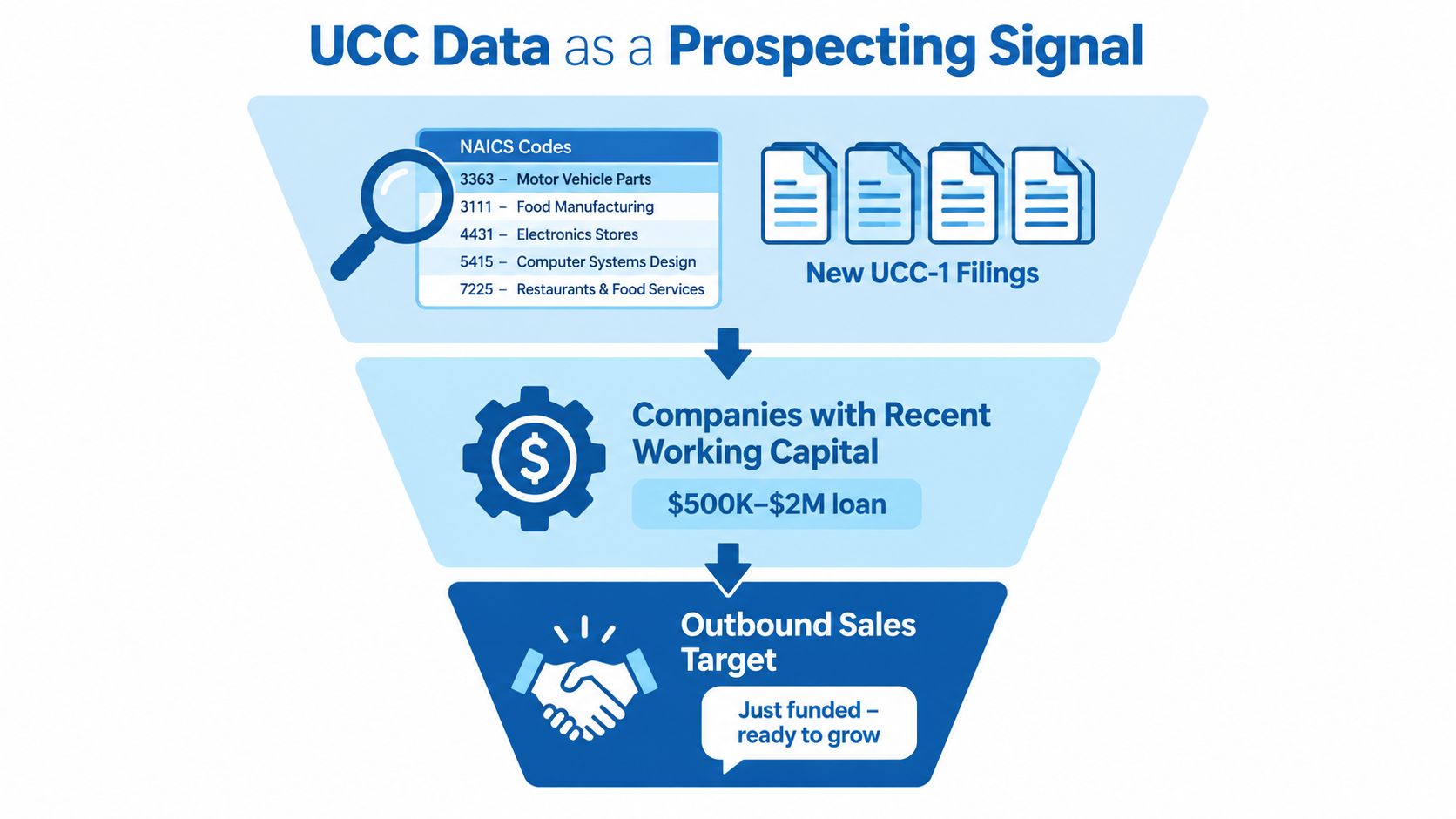
A new UCC-1 gives a bank a timely reason to research a company. The filing may cover equipment, inventory, receivables, or broader working capital. It does not establish distress. It marks a financing event that may coincide with expansion, refinancing, an acquisition, a new facility, or increased demand for treasury services.
A regional bank can monitor filings within target NAICS codes and its geographic footprint. Suppose it identifies 14 new filings by staffing agencies over 60 days, removes duplicate records by secured party, and finds four borrowers financed by a competitor that are approaching that competitor's credit limit. These are specific businesses with recent borrowing activity, an existing lender relationship, and a plausible need for added capacity or a second banking relationship.
From public record to banker action
Use the filing as a research trigger, then apply a disciplined screen:
- Filter by industry and geography. Focus on sectors and markets where the bank has underwriting expertise.
- Separate new activity from old noise. Give priority to recent UCC-1 filings, amendments, and terminations rather than inactive historical records.
- Identify the secured party. A competitor's filing shows who may control the relationship and whether the borrower uses a bank, finance company, or specialty funder.
- Check collateral scope. Equipment-specific financing may leave room for treasury services without competing for the same assets. A blanket lien demands a more careful relationship strategy.
- Route the signal. Give the relationship manager the company, filing context, secured party, collateral scope, and recommended research questions.
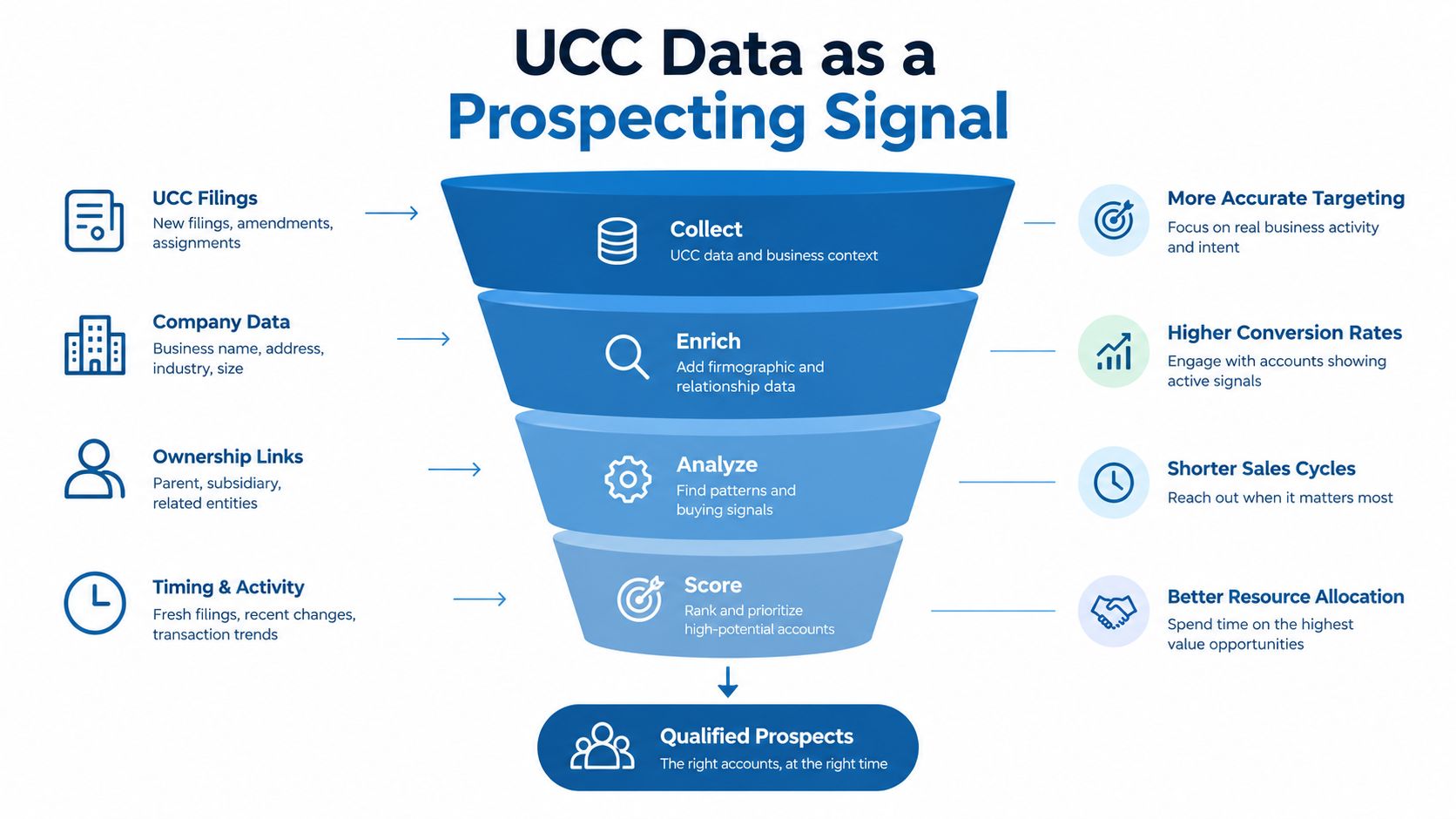
The strongest prospecting workflow combines UCC activity with deposits, treasury usage, company characteristics, and CRM notes. A company that recently financed equipment and shows growing operating activity may need cash management, merchant services, payroll support, or a larger revolving line. That combination gives the banker a reason to research the account before making contact and to frame a relevant commercial conversation.
Visbanking's bank prospecting software is one data-intelligence option for connecting filing activity with relationship and prospect workflows. Human review remains necessary, especially when a blanket lien or competing secured party changes the account strategy. The filing tells the banker when to research the account and which conversation is likely to be relevant.
Turning Filings Into Bank-Wide Action
A $2.1 billion community bank stopped treating UCC monitoring as a legal afterthought. It tied filings to core deposit data and CRM notes, then routed each change to the team that could act on it.
A long-standing manufacturing client later showed a UCC termination from its prior inventory lender. The relationship manager moved fast and triggered a treasury review within 48 hours. That review uncovered a $3.4 million cash drain, which gave the bank a clean opening to discuss refinancing and treasury structure before the borrower shopped competing offers.
The same record also changed the risk view. Analysts saw that the borrower's largest supplier had filed a judgment lien. That shifted the meaning of the termination. The borrower may have gained room on collateral, but its commercial network had new pressure points. The workout officer tightened covenant monitoring and rechecked collateral availability instead of treating the filing as a simple growth signal.
A single filing should not sit in one inbox.
One event, different owners
The bank gets better results when each team receives a decision-ready version of the same record:
- Relationship management gets a refinancing or treasury conversation.
- Credit risk gets a new lien or termination alert tied to existing exposure.
- Loan operations gets a filing-status or continuation task.
- Workout gets a collateral and recovery signal.
- Business development gets a prospect record with lender and industry context.
That setup cuts duplicate manual pulls and closes the gap between legal records and what bankers know about the borrower. It also gives executives a clear audit trail. They can see which filing changed, who reviewed it, what action followed, and whether the team responded.
The data layer does not replace legal judgment. Counsel still handles perfection, priority, intercreditor arrangements, and jurisdiction-specific rules. What it does is get the right people involved early enough to act.
Banks that want to connect this workflow to collateral recovery solutions should do it alongside borrower performance, exposure, and liquidation planning. That is the right operating model, one public filing should not produce five disconnected spreadsheets.
Executive Takeaways and Next Steps
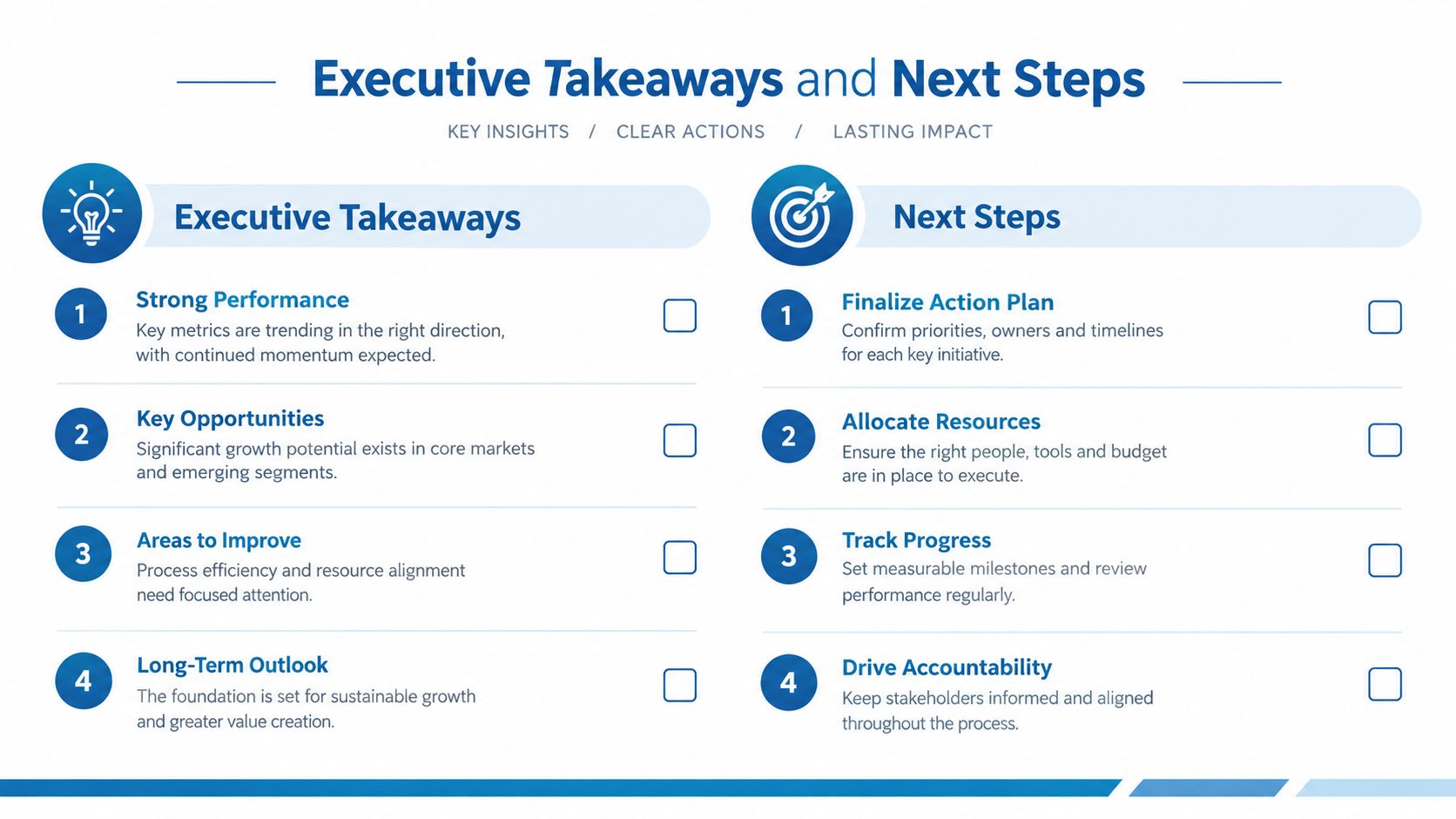
UCC filings become strategic assets only when the bank treats them as live intelligence. The filing itself is a public notice, but its value comes from connecting it to exposure, collateral, lender relationships, borrower behavior, and the next decision.
Use this executive checklist:
- Confirm perfection on every new origination. Verify the exact debtor name, secured-party designation, collateral description, filing office, and post-filing record before the bank relies on the lien.
- Run quarterly lien searches on the top 20% of the portfolio by exposure. Focus first on the relationships where collateral value, concentration, or recovery risk would materially affect the bank.
- Map competitor filings for prospect targeting. Monitor new UCC-1s, secured-party names, collateral scope, and terminations across priority industries and markets.
- Integrate UCC data into pricing models. Multiple blanket liens, narrow equipment claims, and newly available collateral should influence structure, spread, advance rates, and covenant requirements.
- Track UCC lapse filings as early-warning signals. A missed continuation can alter priority, while a termination can indicate refinancing, payoff, lender turnover, or a change in the borrower's capital structure.
The bank should benchmark its current workflow against the standard it expects from its credit systems. Can the team identify a new competing lien quickly? Can a relationship manager see that a prospect recently refinanced? Can risk connect a UCC change to borrower performance and total exposure? If the answers depend on manual searches and individual memory, the bank is leaving decision value in the public record.
The practical next step is to consolidate state filing data, portfolio records, and prospect lists into a repeatable workflow. Measure the time from filing event to banker action, the share of priority relationships monitored, the number of collateral conflicts resolved before approval, and the number of qualified prospects created from new filing activity.
Visbanking connects multi-state UCC filing data with bank intelligence, portfolio context, and prospect workflows so executives can see lender-borrower ties, collateral signals, and financing activity in one decision process. Visit Visbanking to benchmark your current UCC workflow and identify where faster signals can improve prospecting, underwriting, and recovery analysis.
Latest Articles
Brian's Banking Blog
Automated Alerts and Notifications for Banks
Brian's Banking Blog
Customer Feedback Loop for Banks: A Practical Playbook
Brian's Banking Blog
Commercial Lending Trends: What Bank Executives Must Know
Brian's Banking Blog
Bank Marketing Dataset Analysis Strategy

Brian's Banking Blog
ESG Peer Benchmarking for Bank Leaders
Brian's Banking Blog