
Banking Data Analytics: Turning Information Into Profit
Banking Knowledge Base
Essential Insights for Banking Analytics Success
- Modern banking success depends on transforming raw data into actionable insights through a comprehensive analytical approach that includes descriptive, diagnostic, predictive, and prescriptive analytics.
- Effective data transformation requires robust governance frameworks, integration of disparate sources, and powerful visualization tools that democratize data access across the organization.
- Predictive analytics has revolutionized banking by enabling more accurate credit decisions, anticipating customer needs, and detecting fraud in real-time through sophisticated machine learning algorithms.
- Customer analytics has evolved from basic demographic segmentation to multidimensional models that incorporate behavior patterns, channel preferences, and lifetime value to drive personalized experiences.
- Data-driven decision making requires both technological infrastructure and cultural transformation, with successful implementation dependent on clear strategy, change management, and continuous feedback loops.
- Measuring ROI from analytics initiatives must combine direct financial metrics with operational indicators while developing attribution models that capture both immediate benefits and long-term strategic advantages.
Banking Data Analytics: Turning Information Into Profit
In today's competitive financial landscape, the difference between thriving institutions and those merely surviving often comes down to how effectively they leverage their data assets. Banking data analytics has emerged as the cornerstone of strategic decision-making, customer experience enhancement, and risk management for forward-thinking financial institutions. This comprehensive guide explores how banks are transforming raw information into profitable insights through sophisticated analytical approaches.
Table of Contents
- Understanding the Power of Banking Data Analytics
- How Financial Institutions Transform Raw Data Into Insights
- Essential Business Intelligence Tools for Modern Banks
- How Does Predictive Analytics Revolutionise Banking?
- Leveraging Customer Analytics to Drive Banking Growth
- Risk Management Through Advanced Data Analysis
- Implementing Data-Driven Decision Making in Banking
- Measuring ROI: The Future of Financial Performance Analytics
Understanding the Power of Banking Data Analytics
Banking data analytics represents the systematic computational analysis of banking information to uncover patterns, correlations, and actionable insights. In an industry that generates massive volumes of transactional, customer, and operational data daily, the ability to harness this information effectively has become a critical competitive differentiator.
Financial institutions possess treasure troves of data spanning customer demographics, transaction histories, product usage patterns, and market interactions. When properly analysed, this data reveals customer preferences, operational inefficiencies, emerging risks, and untapped revenue opportunities. The most successful banks have transitioned from viewing data as a byproduct of operations to recognising it as perhaps their most valuable strategic asset.
Modern banking data analytics encompasses descriptive analytics (what happened), diagnostic analytics (why it happened), predictive analytics (what might happen), and prescriptive analytics (what actions to take). This comprehensive analytical approach enables banks to move beyond reactive decision-making toward proactive strategy development based on robust data insights.
How Financial Institutions Transform Raw Data Into Insights
The journey from raw banking data to actionable insights follows a sophisticated process that combines technological infrastructure with analytical expertise. Initially, financial institutions must establish robust data governance frameworks that ensure data quality, security, and compliance with regulatory requirements. This foundation is essential for meaningful analysis.
Data integration represents the next critical step, where information from disparate sources—core banking systems, customer relationship management platforms, digital banking channels, and external sources—is consolidated into unified data warehouses or lakes. Advanced extract, transform, and load (ETL) processes standardise this information into consistent formats suitable for analysis.
Data visualisation in banking transforms complex numerical information into intuitive visual representations through dashboards, interactive reports, and graphical interfaces. These visualisations enable stakeholders across the organisation to identify patterns, anomalies, and opportunities that might otherwise remain hidden in spreadsheets or databases. The most effective banking dashboards tools combine technical sophistication with user-friendly interfaces that democratise data access.
Financial trend analysis applies statistical methods and machine learning algorithms to identify meaningful patterns in historical data and project future developments. This analytical approach helps banks anticipate market shifts, changing customer behaviours, and emerging risks before they impact performance.
Essential Business Intelligence Tools for Modern Banks
Bank business intelligence encompasses the technologies, applications, and practices that collect, integrate, analyse, and present business information to support better decision-making. The modern banking intelligence ecosystem includes several essential components that work together to transform data into strategic advantage.
Data warehousing solutions provide the centralised infrastructure necessary to store and organise vast quantities of structured and unstructured banking data. These platforms support complex queries and analyses while maintaining performance and security. Cloud-based data warehousing has gained particular traction for its scalability and cost-effectiveness.
Analytics platforms offer the computational power and algorithmic sophistication required to process banking data at scale. These tools range from traditional statistical analysis software to advanced artificial intelligence systems capable of identifying complex patterns and relationships. Leading banks increasingly employ real-time banking analytics capabilities that process information as it's generated, enabling immediate response to emerging opportunities or threats.
Banking dashboard tools represent the interface between complex data and human decision-makers. The most effective dashboards present banking KPIs and metrics in intuitive formats that highlight actionable insights while filtering out noise. These interfaces often incorporate banking competitive intelligence that contextualises institutional performance against industry benchmarks and competitor activities.
How Does Predictive Analytics Revolutionise Banking?
Predictive analytics in banking leverages historical data, statistical algorithms, and machine learning techniques to identify the likelihood of future outcomes. This forward-looking analytical approach has transformed numerous aspects of banking operations, from customer relationship management to risk assessment and fraud prevention.
In lending operations, predictive models analyse hundreds of variables to assess creditworthiness more accurately than traditional scoring methods. These sophisticated algorithms identify subtle patterns in borrower behaviour that correlate with repayment likelihood, enabling more precise risk-based pricing and expanded access to credit for previously underserved segments.
Customer behaviour prediction represents another powerful application, with models that anticipate needs, preferences, and potential attrition risks. By identifying customers showing early warning signs of dissatisfaction or those likely to need specific financial products in the near future, banks can implement proactive retention strategies and perfectly timed offers that significantly improve conversion rates.
Fraud detection systems employ predictive analytics to identify suspicious transactions in real-time by comparing activity against established patterns and known fraud indicators. Machine learning algorithms continuously improve detection accuracy by incorporating new fraud schemes as they emerge, creating a dynamic defence that evolves alongside threats.
Leveraging Customer Analytics to Drive Banking Growth
Customer analytics banking focuses on extracting actionable insights from customer data to enhance acquisition, retention, and relationship development strategies. This analytical discipline has become increasingly sophisticated as banks gain access to more granular customer information from digital interactions, transaction histories, and third-party sources.
Banking customer segmentation has evolved from basic demographic groupings to multidimensional classifications incorporating behavioural patterns, channel preferences, profitability metrics, and lifecycle stages. These nuanced segmentation models enable highly targeted marketing campaigns, personalised product offerings, and customised service approaches that resonate with specific customer groups.
Lifetime value modelling helps banks identify their most profitable customer relationships and understand the drivers of long-term profitability. By quantifying the expected revenue and cost associated with serving different customer segments over time, institutions can optimise resource allocation and relationship management strategies to maximise returns.
Next-best-action analytics combines customer insights with business rules to determine the most appropriate interaction for each customer at any given moment. These recommendations might include product offers, service interventions, educational content, or relationship-building communications, all delivered through the customer's preferred channel at the optimal time.
Risk Management Through Advanced Data Analysis
Risk analytics has transformed banking's approach to identifying, assessing, and mitigating threats across multiple domains. Advanced analytical techniques now provide unprecedented visibility into credit, market, operational, and compliance risks, enabling more proactive and precise risk management strategies.
Credit risk modelling has progressed from relatively simple scoring systems to sophisticated algorithms that incorporate alternative data sources, macroeconomic indicators, and behavioural patterns. These enhanced models improve default prediction accuracy while identifying opportunities to safely extend credit to previously underserved segments.
Market risk assessment employs complex simulations and stress testing to evaluate portfolio vulnerabilities under various economic scenarios. These analytical approaches help banks maintain appropriate capital buffers while optimising asset allocation to balance risk and return effectively.
Compliance analytics automates the monitoring of transactions and activities against regulatory requirements, dramatically improving detection of potential violations while reducing false positives. Machine learning algorithms continuously refine these monitoring systems, adapting to new regulatory interpretations and emerging compliance risks.
Banking data security has become increasingly analytical, with systems that establish baseline patterns of normal activity and flag anomalies that might indicate breaches or unauthorised access. These security analytics platforms provide essential protection for sensitive financial information in an environment of escalating cyber threats.
Implementing Data-Driven Decision Making in Banking
Data-driven banking represents a fundamental shift in how financial institutions approach strategic and operational decisions. Rather than relying primarily on experience, intuition, or tradition, data-driven organisations systematically incorporate empirical evidence and analytical insights into their decision-making processes at all levels.
Successful implementation requires both technological infrastructure and cultural transformation. Banks must develop the technical capabilities to collect, process, and analyse relevant data while simultaneously fostering an organisational culture that values evidence-based decision-making and analytical thinking.
Financial institution data strategy provides the framework for this transformation, establishing clear objectives, governance structures, and implementation roadmaps. Effective strategies address data acquisition, quality management, analytical capabilities, and the integration of insights into business processes.
Change management represents a critical success factor, as resistance to data-driven approaches often stems from entrenched decision-making habits and discomfort with new analytical tools. Progressive banks invest heavily in training, communication, and demonstrating early wins to build organisational buy-in for data-driven methodologies.
The most mature data-driven banking organisations establish feedback loops that continuously evaluate the outcomes of data-informed decisions, refining their analytical approaches based on real-world results. This iterative improvement process progressively enhances decision quality while building institutional analytical capabilities.
Measuring ROI: The Future of Financial Performance Analytics
Financial performance analytics provides the metrics and methodologies to evaluate the return on investment from banking data initiatives. As analytics programmes mature, institutions increasingly demand rigorous assessment of their impact on business outcomes rather than merely technical implementation success.
Banking performance metrics for analytics initiatives typically include both direct financial measures (revenue growth, cost reduction, loss avoidance) and operational indicators (process efficiency, decision speed, customer satisfaction). The most sophisticated measurement frameworks link analytical capabilities directly to strategic objectives and competitive differentiation.
Attribution modelling represents a particular challenge, as the impact of improved analytics often manifests across multiple business functions and timeframes. Leading institutions develop comprehensive frameworks that capture both immediate benefits and longer-term strategic advantages enabled by enhanced analytical capabilities.
The future of financial performance analytics lies in increasingly integrated measurement systems that provide real-time visibility into how analytical insights translate into business outcomes. These systems will incorporate both traditional financial metrics and emerging indicators of institutional health, such as innovation capacity, organisational agility, and ecosystem development.
As banking continues its digital transformation, the ability to quantify and communicate the value of data analytics investments will become increasingly critical for securing continued resource allocation and executive support. The most successful institutions will develop sophisticated yet transparent approaches to measuring analytics ROI that resonate with stakeholders across the organisation.
Frequently Asked Questions
What is banking data analytics?
Banking data analytics is the systematic computational analysis of banking information to uncover patterns, correlations, and actionable insights. It encompasses descriptive analytics (what happened), diagnostic analytics (why it happened), predictive analytics (what might happen), and prescriptive analytics (what actions to take), enabling banks to transform raw data into strategic advantages for improved decision-making, customer experience, and risk management.
How do banks transform raw data into actionable insights?
Banks transform raw data into actionable insights through a multi-step process: establishing robust data governance frameworks, integrating data from disparate sources into unified warehouses or lakes, implementing ETL processes to standardize information, applying analytical tools and algorithms to identify patterns, and creating data visualizations through dashboards and reports that make complex information accessible to decision-makers across the organization.
What are the essential business intelligence tools for modern banks?
Essential business intelligence tools for modern banks include data warehousing solutions for centralized storage, analytics platforms with computational power and algorithmic capabilities, real-time analytics systems for immediate processing, banking dashboard tools that present KPIs in intuitive formats, and competitive intelligence systems that benchmark performance against industry standards and competitors.
How does predictive analytics improve banking operations?
Predictive analytics improves banking operations by enhancing credit risk assessment through more accurate borrower behavior analysis, anticipating customer needs and potential attrition risks, enabling personalized marketing and product recommendations, detecting fraudulent transactions in real-time by identifying suspicious patterns, and optimizing operational processes through forecasting models that anticipate resource requirements.
What is data-driven decision making in banking?
Data-driven decision making in banking is an approach where financial institutions systematically incorporate empirical evidence and analytical insights into strategic and operational decisions rather than relying primarily on intuition or tradition. It requires both technological infrastructure to process data and cultural transformation that values evidence-based thinking, supported by clear data governance frameworks and change management strategies.
How do banks measure ROI on data analytics investments?
Banks measure ROI on data analytics investments through both direct financial measures (revenue growth, cost reduction, loss avoidance) and operational indicators (process efficiency, decision speed, customer satisfaction). Advanced institutions develop attribution models that capture immediate benefits and long-term strategic advantages, creating comprehensive frameworks that link analytical capabilities directly to business outcomes and strategic objectives.
How is customer analytics used to drive banking growth?
Customer analytics drives banking growth through sophisticated segmentation models that enable targeted marketing and personalized offerings, lifetime value modeling that identifies the most profitable relationships, next-best-action analytics that determine optimal customer interactions, behavioral analysis that anticipates needs and preferences, and churn prediction models that support proactive retention strategies—all contributing to improved acquisition, retention, and relationship development.
Related Articles
Brian's Banking Blog
A Guide to Predictive Analytics for Banks
Brian's Banking Blog
A Bank Executive's Guide to Predictive Analytics

Brian's Banking Blog
What Is Market Intelligence? A Guide for Bank Executives
Brian's Banking Blog
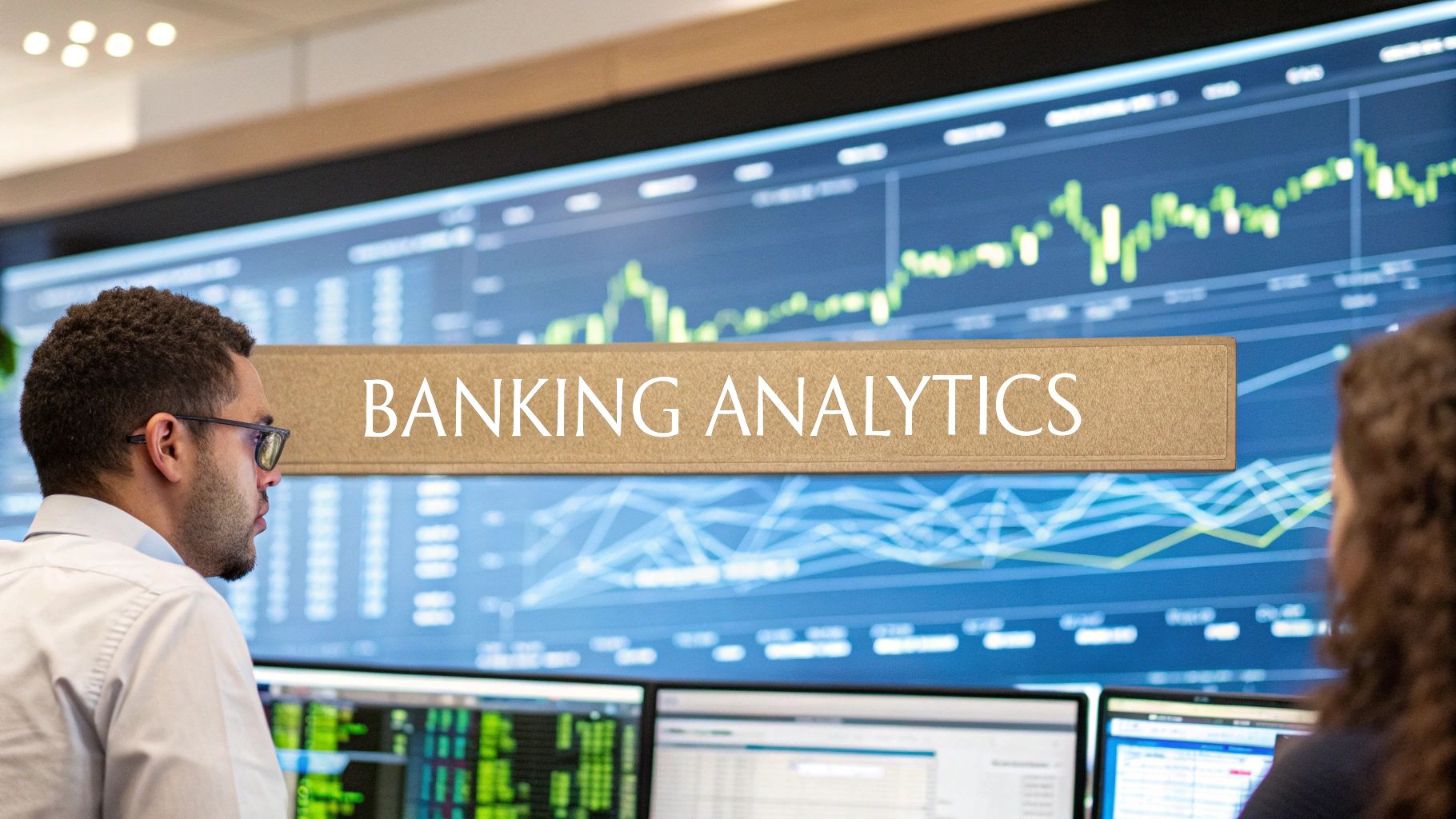
Analytics for Banking That Drive Data Intelligence
Brian's Banking Blog
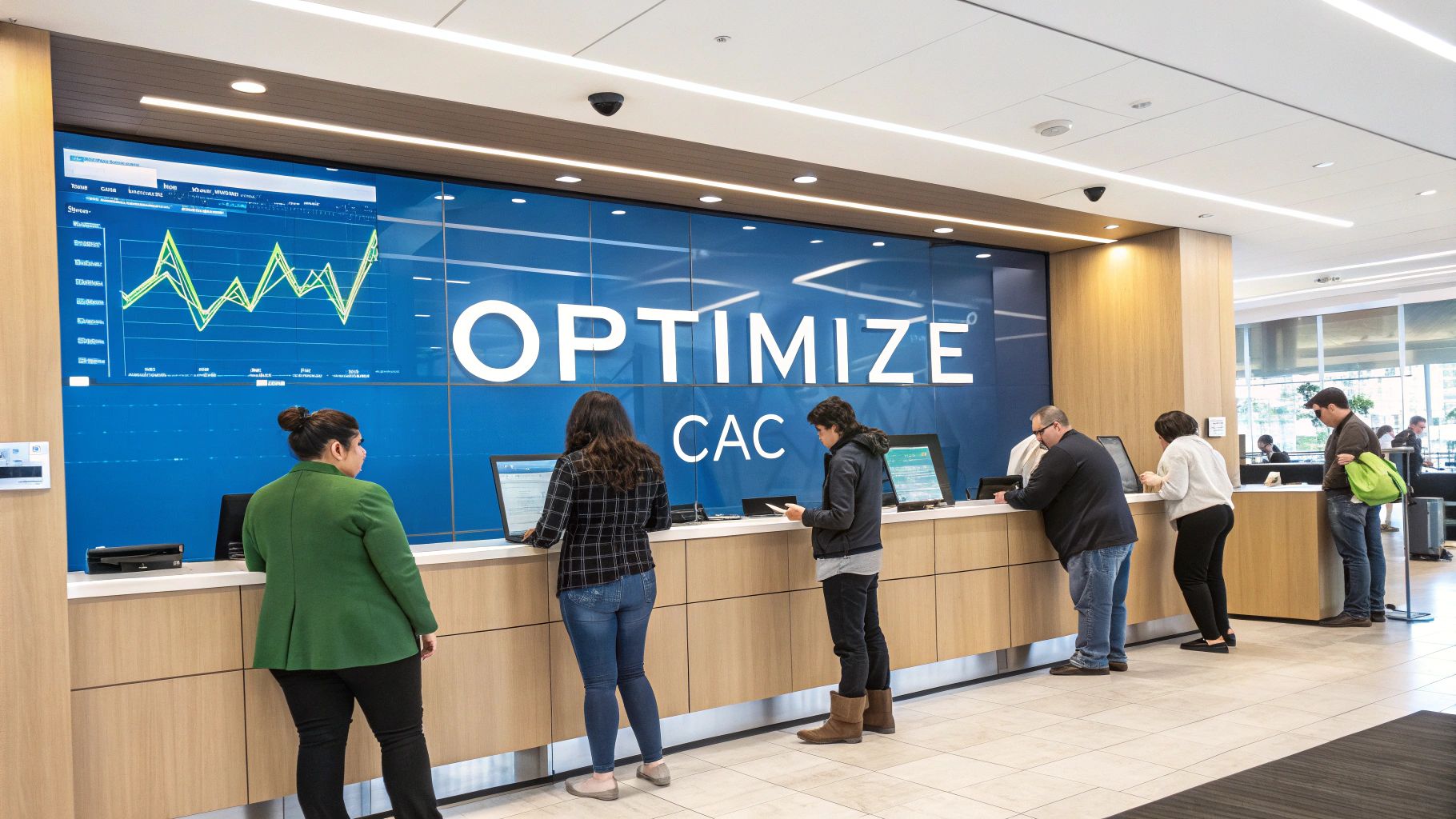
Mastering Bank Customer Acquisition Cost: A Strategic Guide for Executives

Brian's Banking Blog