
Loss Given Default Calculation for Bank Executives
Brian's Banking Blog
The popular advice is simple: calculate Loss Given Default (LGD) as one minus the recovery rate, then apply the result to exposure at default. That formula is useful as a starting point, but it is not an executive-grade loss given default calculation. It can conceal whether collateral values are current, whether recoveries are net of workout costs, whether default is defined consistently, and whether the estimate reflects stressed conditions.
The key question for a bank board isn't “What is our average LGD?” It is “Which exposures will produce which losses under the conditions that matter?” That shift turns LGD from a static accounting input into a scenario-sensitive governance discipline. It also exposes a data problem. If collateral, exposure, recovery, legal-cost, macroeconomic, and regulatory data sit in separate systems, risk leaders may be unable to explain why a model changed or whether its assumptions remain defensible.
Redefining Loss Given Default for Modern Banking
A portfolio-average LGD can be easy to report and still be the wrong basis for a capital decision. Collateral type, seniority, jurisdiction, recovery timing, legal process, and macroeconomic conditions can change the loss materially. Secured exposure is not automatically low loss when collateral is thin, difficult to liquidate, legally contested, or valued with stale information. Unsecured exposure can recover more than expected if the borrower cures or generates cash during the workout.
Basel IRB practice makes the segmentation requirement explicit. For secured exposures, the collateralised transaction LGD, or LGD*, is an exposure-weighted average of unsecured LGD and secured LGD, rather than a single recovery assumption applied to the full balance (Basel Framework guidance). The data model must therefore retain both the collateralised portion and the unsecured residue. A pipeline that collapses them into one balance may produce a number that is mathematically tidy but difficult to defend.
Board takeaway: A reported LGD without segmentation, recovery timing, collateral assumptions, and stress treatment is not a complete risk statement.
Expected-loss LGD and downturn LGD serve different decision needs. Basel's conditional expected loss framework uses downturn LGD, so calibration to average historical recoveries can understate capital needs when adverse conditions reduce collateral proceeds or increase workout costs. A supervisory shortcut that linearly adjusts average LGD may be practical when internal downturn evidence is incomplete. It becomes less reliable for portfolios concentrated in subordinated, thin-collateral, or litigation-heavy exposures.
The European supervisory discussion adds a benchmarking dimension. Recent analysis describes an ECB LGD reference value as a backstop in 2025, intended to prevent downturn LGD estimates from falling below realized-loss evidence when the peak-loss period and macroeconomic downturn window do not align (analysis of the ECB's shifting perspective on downturn LGD). The implication is direct: governance must address both model calibration and the evidence used to challenge it.
Executives should ask whether every material LGD movement can be traced to consistent, unified evidence. Fragmented collateral, exposure, recovery, legal-cost, macroeconomic, and regulatory data create reconciliation work and regulatory friction. A precise estimate built from disconnected inputs may be less defensible than a transparent estimate with wider uncertainty. Capital allocation, pricing, provisioning, and portfolio exits depend on distinguishing economic deterioration from a change in data architecture.
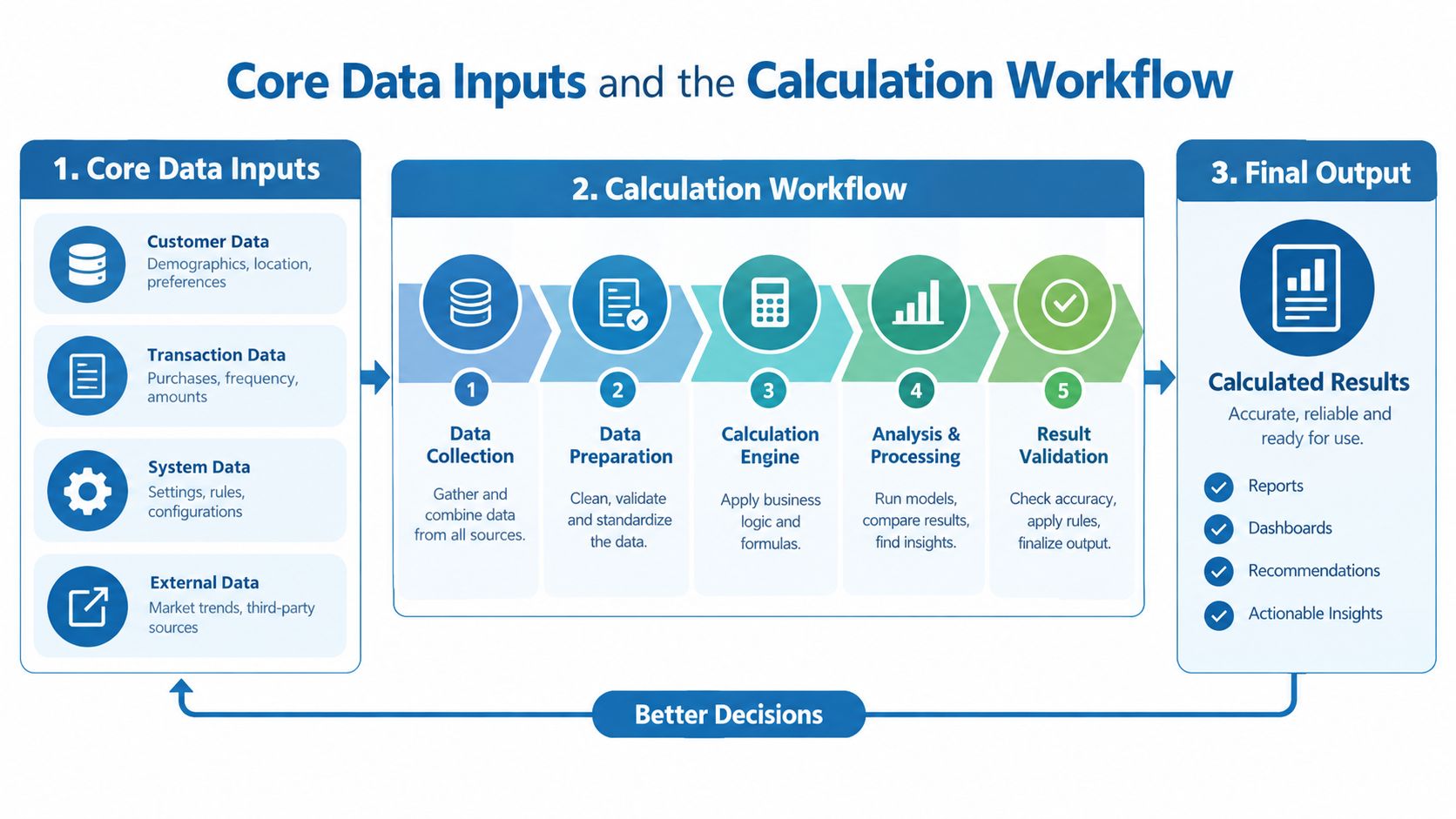
Core Data Inputs and the Calculation Workflow
LGD is not a fixed property of a loan. It is an evidence chain whose result changes with the default definition, exposure date, recovery timing, collateral condition, and costs recorded by the bank. If those inputs sit in separate systems, the formula can remain correct while the reported risk becomes difficult to reconcile with finance, audit, or supervisors.
The first control is a consistent default event across products, reporting periods, and workout teams. Otherwise, the recovery history may combine legal proceedings, temporary delinquency followed by cure, and charge-offs governed by different operational policies. Those cases do not represent the same point in the credit cycle.
The exposure measure follows. EAD must be measured at the time of default, rather than taken from an earlier booking balance or a later charged-off amount. The calculation subtracts realized recoveries from EAD, deducts workout and liquidation costs, and divides the resulting net loss by EAD:
LGD = (EAD minus net recoveries) divided by EAD
The Chicago Fed's practical framework defines total post-default loss relative to defaulted exposure and distinguishes count-based from balance-weighted measurement (Chicago Fed LGD materials). Equal weighting gives each default the same influence. Balance weighting gives larger exposures greater influence, which can materially change portfolio LGD and the capital conclusion drawn from it.
Build the evidence chain around the default event
A controlled pipeline should connect the facility, borrower, collateral, lien position, default date, EAD, recovery cash flows, and related costs. Recovery proceeds need timing treatment. Cash collected after a prolonged workout has a different economic value from cash received immediately. Legal fees, liquidation expenses, carrying costs, and servicing costs belong in the record before the recovery rate is calculated.
Collateral controls should preserve the valuation date, method, appraiser or source, lien priority, and liquidation outcome. A stale valuation can make expected recovery appear stronger than the proceeds available in a sale. Delayed charge-off recognition creates a related distortion by shifting the loss-recognition point.
The operating discipline resembles the workflow for loan underwriting, where borrower, collateral, documentation, and transaction records must be connected rather than reviewed as isolated fields. After default, the same connected view supports defensible LGD estimation.
Keep gross recovery and net loss separate
Risk teams should retain gross and net fields. Gross recovery records cash or asset value received. Net recovery subtracts the expenses required to obtain it. Combining them inflates recovery and understates LGD.
A reviewer should be able to reproduce the result from source transactions, adjustment records, and timing assumptions, not only from a manually edited spreadsheet. Banks can apply a documented credit risk modeling approach to connect inputs, validation evidence, and decision outputs. The purpose is traceability. The chief risk officer should be able to identify which data changed, which assumption moved, and whether the effect reaches provisioning, capital, or pricing.
Navigating Special Cases and Regulatory Floors
A single recovery assumption fails as soon as collateral structures differ. Basel IRB treatment requires secured-transaction LGD to combine secured and unsecured components according to their exposure weights. The practical sequence is to segment the facility, identify collateralised and unsecured portions, estimate each component separately, then weight them into LGD*. The Basel Framework CRE32 secured-transaction requirements provide the regulatory anchor for that treatment.
This prevents a basic but material error. If collateral covers only part of an exposure, applying the secured recovery assumption to the full balance overstates protection. The unsecured residue retains its own recovery behaviour, legal costs, and timing risk. Seniority and lien position can change the result materially, particularly when bankruptcy proceedings distribute proceeds across creditors.
Cure rates require the same discipline. A borrower that cures after default is not automatically a full recovery. Analysts need to examine the resulting cash flows, restructuring terms, and costs incurred before cure. Bankruptcy and litigation require an even broader view. A nominal collateral value becomes recovery only after the bank establishes enforceability, priority, liquidation proceeds, and the expenses required to realise them. For directors reviewing distressed credit, the legal pathway can matter as much as the asset value. The discussion of bonds in default consequences illustrates why creditor rights and recovery processes shape outcomes.
Accounting estimates and supervisory floors serve different purposes
Point-in-time accounting estimates may reflect current borrower and macroeconomic conditions. Regulatory capital models require downside sensitivity and evidence that losses are not understated. Different LGD outputs can therefore be valid, provided governance records each model's purpose, horizon, scenario treatment, and conservatism.
The ECB's use of an LGD reference value as a backstop in 2025 shows the tension. A downturn estimate may appear reasonable within its selected historical window yet fall below realised-loss experience when the periods do not align. Supervisors also compare loss-rate inputs across banks, making peer evidence relevant to model challenge.
A board should require three separate answers:
- What does current accounting evidence imply? This supports provisioning and reflects present conditions.
- What does adverse-cycle evidence imply? This supports capital resilience and downturn calibration.
- What do realised losses and peer comparisons challenge? This tests whether recovery assumptions remain credible.
Fragmented collateral, workout, legal, and accounting data makes those answers difficult to reconcile. A unified data pipeline preserves the links between source events, scenario assumptions, regulatory adjustments, and reported outcomes. That connection reduces friction during review and lets management explain why an allowance differs from a capital input without treating either measure as interchangeable. A structured view of loan loss reserves helps place LGD within the wider allowance process, especially for portfolios where recoveries depend on timing or contested legal outcomes.
Worked Numeric Examples and Scenario Stress Testing
LGD is not a static input. Its effect on portfolio loss changes as default frequency, collateral values, recovery timing, and workout costs move together. A 30% default rate multiplied by 20% LGD produces a 6% total loss rate, illustrating the loss decomposition used in the Chicago Fed loss decomposition framework. The arithmetic is simple. The governance question is whether the severity assumption remains credible under the same conditions that increase defaults.
The relationship is:
Total portfolio loss rate = default rate × LGD
This calculation separates default probability from post-default severity while showing how quickly the combined outcome can change.
Portfolio Loss Sensitivity Matrix
| Default Rate | Estimated LGD | Total Portfolio Loss Rate |
|---|---|---|
| 30% | 20% | 6% |
| 30% | 30% | 9% |
| 30% | 40% | 12% |
| 20% | 20% | 4% |
| 40% | 20% | 8% |
The matrix gives the board a direct sensitivity test. With the default rate held at 30%, increasing LGD from 20% to 40% doubles the total portfolio loss rate from 6% to 12%. Default frequency does not need to change for the result to worsen. Lower collateral proceeds, longer recoveries, higher legal costs, or weaker workout execution can produce the increase in severity.
The calculation also exposes a data-governance problem. If collateral, legal, servicing, and workout records sit in separate systems, analysts may change one LGD input without seeing the operational evidence affecting the others. A unified pipeline can connect each scenario adjustment to source events and reported outcomes, making the sensitivity result reproducible rather than merely plausible.
Downturn calibration changes the question
A through-the-cycle average describes recoveries across a broad history. A downturn LGD asks what the bank may lose when borrower cash flow and collateral markets weaken together. For relevant conditional expected-loss treatment, the Basel framework requires downturn LGD rather than a pure through-the-cycle average, as noted in the Basel downturn LGD requirements.
Validation should compare vintages, collateral categories, workout regimes, and macro scenarios. A stable portfolio average can conceal exposures that respond differently to the same shock, particularly when unlike loans are pooled into one estimate.
Stress-testing question: If defaults rise while collateral liquidation values weaken and workout periods lengthen, which LGD inputs move first, and can management identify the evidence supporting each movement?
Directors do not need to approve every parameter. They do need evidence that scenario design captures the interaction between default frequency and recovery severity, because that interaction can create capital surprises and force reconciliation between fragmented regulatory data sources.
Common Modeling Pitfalls and Validation Traps
LGD rarely fails because the formula is difficult. It fails when a plausible average conceals how recoveries vary across exposures, periods, and stress conditions. A model can therefore produce a stable estimate while missing concentration in losses or the relationship between default rates and recovery severity. Chicago Fed research distinguishes the loss distribution used for expected LGD from the distribution relevant to economic capital, a distinction that validation must preserve (Chicago Fed research on LGD distributions).
What validation should challenge
- Average compression: Test results by collateral type, seniority, jurisdiction, and workout regime. A portfolio mean should not erase material differences between exposure groups.
- Recovery inflation: Reconcile recoveries to actual cash receipts, then deduct workout, liquidation, and legal costs. Non-cash settlements require separate treatment and clear valuation evidence.
- Timing blindness: Confirm that delayed recoveries are discounted consistently and that collateral values reflect liquidation conditions rather than stale observations.
- Definition drift: Compare default definitions, cure treatment, exposure measures, and observation periods across source systems and reporting cycles.
- Capital and accounting conflation: Check that expected-loss LGD has not replaced downturn LGD where capital rules require a stressed calibration. The Basel supervisory LGD guidance sets the relevant supervisory context.
A supervisory adjustment can also create false confidence. A linear uplift from average LGD may not represent portfolios concentrated in subordinated, thin-collateral, or litigation-heavy exposures. Legal costs, collateral liquidation, and recovery timing can change together, so a transparent adjustment may still rely on an unsuitable assumption.
Validation needs a data lineage test
Validation should begin with lineage before statistical performance. Can analysts trace each default to the correct EAD? Can they identify the collateral value used at liquidation, separate cash recoveries from non-cash settlements, and show the costs incurred to obtain those recoveries? If the answers depend on disconnected spreadsheets, reviewers cannot reproduce the estimate reliably.
A model is not conservative merely because its LGD is high. It is credible when the bank can explain why the estimate is high and reproduce it from controlled evidence.
Governance latency creates a final trap. If updated data arrives after model review, deterioration may surface only after capital and allowance decisions are complete. Monitoring should flag stale collateral, changing recovery timing, rising legal expenses, and unusual divergence between modeled and realized losses. These controls connect model risk with operating risk, where fragmented pipelines can conceal the evidence needed for timely remediation. A unified record of definitions, source events, transformations, and outcomes makes validation reproducible and gives management a clearer basis for capital and provisioning decisions.
Operationalizing LGD Data Pipelines with Visbanking
A mathematically sound model cannot compensate for stale or siloed inputs. Banks need a controlled way to connect regulatory filings, financial statements, market conditions, collateral signals, borrower information, and workout outcomes. Manual data pulls make that difficult to sustain because each spreadsheet can introduce different definitions, dates, transformations, and undocumented overrides.
Visbanking's Bank Intelligence and Action System, or BIAS, brings together financial, regulatory, market, and people data from sources including FDIC call reports, FFIEC and UBPR, NCUA 5300, SBA program data, UCC filings, SEC and EDGAR, BLS and BEA macro series, and HMDA. Its Bank Performance application supports peer benchmarking and historical trend analysis across 4,600+ institutions, while production-grade pipelines, MLOps, feature stores, observability, secure APIs, dashboards, and exportable reports support governed model operations.
That architecture matters for LGD because a risk team needs more than a dashboard. It needs feature definitions that remain consistent, historical benchmarks that can be reproduced, alerts when source data changes, and an audit trail connecting an output to the inputs that produced it. A unified data layer can also help teams compare modeled assumptions with realized outcomes and identify where collateral or recovery evidence is no longer representative.
Move from periodic review to controlled monitoring
A practical operating model should connect four activities:
- Data ingestion: Collect relevant regulatory, financial, market, collateral, and workout data through governed pipelines.
- Feature management: Preserve definitions, timestamps, transformations, and ownership for inputs used in LGD estimation.
- Model monitoring: Compare expected and realized recoveries across segments, vintages, and stress conditions.
- Decision delivery: Send exceptions and benchmark results to risk, finance, credit, and executive workflows.
Teams designing this architecture can use a documented approach to building data pipelines to make ingestion, observability, and data ownership explicit. The goal is not to replace model judgment. It is to give that judgment a reliable evidence base.
A bank that treats LGD as a living risk signal can make better decisions about pricing, collateral standards, allowance adequacy, capital planning, and portfolio concentration. A bank that treats it as a fixed spreadsheet ratio will struggle to explain its assumptions when conditions change.
Visbanking helps banks unify regulatory, financial, market, and institutional data into explainable analytics that support LGD benchmarking, stress testing, and risk oversight. Visit Visbanking to explore how your team can connect fragmented risk data, monitor changing signals, and strengthen audit-ready capital and provisioning decisions.
Latest Articles

Brian's Banking Blog
Automated Alerts and Notifications for Banks

Brian's Banking Blog
Customer Feedback Loop for Banks: A Practical Playbook

Brian's Banking Blog
Commercial Lending Trends: What Bank Executives Must Know

Brian's Banking Blog
Bank Marketing Dataset Analysis Strategy

Brian's Banking Blog
ESG Peer Benchmarking for Bank Leaders

Brian's Banking Blog