
Bank Customer Experience: Why Service Quality Matters More
Banking Knowledge Base
Essential Insights for Banking Excellence
- Customer experience has replaced products and rates as the primary differentiator in banking, with convenience, personalization, and seamless interactions becoming non-negotiable expectations.
- Exceptional banking service now requires accessibility across all channels, personalized interactions, complete transparency, effective problem resolution, and proactive customer engagement.
- Digital transformation has fundamentally reshaped banking relationships, with successful institutions balancing technological efficiency with meaningful human connections.
- Data-driven personalization that recognizes customers' life stages and creates emotional connections forms the foundation of lasting banking relationships.
- Leading banks employ comprehensive measurement strategies including NPS, CES, and journey mapping to continuously improve customer satisfaction.
- Building loyalty in competitive markets requires meaningful reward programs, proactive value delivery, community connection, and service recovery excellence.
Bank Customer Experience: Why Service Quality Matters More
In today's competitive banking landscape, customer experience has emerged as the defining differentiator between financial institutions. While products and rates once drove customer decisions, the quality of service and overall experience now determine which banks thrive and which struggle to retain their customer base. This shift reflects a fundamental change in consumer expectations, where convenience, personalization, and seamless interactions across channels have become non-negotiable requirements.
Banks that recognize and adapt to this new reality are positioning themselves for long-term success in an increasingly digital world. This comprehensive guide explores why customer experience has become the cornerstone of banking strategy and how financial institutions can elevate their service quality to meet evolving customer demands.
Table of Contents
- Understanding the Evolution of Banking Customer Experience
- What Makes Exceptional Customer Service in Banking Today?
- The Digital Transformation of Customer Experience in Financial Services
- Building Personalized Banking Relationships That Last
- How Top Banks Are Measuring and Improving Customer Satisfaction
- Balancing Technology and Human Touch in Banking Interactions
- Strategies to Enhance Customer Loyalty in Competitive Banking Markets
Understanding the Evolution of Banking Customer Experience
The banking customer experience has undergone a remarkable transformation over the past several decades. What began as a transaction-focused relationship conducted primarily through brick-and-mortar branches has evolved into a complex, multi-channel engagement strategy. Traditional banking once revolved around limited hours of operation, paper-based processes, and face-to-face interactions that often involved lengthy wait times and cumbersome procedures.
Today's banking landscape bears little resemblance to this past era. The introduction of ATMs in the 1970s marked the first significant shift toward self-service banking, followed by telephone banking in the 1980s and online banking in the 1990s. The smartphone revolution of the 2010s accelerated this evolution exponentially, placing banking capabilities literally in customers' hands 24/7.
This evolution reflects broader changes in consumer expectations across all industries. Modern banking customers now expect the same level of convenience, personalization, and seamless experience they receive from technology giants like Amazon and Apple. They demand instant access to services, minimal friction, and interactions that anticipate their needs rather than simply responding to them.
For banks, this evolution represents both a challenge and an opportunity. Those that successfully adapt their customer experience strategies can differentiate themselves in a crowded marketplace, while those that cling to outdated service models risk becoming increasingly irrelevant.
What Makes Exceptional Customer Service in Banking Today?
Exceptional banking customer service in today's environment extends far beyond polite tellers and clean branches. It encompasses a holistic approach that addresses both functional and emotional customer needs across all touchpoints. At its core, superior banking service quality now hinges on several key elements:
Accessibility and convenience: Customers expect banking services to be available whenever and wherever they need them. This means robust digital platforms that function flawlessly across devices, extended contact center hours, and streamlined processes that minimize effort.
Personalization: Generic, one-size-fits-all banking experiences no longer suffice. Customers expect their financial institutions to understand their unique situations, anticipate their needs, and offer tailored solutions and recommendations.
Transparency and trust: In an industry built on handling people's money, exceptional service requires complete transparency about fees, terms, and processes. Clear communication builds the foundation of trust that sustains banking relationships.
Problem resolution: How banks handle issues when they arise often defines the customer experience more than routine transactions. Effective problem resolution requires empowered employees, clear processes, and a genuine commitment to making things right.
Proactive engagement: Rather than waiting for customers to identify problems or opportunities, exceptional service involves proactively reaching out with relevant information, alerts about potential issues, and personalized recommendations.
Banks that excel in these areas create emotional connections with customers that transcend transactional relationships, fostering loyalty that withstands competitive offers and occasional service failures.
The Digital Transformation of Customer Experience in Financial Services
Digital transformation has fundamentally reshaped the banking customer experience landscape. What began as simple online banking portals has evolved into sophisticated ecosystems that integrate mobile apps, AI-powered chatbots, voice banking, and seamless omnichannel experiences. This transformation has accelerated dramatically in recent years, with mobile banking apps continuing to be consumers' preferred banking option, according to recent industry surveys.
The most successful digital banking experiences share several key characteristics:
Intuitive design: Effective banking apps and websites feature user-centric designs that make navigation intuitive, even for complex financial tasks. They prioritize the most common customer needs while making less frequent activities easily discoverable.
Seamless integration: Today's customers expect to start a process on one channel (such as a mobile app) and continue it on another (like a branch visit or phone call) without having to repeat information or restart the process.
Personalized interfaces: Advanced digital banking platforms now customize the user experience based on individual preferences, past behavior, and anticipated needs, presenting the most relevant information and options prominently.
Proactive insights: Rather than simply displaying account information, leading digital banking experiences provide actionable insights about spending patterns, saving opportunities, and potential financial issues before they become problems.
The digital transformation of banking customer experience continues to evolve rapidly, with emerging technologies like voice banking, augmented reality, and embedded finance promising to further revolutionize how customers interact with their financial institutions.
Building Personalized Banking Relationships That Last
Despite the digital revolution in banking, the fundamental importance of relationships remains unchanged. What has evolved is how these relationships are built and maintained in an increasingly digital environment. Personalized banking relationships now extend beyond the traditional banker-client model to encompass data-driven insights, tailored communications, and customized product offerings.
Successful relationship-building in modern banking requires several key approaches:
Data-driven personalization: Banks must leverage the wealth of customer data at their disposal to understand individual financial situations, preferences, and goals. This information forms the foundation for meaningful personalization that goes beyond simply addressing customers by name.
Life-stage awareness: Effective relationship banking recognizes that customer needs evolve dramatically across different life stages. From student loans to retirement planning, banks that anticipate and address changing needs strengthen relationships over time.
Consistent experiences across touchpoints: Customers should feel recognized and valued whether they're visiting a branch, using a mobile app, or speaking with a contact center representative. This consistency builds trust and reinforces the relationship.
Emotional connection: Beyond functional needs, lasting banking relationships address emotional aspects of financial management. This includes reducing anxiety, building confidence, and celebrating financial milestones and achievements.
Banks that excel at relationship building create customers who not only stay longer but also deepen their relationship through additional products and services, making them significantly more profitable over their lifetime.
How Top Banks Are Measuring and Improving Customer Satisfaction
Leading financial institutions recognize that you can't improve what you don't measure. They employ sophisticated approaches to tracking customer satisfaction and using those insights to drive continuous improvement. The most effective measurement strategies combine multiple methodologies to create a comprehensive view of the customer experience.
Key measurement approaches include:
Net Promoter Score (NPS): This widely-used metric measures customers' likelihood to recommend the bank to others, providing a simple yet powerful indicator of overall satisfaction and loyalty. Top banks track NPS across different segments, products, and touchpoints to identify specific improvement opportunities.
Customer Effort Score (CES): This metric focuses on the ease of completing banking tasks, recognizing that reducing customer effort often has a stronger impact on loyalty than delight-focused initiatives. Banks use CES to identify and eliminate friction points in customer journeys.
Customer satisfaction surveys: More detailed surveys allow banks to explore specific aspects of the customer experience, from branch interactions to digital banking features. Effective surveys balance depth with brevity to maximize response rates and actionable insights.
Journey mapping and analytics: Advanced banks track customer behavior across entire journeys rather than isolated touchpoints, identifying drop-off points, unnecessary steps, and opportunities for streamlining processes.
Voice of customer programs: Structured approaches to collecting, analyzing, and acting on customer feedback help banks identify emerging issues and opportunities before they impact satisfaction metrics.
The most successful banks don't just measure satisfaction—they create closed-loop processes that ensure insights translate into concrete improvements and communicate those changes back to customers.
Balancing Technology and Human Touch in Banking Interactions
The most effective banking customer experiences strike a delicate balance between technological efficiency and human connection. While digital transformation has revolutionized banking convenience, research consistently shows that customers still value human interaction for complex financial decisions, problem resolution, and emotional reassurance.
Finding the right balance involves several key considerations:
Channel optimization: Successful banks direct routine transactions to digital channels while preserving human interaction for high-value, complex, or emotionally charged situations. This approach maximizes efficiency while ensuring human support when it matters most.
Technology that enhances human capabilities: Rather than replacing human bankers, the best technology augments their capabilities by providing relevant customer information, next-best-action recommendations, and automated handling of administrative tasks.
Seamless handoffs: When customers move between digital self-service and human assistance, the transition should be smooth and contextual. Representatives should have full visibility into the customer's journey to avoid repetition and frustration.
Emotional intelligence: As routine transactions shift to digital channels, the human interactions that remain become increasingly focused on complex situations with significant emotional components. This requires bankers with high emotional intelligence and problem-solving abilities.
Digital empathy: Even purely digital interactions can incorporate elements of empathy through thoughtful design, personalized messaging, and anticipation of customer needs and concerns.
Banks that successfully balance technology and human touch create experiences that feel both efficient and caring—a powerful combination for building customer loyalty in today's competitive environment.
Strategies to Enhance Customer Loyalty in Competitive Banking Markets
In an era where switching financial institutions has never been easier, cultivating customer loyalty requires deliberate strategy and consistent execution. The most successful banks employ multifaceted approaches that address both rational and emotional aspects of the customer relationship.
Effective loyalty-building strategies include:
Reward programs with meaningful benefits: Beyond traditional points systems, innovative banks offer benefits that simplify financial management, provide exclusive access to services, or deliver personalized insights and recommendations.
Proactive value delivery: Rather than waiting for customers to request better rates or identify savings opportunities, loyalty-focused banks proactively deliver value by alerting customers to better options or automatically applying benefits they qualify for.
Community connection: Banks that demonstrate authentic commitment to the communities they serve create emotional bonds that transcend transactional relationships. This includes local involvement, support for small businesses, and alignment with customer values.
Financial education and empowerment: By helping customers improve their financial knowledge and confidence, banks position themselves as trusted partners rather than just service providers. This creates deeper relationships that customers are reluctant to abandon.
Service recovery excellence: How banks respond when things go wrong often has a more profound impact on loyalty than routine positive experiences. Effective service recovery turns potential defection points into loyalty-strengthening opportunities.
Continuous innovation: Banks that regularly introduce meaningful improvements to their customer experience demonstrate that they value the relationship and are investing in its future, encouraging customers to remain loyal even when competitors attempt to lure them away.
By implementing these strategies consistently across all customer touchpoints, banks can build the kind of deep-rooted loyalty that withstands competitive pressures and creates advocates who attract new customers through positive word-of-mouth.
Frequently Asked Questions
Why is customer experience more important than products in banking today?
Customer experience has become more important than products in banking because most financial products have become commoditized. While rates and features can be easily matched by competitors, exceptional service quality creates emotional connections that drive loyalty. Research shows that customers who rate their banking experience highly are 2.5 times more likely to remain with their bank and 3 times more likely to recommend it to others, making service quality the true differentiator in today's competitive landscape.
What are the key elements of exceptional banking customer service?
Exceptional banking customer service consists of five key elements: 1) Accessibility and convenience across all channels, 2) Personalization tailored to individual financial needs, 3) Complete transparency about fees and processes, 4) Efficient problem resolution when issues arise, and 5) Proactive engagement that anticipates customer needs before they're expressed. Banks that excel in these areas create emotional connections that transcend transactional relationships.
How can banks balance digital innovation with human interaction?
Banks can balance digital innovation with human interaction by directing routine transactions to digital channels while preserving human support for complex financial decisions and problem resolution. Successful strategies include implementing seamless handoffs between channels, using technology to enhance banker capabilities rather than replace them, training staff in emotional intelligence, and incorporating empathetic design into digital experiences. The goal is creating experiences that feel both efficient and caring.
What metrics should banks use to measure customer satisfaction?
Banks should use a combination of metrics to measure customer satisfaction comprehensively: Net Promoter Score (NPS) to gauge likelihood to recommend, Customer Effort Score (CES) to identify friction points, detailed satisfaction surveys for specific touchpoints, journey analytics to track behavior across entire processes, and structured Voice of Customer programs to collect qualitative feedback. Leading banks create closed-loop systems that translate these insights into concrete improvements.
How has digital transformation changed banking customer expectations?
Digital transformation has fundamentally changed banking customer expectations by creating demand for 24/7 accessibility, instant service, seamless omnichannel experiences, and personalized interactions. Modern customers now expect the same level of convenience and intuitive design they receive from technology companies like Amazon and Apple. They want banking experiences that are proactive rather than reactive, with interfaces that adapt to their individual preferences and needs across all devices and channels.
What strategies most effectively build customer loyalty in banking?
The most effective strategies for building customer loyalty in banking include meaningful reward programs that go beyond points, proactive value delivery that doesn't require customer requests, authentic community involvement, financial education initiatives that empower customers, excellent service recovery when problems occur, and continuous innovation that demonstrates investment in the relationship. When implemented consistently, these approaches create emotional bonds that withstand competitive offers.
How important is personalization in modern banking relationships?
Personalization is critical in modern banking relationships, with 76% of customers expecting their bank to understand their individual needs and preferences. Effective personalization requires leveraging customer data to deliver tailored recommendations, customized interfaces, life-stage appropriate offerings, and communications that reflect the customer's unique financial situation. Banks that excel at personalization see significantly higher retention rates, deeper product penetration, and greater share of wallet from their customers.
Related Articles

Brian's Banking Blog
How to Improve Customer Satisfaction: A Data-Driven Mandate for Bank Executives
Brian's Banking Blog
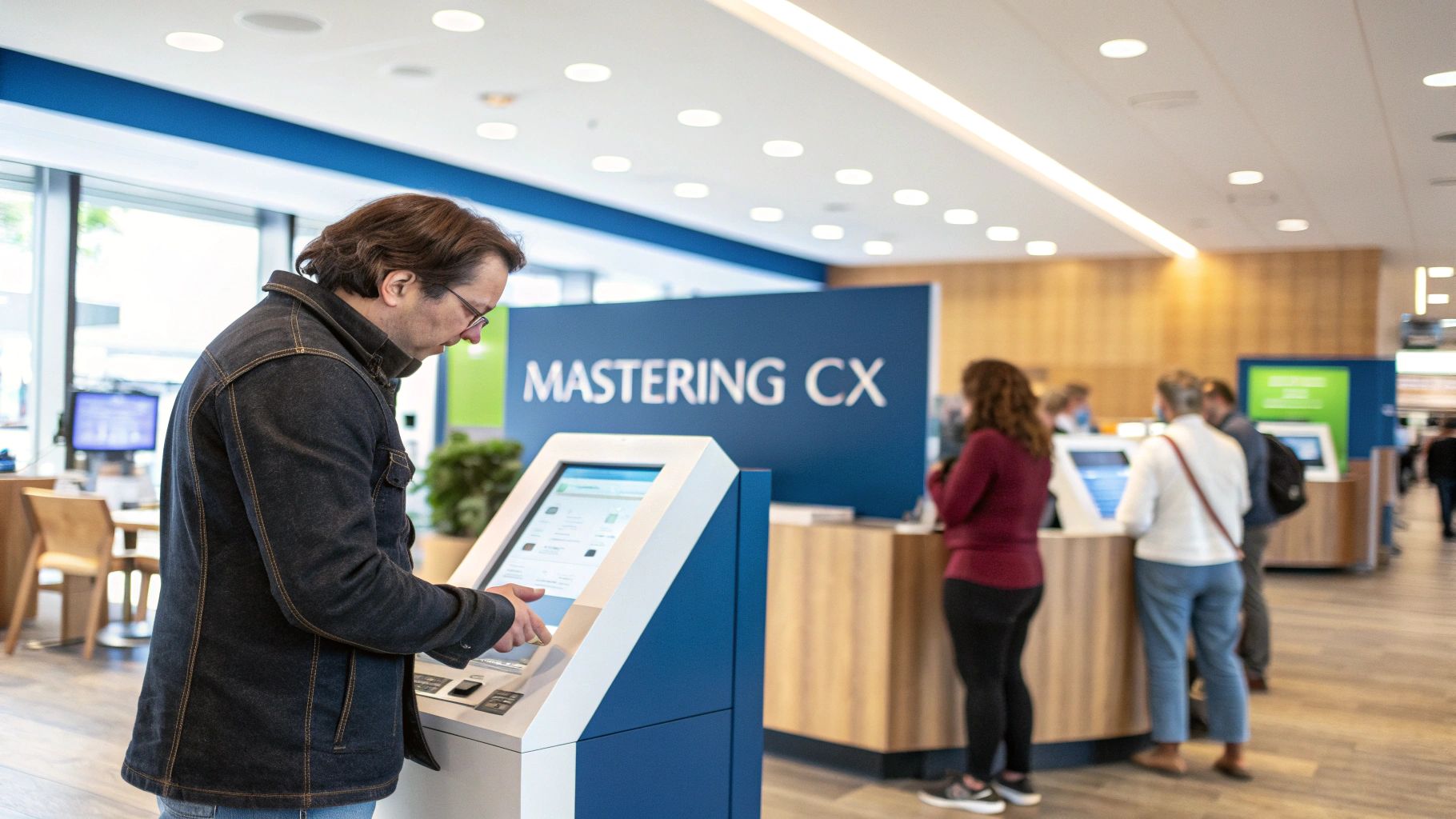
Mastering the Customer Experience in the Banking Industry

Brian's Banking Blog
Mastering Banking Performance Metrics: A Guide for Executives

Brian's Banking Blog
Mastering Operations in the Banking Industry for Strategic Advantage

Brian's Banking Blog
Analytics for Banking That Drive Data Intelligence

Brian's Banking Blog