
API Security Testing Tools: 10 Options for Banks in 2026
Brian's Banking Blog
Your API inventory is a board-level risk. Consider a mid-sized bank with 1,200 API endpoints, roughly 15% undocumented, and a core banking integration a partner team exposed last quarter, a hypothetical scenario that illustrates the stakes of securing warehouse and CRM integrations. Standard scanners could flag obvious configuration gaps while missing the authorization flaw that lets a legitimate customer read someone else's account.
The board's question isn't whether technology staff bought a scanner. It's whether management can demonstrate that customers, employees, partners, and service accounts stay within their permitted boundaries. A successful login proves identity, not permission to view a balance, change payment instructions, or retrieve restricted loan information.
Fund evidence of enforced business boundaries, not a rising count of scanned endpoints.
The strongest API security testing tools serve different operating models. Some help developers enforce API contracts before release; others discover unmanaged interfaces, automate cross-role tests, or support a specialist investigating a complex lending workflow. Buying the wrong category leaves either a coverage gap or a maintenance obligation your staff can't sustain.
Choose according to the team that will operate the tool and the evidence risk officers need to review. The options below distinguish specification-led development, continuous authorization testing, inventory recovery, specialist assessment, and enterprise governance. None removes management's responsibility to define the bank's access rules.
1. 42Crunch
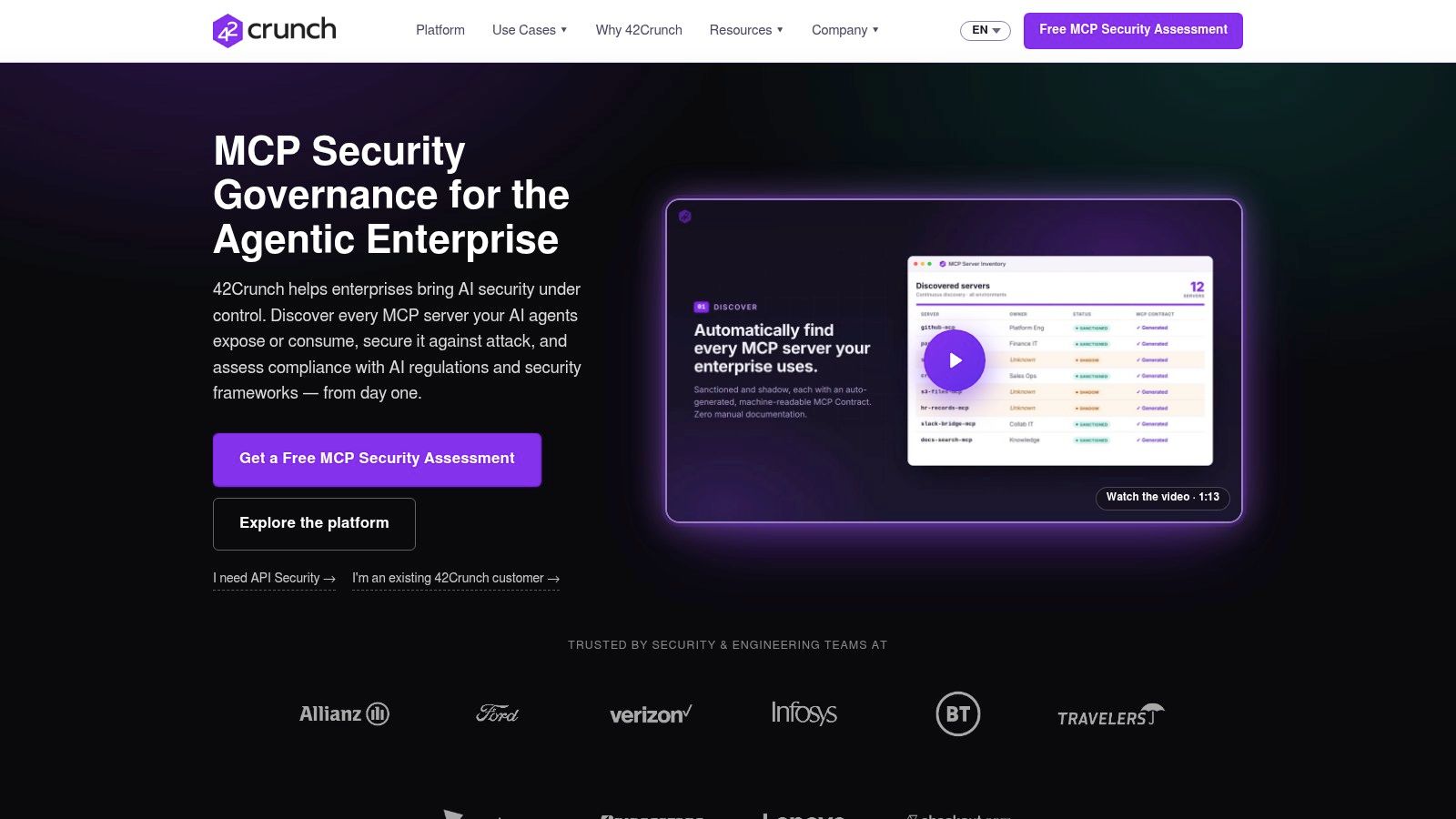
Best for specification-led development teams. Choose 42Crunch when developers maintain OpenAPI definitions as controlled engineering assets. Its combination of static contract analysis and dynamic testing helps teams identify design weaknesses before release and check whether running services behave consistently with their definitions.
That's useful for a bank standardizing customer-data services across mobile, CRM, and partner channels. Developers can examine declared authentication requirements, then test the deployed implementation rather than treating an approved specification as proof of security.
Fund contract ownership alongside the platform
42Crunch offers security and quality checks for OpenAPI contracts, IDE integrations, and CI/CD security gates. Standalone tools support individual-definition evaluation, while broader team deployment can require a paid plan or sales engagement.
- Primary advantage: Developers can address contract weaknesses before they become production defects.
- Operating constraint: Stale or incomplete specifications undermine coverage.
- Governance requirement: Retain the contract version, scan configuration, findings, and remediation evidence for each controlled release.
Don't mistake contract compliance for complete authorization assurance. A service can follow its schema and still return another customer's records.
Assign an API owner to maintain definitions and an application-security specialist to design cross-user tests. Pair the implementation review with secure REST API practices using JWT, but require evidence that the service enforces permissions after validating the token. That staffing commitment belongs in the funding decision.
2. APIsec
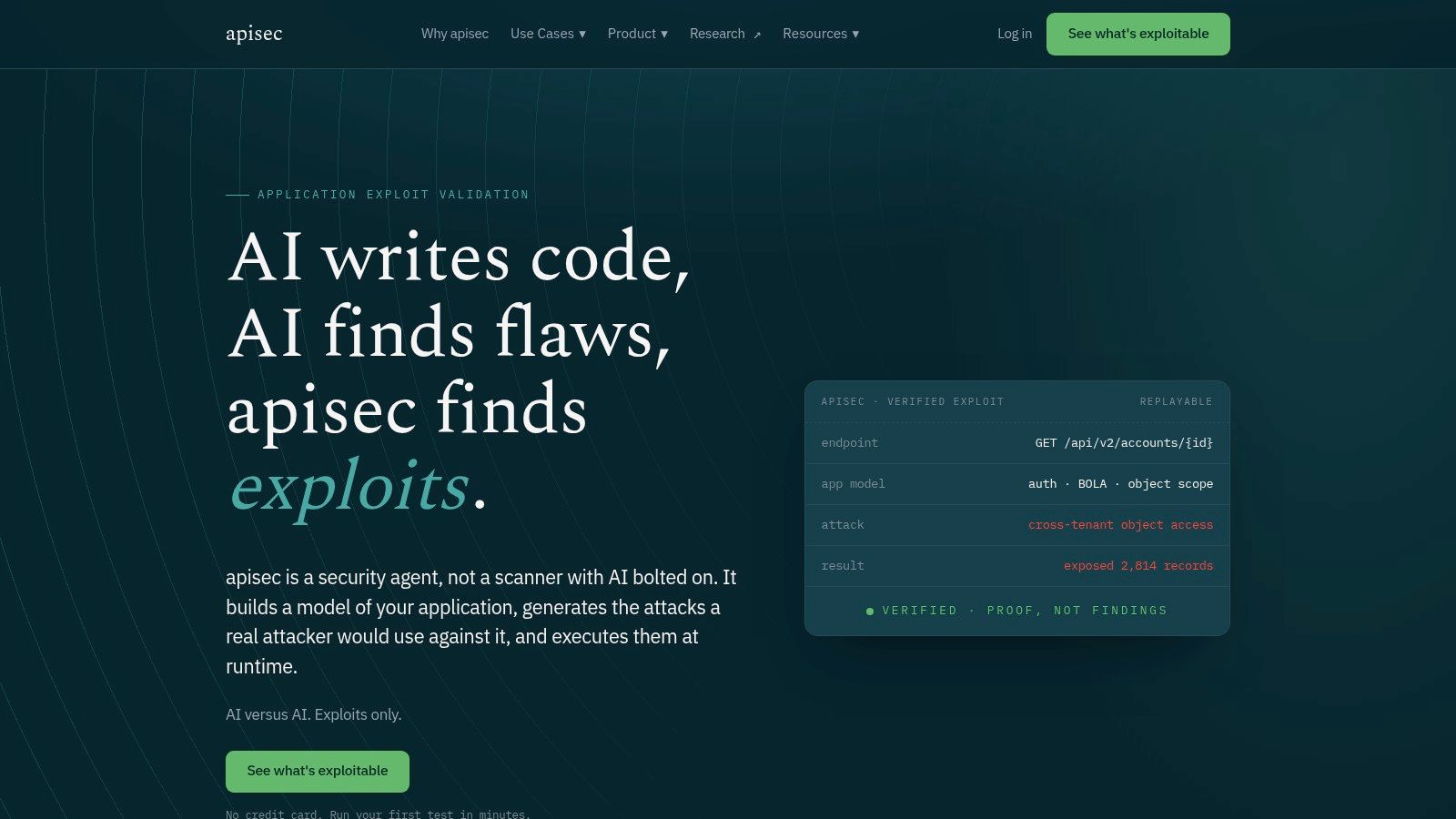
A customer changes an account identifier in a valid request and receives someone else's statement. That's the authorization failure to use when evaluating APIsec, which focuses on automated API security validation, including business-logic attack simulations, broken object-level authorization, and role-based access checks.
Choose it for teams ready to automate explicit access rules. Its API-specific focus makes it a strong candidate when conventional scanning leaves unanswered questions about customer separation, employee privileges, and partner permissions.
Make the bank's permission model the acceptance test
APIsec provides continuous testing, with CI/CD and ticketing integrations on higher plans. Hosted agents support private API testing, and custom-priced on-premises options address deployment requirements.
The commercial model is organized around endpoint counts, so inventory growth matters to budgeting. Use the free evaluation tier to establish test quality, then price the actual deployment scope, integrations, and customization rather than extrapolating from a narrow demonstration.
Procurement test: Require the vendor to demonstrate a prohibited cross-customer request, explain the authorization expectation, and reproduce the finding after remediation.
Automation still needs business context. Security staff must supply representative identities, resource ownership, and expected outcomes; otherwise, generated tests can misinterpret legitimate sharing or overlook a restricted workflow.
Use Visbanking's explanation of API security to align business and technology stakeholders on those boundaries. Fund a named test owner, not merely a subscription, and require reproducible evidence suitable for independent review.
3. StackHawk
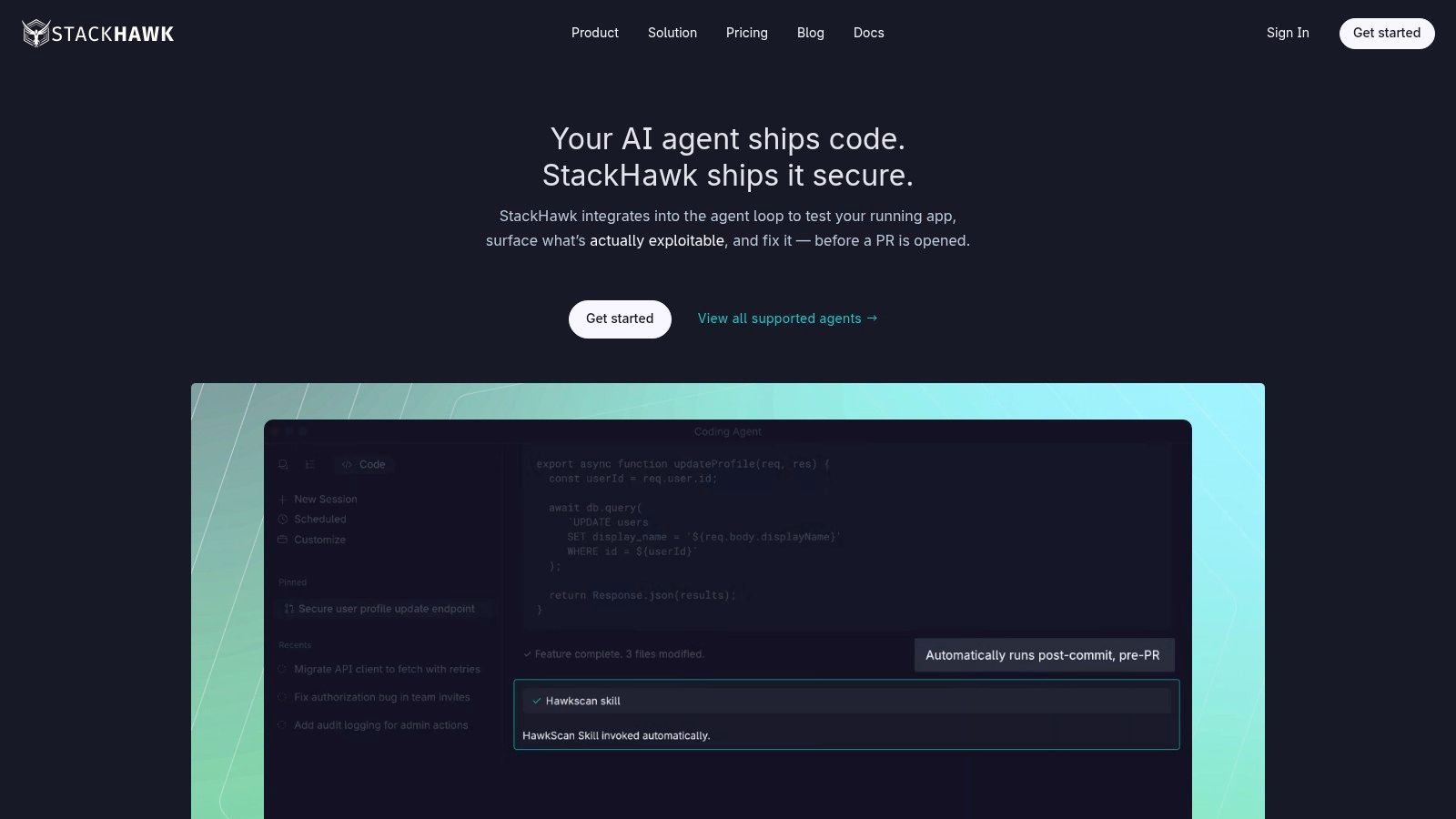
StackHawk fits banks whose development teams can own security testing inside their delivery pipelines. Its developer-focused dynamic application security testing, or DAST, scans running applications and APIs, with discovery, authenticated scanning, findings triage, and multi-user business-logic testing.
Recommend it when security findings need to reach the engineer changing the service, not wait in a separate assessment queue. Don't select it as a substitute for specialist manual investigation.
Put release ownership with engineering
For a lending API, configure customer, relationship-manager, and administrator profiles against realistic test records. Verify that changing the profile changes permitted actions, including access to restricted underwriting fields and administrative functions.
- Workflow strength: Local and CI/CD execution supports testing during development.
- Coverage strength: Discovery and authenticated scanning help identify what the team exercised.
- Budget constraint: Scale pricing is quote-based, so assess the full deployment rather than assuming an entry configuration covers enterprise needs.
The necessary staff include a pipeline owner and a security reviewer who understands authentication and custom workflows. Developers must maintain test credentials, seed data, and expected authorization outcomes as the application changes.
For governance, require evidence that release gates distinguish actionable failures from informational findings. A consistently ignored gate adds operational friction without improving control effectiveness.
StackHawk is the right choice when engineering leaders accept this ownership. If the bank lacks reliable staging environments or delivery automation, fund those foundations before expanding scanning.
4. Akto
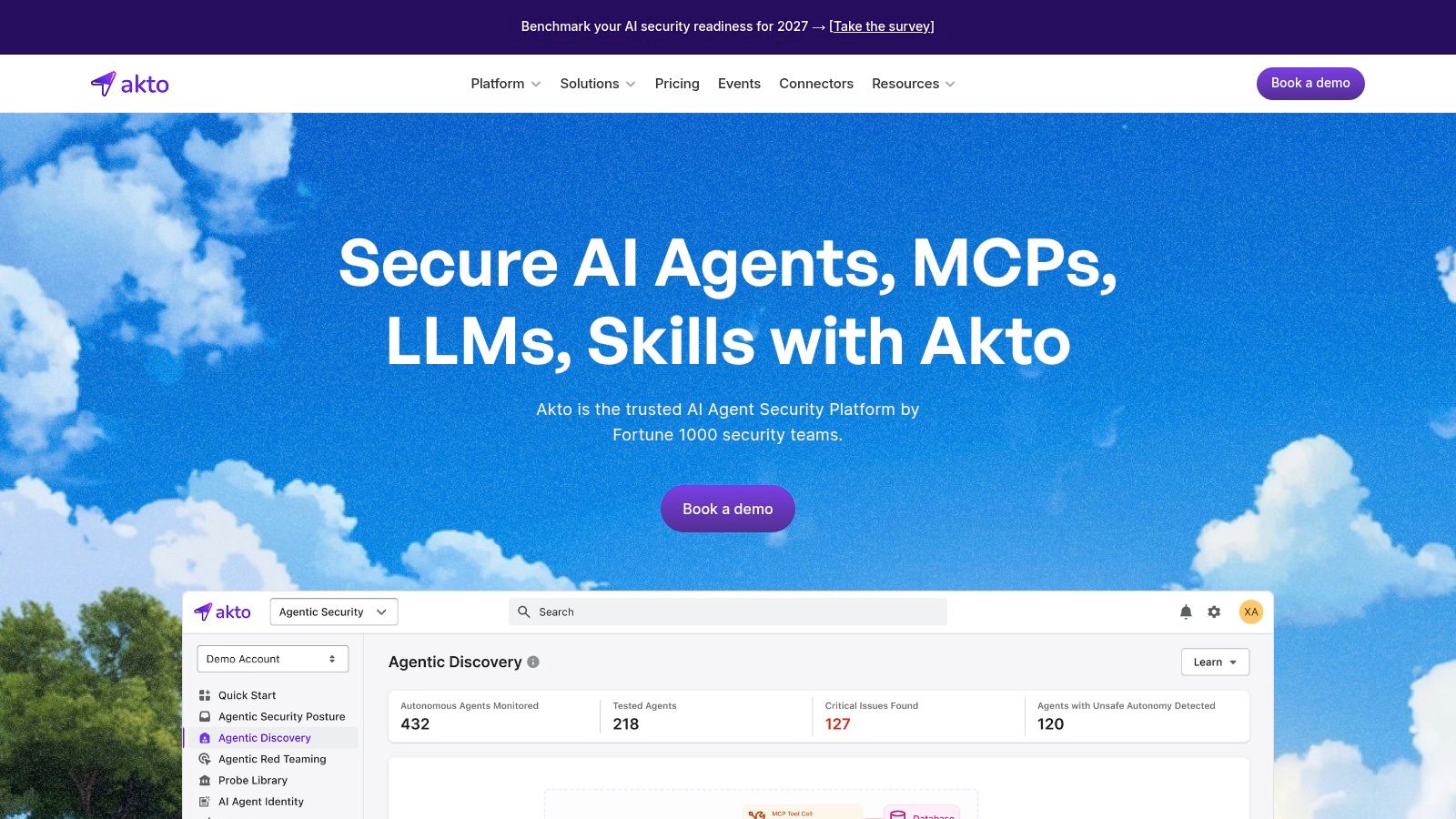
Recover the inventory before claiming coverage. Akto combines API discovery with security testing and offers open-source and commercial paths. Recommend it for banks where teams disagree about which interfaces exist, who owns them, or which partner integrations remain active.
Discovery matters because an undocumented service will not appear in a specification-led test program. An unrecorded interface between a mobile channel and a core system can let one customer reach another's data while sitting outside every declared scope. Akto's test library and custom-test support let teams turn discovered behavior into repeatable security checks, including authorization cases between customer, staff, and partner roles.
Treat traffic access as a controlled privilege
The professional offering includes CI/CD and Jira integrations. Its commercial plans scale with endpoint volume, so ask for the tier that matches your inventory and monthly test load rather than assuming a base configuration covers the estate.
Before deployment, security and privacy staff should establish how the selected configuration handles request bodies, response content, credentials, and retention. Capturing banking traffic without those controls creates another sensitive-data repository that regulators will ask you to justify. The wider the traffic access, the stricter those controls must be.
- Choose open source: when platform engineers can operate, update, and support the deployment.
- Choose commercial support: when integration assistance and vendor accountability outweigh self-management savings.
- Require ownership: assign every discovered endpoint to an accountable application team before counting it as a governed asset.
Professional pricing requires a scoped proposal, not reliance on a simple public rate. Cover deployment model, capacity, support, and data handling in the request so procurement compares like for like.
For defensible reporting, keep discovered, authenticated, actively tested, and remediated endpoints as separate statuses. Combining them into a single coverage figure overstates assurance to the board and to examiners.
5. Escape
A banker opens a customer record in a browser, follows a loan workflow, and triggers API calls absent from the maintained specification. Escape addresses this kind of visibility problem through API and web-application DAST, including API traffic captured during browser exploration.
Choose Escape for application-security teams that need to explore API behavior beyond schema-only scanning. Its business-logic emphasis, REST and GraphQL documentation, coverage analysis, CLI, and public API support automated assessment of complex application paths.
Separate discovery from active assurance
A captured endpoint isn't necessarily an actively tested endpoint. Require coverage reports that identify which operations received security checks, which required authentication, and which remained outside the scan.
Some scan modes can send data-mutating requests. For banking workflows, that means testing against synthetic accounts, controlled partner services, and environments where payment or consent changes can't affect customers.
A scanner must never discover its production safety boundaries by crossing them.
Escape's custom-scoped pricing calls for a concrete evaluation workload. Include authentication setup, browser exploration, scan controls, evidence export, and remediation verification in the commercial discussion.
The staffing requirement is an application-security operator working with the business-process owner. The operator manages scan scope; the process owner explains why an apparently valid sequence might violate consent, approval authority, or workflow state.
For directors, the relevant evidence is not browser activity captured. It's proof that the bank tested prohibited actions and recorded safe, repeatable outcomes.
6. OWASP ZAP
OWASP ZAP is the budget-conscious choice for technically capable teams, not a substitute for security staff. The free, open-source tool supports API scanning from OpenAPI, SOAP, and GraphQL definitions, alongside active and passive scanning, proxy capabilities, and automation.
Use it to establish repeatable baseline checks or to support a team that wants direct control over its scanning infrastructure. Docker-based execution and API automation make it adaptable to CI/CD workflows.
Save on licensing, budget for operation
ZAP shifts spending from subscription fees to engineering time. Someone must configure authentication, tune scans, manage infrastructure, maintain add-ons, and interpret findings.
- Strong fit: A bank with security engineering capacity and stable test environments.
- Weak fit: A thinly staffed team expecting unattended, business-aware assurance.
- Critical limitation: Automated active scanning doesn't establish that custom access-control logic is correct.
For example, a scan might identify an injection weakness in an account-search endpoint without determining whether a relationship manager can retrieve records outside an assigned portfolio. That second question needs explicit identities, ownership rules, and negative tests.
Require version-controlled scan configurations, documented exclusions, retained findings, and independent verification of important fixes. These practices make an open-source deployment reviewable.
Choose ZAP when management is willing to fund that operating discipline. A free license with no accountable operator is an unfunded control, not a savings achievement.
7. Burp Suite
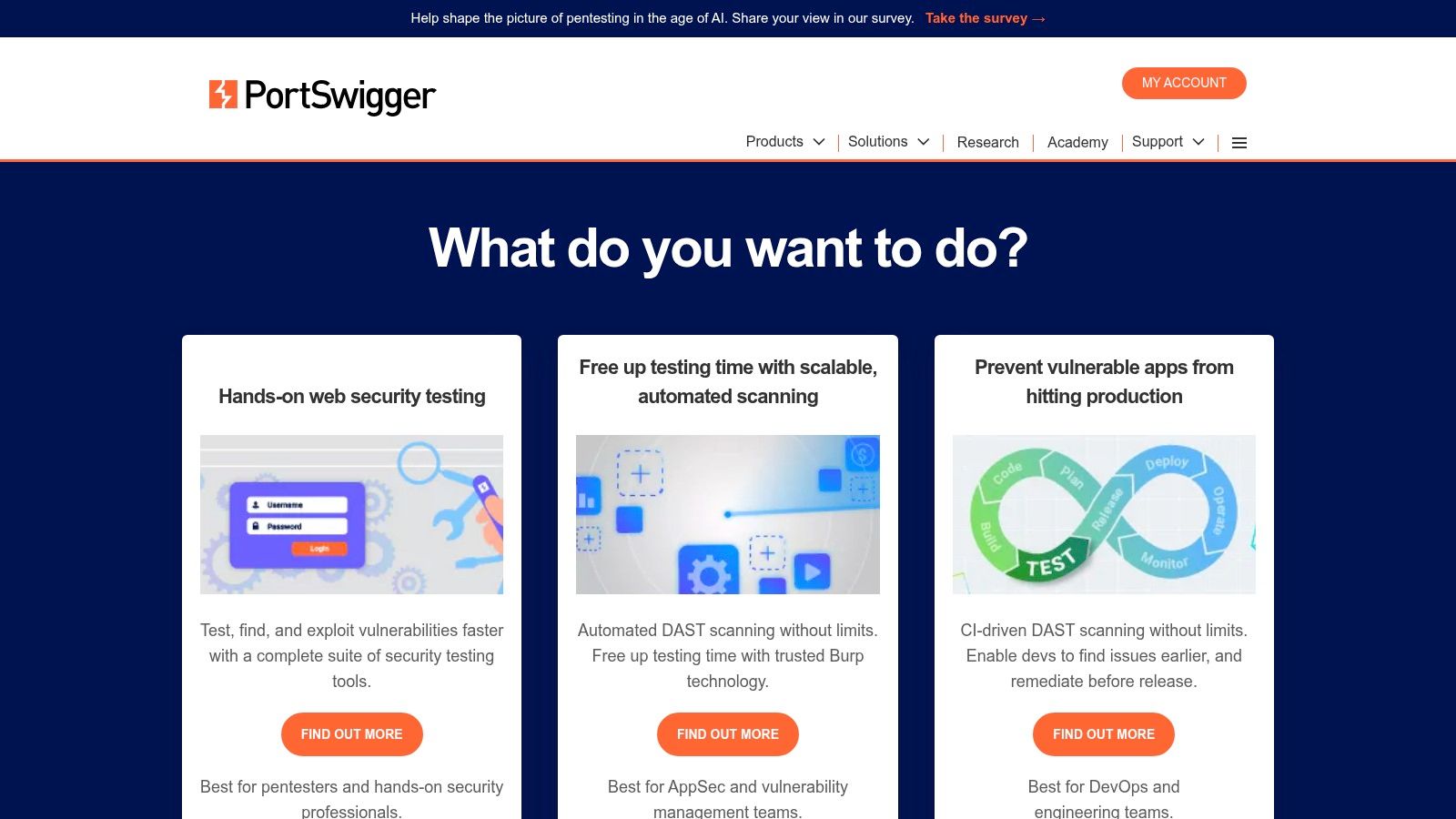
Choose Burp Suite for specialist investigation. Its intercepting proxy lets testers inspect, modify, replay, and manually probe requests. Professional and DAST products add automated scanning, while applicable API scanning supports basic authentication, bearer tokens, and API keys.
A skilled tester can hold the request constant, change the identity or resource identifier, and inspect whether the bank enforces the intended boundary. That's valuable when a workflow involves delegated authority, joint ownership, or different employee entitlements.
Buy expertise with the toolkit
The OWASP API security announcement identifies access control in three of the five highest-ranked risks in its 2023 list. Burp's value is the specialist's ability to investigate those boundaries beyond generic vulnerability signatures.
Capabilities differ across Community, Professional, and DAST editions. Professional requires a paid subscription, while enterprise DAST pricing is quote-based; select the edition around the operating model.
- Manual assessment: Fund an experienced tester and access to business-process owners.
- Finding validation: Preserve sanitized requests, responses, identity context, and expected authorization decisions.
- Regression protection: Convert confirmed abuse cases into repeatable tests after remediation.
Burp is not the economical answer for an unstaffed continuous-testing program. It is a strong choice for deep assessment of high-exposure APIs and independent validation of automated findings.
For regulatory defensibility, require test scope and exclusions alongside the report. Specialist depth matters, but directors still need to know what wasn't examined.
8. Invicti
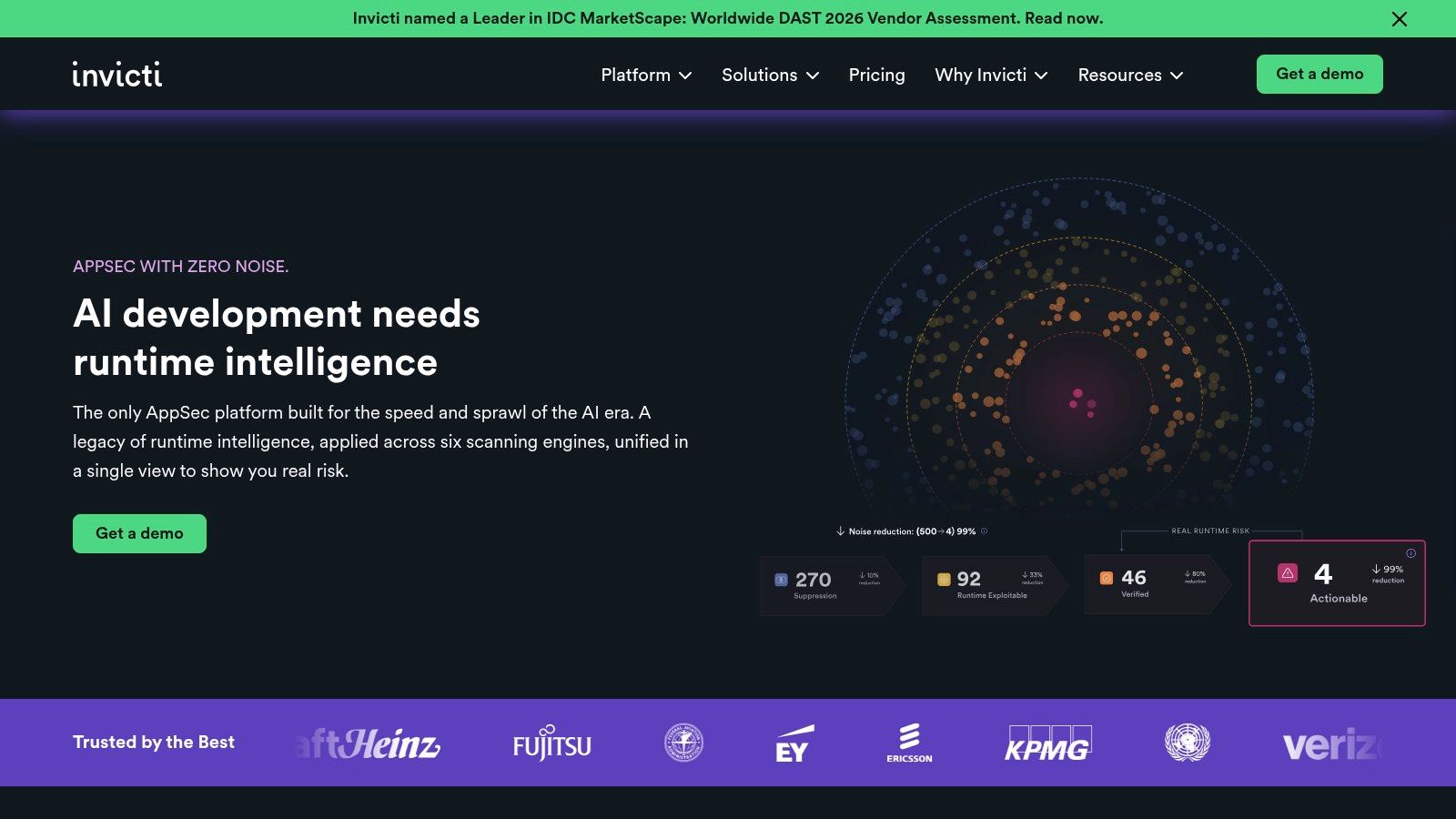
Banks consolidating application-security governance should evaluate Invicti. Its commercial DAST and AppSec platform combines web and API testing, API discovery, definition imports for REST, SOAP, and GraphQL, and delivery and issue-management integrations.
Choose it when central security staff need to coordinate scanning across application portfolios. Don't pay for a broader platform merely to scan a narrow API estate that a smaller team can govern effectively.
Consolidate reporting without flattening risk
Proof-based findings can help reviewers validate vulnerabilities and prioritize triage. Proof-of-concept licenses support evaluation before a larger commitment.
The acceptance test should still include bank-specific authorization scenarios. Confirm that a customer can't invoke staff functions, a partner can't exceed its delegated scope, and a valid user can't retrieve restricted object properties.
- Funding case: Centralized web and API DAST can reduce fragmented administration.
- Staffing case: A platform administrator must coordinate onboarding, credentials, scan policy, and remediation routing.
- Trade-off: Broader AppSec capabilities add scope and administration that a lightweight API-only program may not need.
Pricing depends on package and scope. Require a proposal tied to the bank's application inventory, reporting requirements, and support expectations.
Use Visbanking's API security solutions guidance to connect technical testing with release controls and authorization evidence. For governance, insist that portfolio reports distinguish confirmed vulnerabilities, coverage gaps, accepted exceptions, and overdue remediation rather than presenting a reassuring aggregate score.
9. Bright Security
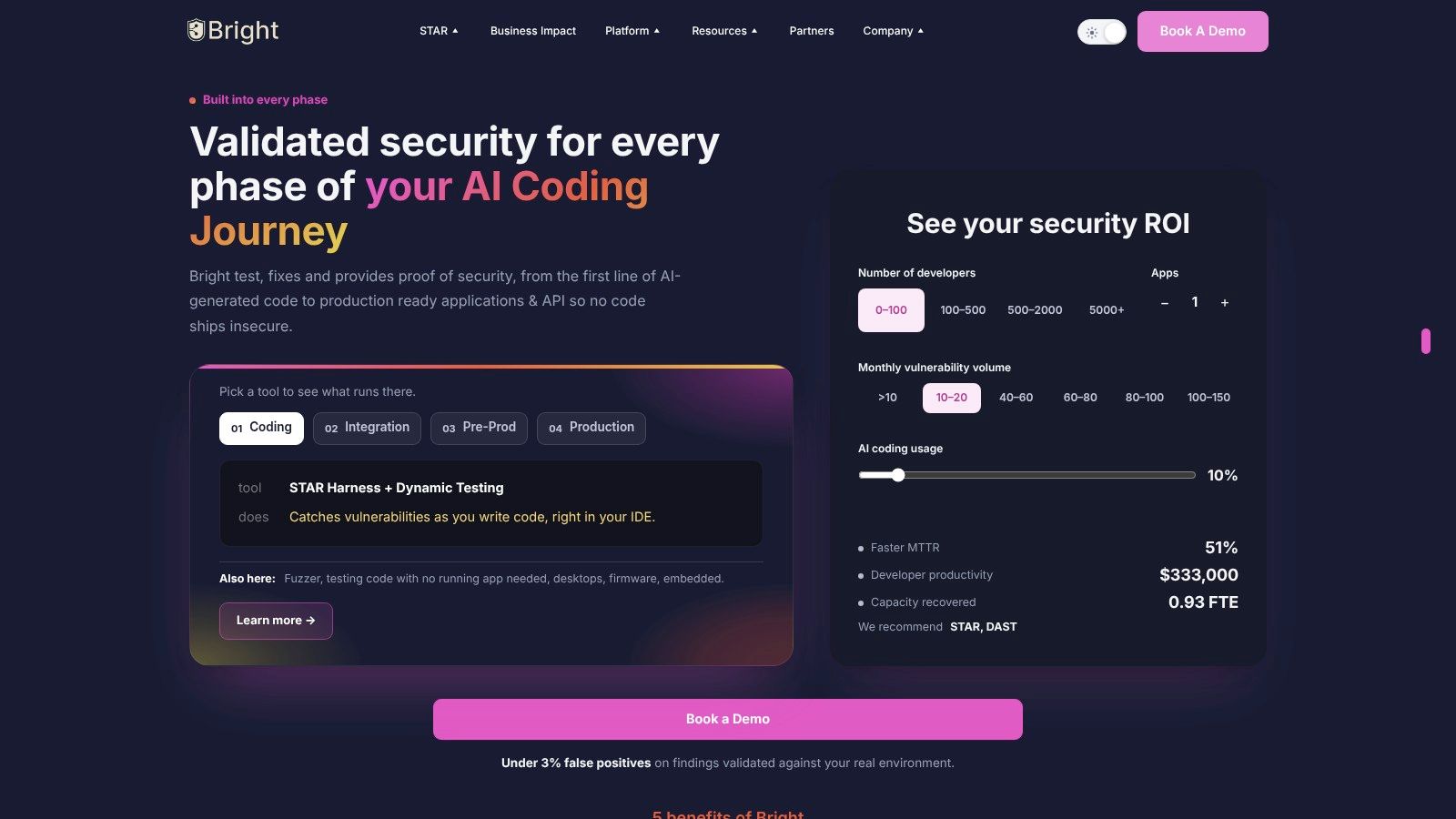
Your developers already maintain Postman collections and OpenAPI files. Bright Security offers a practical route from those assets to repeatable API scanning, with application DAST, CLI and API integrations, and code-based scan configuration.
Recommend it for development teams that want security checks embedded in familiar delivery workflows. Its documented authentication support includes JWT, OpenID Connect, and OAuth, alongside support for REST, SOAP, GraphQL, and other API types.
Authenticate successfully, then challenge permission
Getting the scanner past login is only the setup step. Require separate tests for customer ownership, employee authority, partner scope, and workflow state.
For a consent API, test whether a revoked authorization remains unusable across downstream calls. A successful token exchange doesn't establish that the application honors the customer's current consent.
- Operational advantage: Existing definitions and collections can support scan setup.
- Delivery advantage: CI-oriented execution supports repeatable development checks.
- Coverage limitation: Complex authorization and business logic still need manual or purpose-built tests.
Obtain a scoped commercial proposal rather than budgeting around an assumed public rate. During evaluation, measure configuration effort, finding reproducibility, and the reviewer time needed to separate valid findings from noise.
Assign developers responsibility for maintaining collections and authentication setup, with security staff approving negative-test expectations. For audit review, retain scan inputs and evidence that important findings were retested successfully. Bright is a sound choice when those engineering assets already have accountable owners.
10. Probely
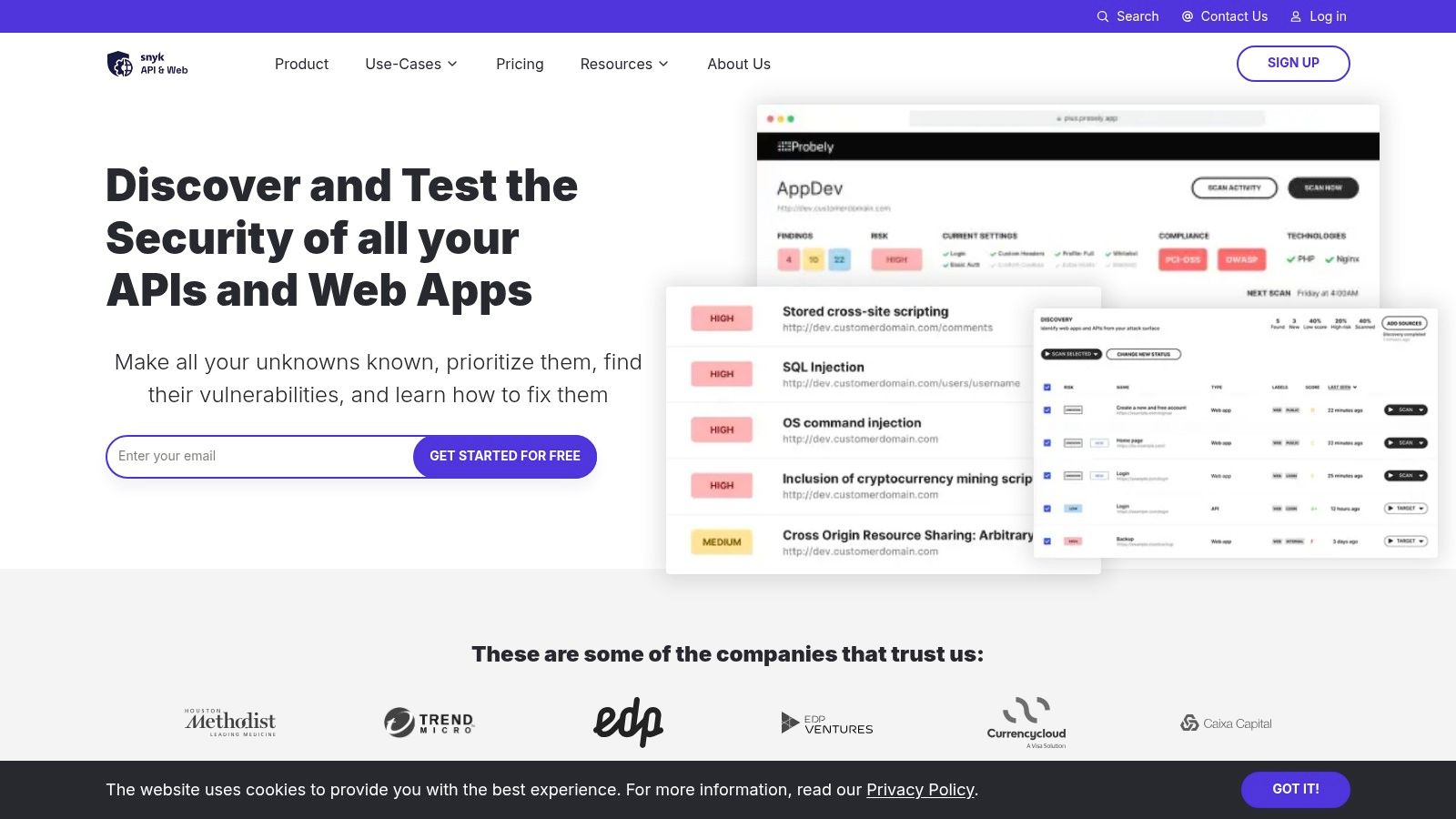
Probely suits teams moving from ad hoc scanning toward a managed web and API vulnerability program. It accepts Swagger/OpenAPI schemas and Postman collections and supports authenticated targets.
Its free evaluation path lowers the initial commitment, while enterprise capabilities include internal scanning agents, SSO, integrations, compliance-oriented reporting, and expanded user and target management. That combination merits evaluation when the bank needs a manageable scanner without immediately adopting a broader AppSec suite.
Evaluate the enterprise operating model
The free plan offers a limited monthly scanning allowance, so use it for a focused technical evaluation rather than treating it as a complete testing program. Enterprise pricing is custom, so request a scoped proposal sized to the bank's actual target count and scan frequency before committing budget.
Before procurement, ask the operating team to demonstrate onboarding, credential renewal, finding assignment, remediation verification, and report export. These routine tasks determine whether the program stays current after implementation. A scanner that stalls on credential renewals or buries findings in triage queues will fail an audit trail review regardless of its detection quality.
- Best use: Baseline authenticated web and API scanning with managed reporting.
- Staffing requirement: An accountable scan owner and developers available to resolve findings.
- Acceptance condition: Demonstrated coverage of the bank's own authorization and business-logic scenarios.
Compliance-oriented reports can organize evidence for examiners; they do not certify that every relevant control works. Test restricted fields, prohibited functions, cross-customer access, and state-changing operations explicitly, and record the results as separate evidence rather than folding them into automated scan output.
Choose Probely when its administration and reporting fit the team's capacity and the assigned staff can sustain it. Fund specialist testing where authorization complexity exceeds demonstrated scanner coverage, and include that complementary work in the approved budget rather than treating it as an afterthought.
How the 10 Tools Compare on Pricing, Entry Cost, and Fit
Published pricing matters more to a bank than a low sticker figure. A tool with transparent tiers lets a small team start an evaluation without procurement friction, while quote-based pricing is fine for an enterprise purchase provided the proposal is scoped to the bank's API inventory and authorization-test requirements. Free tiers and open-source paths have a different role: they prove fit before budget is committed, they do not constitute a testing program.
| Item | Pricing Transparency | Free or Open-Source Path | Best Fit for Banks | Main Trade-Off |
|---|---|---|---|---|
| 42Crunch | Published pricing supports small-team evaluation; larger plans may require sales | Free standalone tools for individual API definitions | Banks using maintained OpenAPI specifications and CI/CD security gates | Works best with current API specifications and complements broader security testing |
| APIsec | Published endpoint-based pricing; larger inventories may be costly | Free tier for evaluation | Banks needing automated API and authorization-boundary testing | Automated authorization findings need validation against bank-specific access rules |
| StackHawk | Scale pricing is quote-based | No free tier listed; confirm with vendor | Banks embedding runtime API testing into developer workflows | Findings need review, and larger-scale pricing is not public |
| Akto | Professional tier pricing is not published; contact sales for scope | Open-source self-management path | Banks seeking API discovery and customizable tests | Requires ongoing inventory maintenance and review of sensitive data handling |
| Escape | Custom-scoped pricing | No free tier listed; confirm with vendor | Banks testing API behavior and business logic beyond schema checks | Scan scope needs careful configuration, especially for data-mutating requests |
| OWASP ZAP | Free | Free and open source | Banks with security expertise and capacity to manage scanning workflows | Requires tuning and expertise; automated scans may miss logical access-control flaws |
| Burp Suite | Professional is subscription-based; enterprise DAST is quote-based | Community edition available | Banks needing hands-on API assessment and detailed investigation | Manual testing takes expertise and time; features vary by edition |
| Invicti | Quote-based pricing depends on package and scope | Proof-of-concept licenses available | Banks consolidating web and API DAST within a broader AppSec program | Broader platform may exceed API-only needs; review authorization depth |
| Bright Security | Quote-based; request a scoped commercial proposal | No free tier listed; confirm with vendor | Banks integrating API scans from specifications or collections into development workflows | Validate scan depth and false positives; complex authorization may need manual tests |
| Probely | Free plan available; enterprise pricing is custom | Free plan with limited scanning time | Banks seeking API scanning with enterprise integrations and compliance reporting | Free scanning is limited, and complex business logic needs coverage validation |
Two patterns in the table should drive the shortlist. Tools with published pricing and a free path (42Crunch, APIsec, ZAP, Burp Suite, Probely) carry the lowest entry cost and suit teams proving value before requesting budget. Quote-based platforms (Escape, Invicti, Bright Security) fit institutions ready to fund a scoped enterprise contract. In both cases, the trade-off column is the cost line that matters: every tool here requires either specification upkeep, finding review, or supplementary manual testing to cover cross-customer access and prohibited business functions, and that staffing belongs in the approved budget alongside the license.
Choose by Risk Profile, Then Prove the Value
Start with the highest-exposure APIs: payments, account access, lending workflows, consent services, and partner integrations. Match the tool to the team that will run it, not to the longest feature list. Small teams with clean OpenAPI specifications can begin with focused free or open-source options, provided they fund configuration and maintenance.
Institutions with broader governance needs should weigh enterprise DAST platforms against their reporting, access-management, and remediation requirements. Teams investigating complex permissions need specialist testing alongside automation. No tool should pass procurement solely because it imports a schema and produces a vulnerability report.
Board standard: Management should demonstrate the prohibited business action, the control that prevents it, and the evidence retained after retesting.
Require a controlled evaluation using synthetic banking records and representative customer, employee, partner, and service identities. Include cross-customer reads, privileged-function calls, restricted-field access, revoked consent, and invalid workflow transitions. Test negative outcomes deliberately rather than inferring security from successful functional tests.
Financial exposure belongs in that evaluation. The OWASP resource-consumption guidance supports testing downstream service costs; in a hypothetical scenario, an endpoint triggering a $0.02 SMS per request creates $20,000 of exposure across 1,000,000 abusive requests. A bank should therefore assess vendor charges and transaction effects alongside latency, resource use, and error handling.
Build an investment case directors can challenge
Ask management to report authenticated coverage, tested authorization boundaries, unresolved exceptions, remediation ownership, and successful retests. Separate discovery from active testing and continuous monitoring from intentional abuse-case validation. An alerting platform can identify suspicious behavior without proving that the application will reject it.
Fund the full operating model: licensing, implementation, test environments, identity provisioning, engineering maintenance, specialist review, and evidence retention. Establish who approves release exceptions and who accepts residual risk. Regulatory defensibility comes from an accountable process and reproducible evidence, not a product badge.
Before committing budget, benchmark the bank's security and technology posture against peers using comparable internal control information. Use financial peer intelligence to add business context, not to infer another institution's API security maturity from its financial statements.
Visbanking's Bank Performance app supports peer benchmarking across 4,600+ institutions, while Bank Intelligence surfaces risk and performance signals with automated alerts. Combine that context with internal API ownership, workflow exposure, and control evidence to explain why a particular investment deserves priority.
The decision should be clear: which business boundary needs protection, which team can operate the tool, and what evidence will demonstrate improvement. Approve the platform that answers those questions, then hold management accountable for the results.
Visbanking brings financial, regulatory, market, and people data together to support peer benchmarking and better-informed banking decisions. Connect that business context to your internal API risk evidence so funding follows the workflows and exposures that matter most. Visit Visbanking to explore the data and benchmark your institution.
Latest Articles

Brian's Banking Blog
Bank Shares Performance: Metrics That Drive Returns
Brian's Banking Blog
Help to Identify Bank Prospects and Risk Signals
Brian's Banking Blog
HMDA Data Reporting: How to File Without Costly Errors

Brian's Banking Blog
Talent Market Intelligence: A Guide for Bank Leaders

Brian's Banking Blog
Bank Loan Performance: Metrics, Formulas and Benchmarks
Brian's Banking Blog