
Community Wide Development Strategies for Growth
Brian's Banking Blog
The Ripple Effect of Community Wide Initiatives

Community wide initiatives, when done right, can create a powerful ripple effect. They transform neighborhoods and build a sense of shared responsibility. This goes beyond individual programs, sparking positive change across different areas. These initiatives rely on partnerships and shared ownership for lasting impact.
This collaborative approach helps community members feel more invested in the outcome. It's about working together towards a common goal.
For example, a single program to improve youth literacy is valuable, but its impact is limited. A community wide initiative, however, can change everything. Imagine literacy programs across schools, libraries, and community centers. Add in involved parents and business partnerships, and suddenly, there's a powerful support system. This interconnectedness helps tackle complex challenges.
The Importance of Community-Driven Development
One key element of community wide development is Community-Driven Development (CDD). These programs, often backed by groups like the World Bank, empower communities to address their specific needs. CDD has a proven track record of improving access to crucial services. Think clean water, healthcare, and education – all essential for a thriving community.
In 2023, CDD programs were recognized for providing cost-effective solutions with strong local backing. These programs are vital for reducing poverty and ensuring sustainable development.
Community wide initiatives also tackle larger, systemic problems more effectively than isolated projects. Take economic inequality, for instance. One job training program can only do so much. But a community wide effort that combines job training, affordable housing, and access to financial services creates a much stronger solution. This multi-pronged strategy addresses the underlying causes of inequality and encourages long-term economic stability.
The Power of Collective Ownership
Successful community wide initiatives depend on everyone’s participation. Residents, businesses, local government, and non-profits all have a role to play. When everyone is invested in the shared goals, they’re more likely to dedicate their resources, skills, and time. This boosts the initiative's effectiveness and strengthens the community as a whole. It fosters a shared sense of responsibility.
Measuring Community Wide Impact
Measuring the true impact of these initiatives requires a broader perspective. Individual program results are important, but we also need to look at changes across the entire community. This includes things like increased civic engagement, better public health, and stronger social connections. These wider indicators provide a more comprehensive view of an initiative's success. By looking at these various factors, we can truly understand the lasting benefits of working together.
COMMUNITYWIDE FCU: A Blueprint for Local Prosperity

Since 1967, COMMUNITYWIDE FCU has served as a cornerstone of the South Bend community. It's more than just a place to deposit checks; it's a vital resource for its 70,999 members across 11 branches. This growth speaks volumes about their commitment to putting the community first. Overseen by the NCUA, this member-owned institution has consistently prioritized the financial well-being of its members and the South Bend area as a whole. For a broader perspective on the vital role community banks play, take a look at this article: The Role of Community Banking in Local Economies.
The Power of Multiple Common Bonds
COMMUNITYWIDE FCU operates under a "Multiple common bond – other" model. This inclusive approach allows them to serve diverse segments of the community, fostering a sense of shared prosperity. Connecting individuals from various backgrounds strengthens the overall fabric of South Bend.
This diverse membership model also enables COMMUNITYWIDE FCU to offer a wider range of financial products and services. These offerings are tailored to meet the unique needs of their diverse membership.
Financial Strength and Member Benefits
COMMUNITYWIDE FCU maintains a "well capitalized" status. This is evident in their 13.03% net worth ratio and total assets exceeding $837 million. This strong financial foundation provides tangible benefits for members.
It allows them to offer competitive interest rates on savings accounts and loans. They are also able to invest in advanced technology and improved services for their members. This financial stability ensures COMMUNITYWIDE FCU can continue serving its members effectively, even during economic downturns.
Governance Focused on Community Needs
Unlike traditional banks focused on shareholder profits, COMMUNITYWIDE FCU prioritizes the needs of its members. Their governance structure ensures that decisions are made in the best interests of the community.
Led by President Stephen Hart and CEO Andrew Burggraf, COMMUNITYWIDE FCU focuses on empowering members and reinvesting in local initiatives. This member-centric approach reinforces their commitment to community-wide prosperity. Their lending practices often cater to local businesses and community development projects, further demonstrating their dedication to South Bend’s growth.
Let's take a closer look at some key metrics:
The following table provides a snapshot of COMMUNITYWIDE FCU's financial health and operational efficiency. This data offers valuable insights into their performance and stability.
| Metric | Value |
|---|---|
| Net Worth Ratio | 13.03% |
| Total Assets | $837 million |
| Number of Members | 70,999 |
| Number of Branches | 11 |
As you can see, COMMUNITYWIDE FCU demonstrates a strong commitment to its members and the South Bend community. Their solid financial standing and community-focused approach position them as a key driver of local prosperity.
How Financial Institutions Drive Community Wide Growth
Community-centered financial institutions are essential for local economic growth. They serve as vital economic engines, supporting entire neighborhoods by providing the financial resources individuals and businesses need to thrive. Institutions like COMMUNITYWIDE FCU actively stimulate local business development, create pathways to homeownership, and facilitate wealth building with their $658 million loan portfolio.
Local institutions, such as COMMUNITYWIDE FCU, often prioritize relationship banking, taking the time to understand the specific needs of their members and the community. This differs significantly from the approach of national banks. This personalized approach allows them to offer financial products and services tailored to local businesses and individuals, fostering deeper connections and a more personalized banking experience. This localized focus allows reinvestment in the community, something larger national banks often don't do.
Additionally, these institutions recirculate money within the local economy. This generates a multiplier effect, where money loaned and spent locally creates further economic activity within the community. This strengthens small businesses and contributes to the financial health of families. This continuous cycle of local investment and spending builds a more resilient and prosperous community. Learn more about the vital role banks play in economic growth: How banks continue to play a key role in economic growth and wealth creation.
Community Impact and Financial Stability
COMMUNITYWIDE FCU’s strong capital position, reflected in its impressive 25.80% risk-based capital ratio, allows it to maintain stable services, even during economic downturns. This stability is especially crucial during challenging times when communities are most vulnerable and rely on the consistent support of their local financial institutions. This reliability provides a vital safety net for families and businesses facing financial hardship.
Furthermore, COMMUNITYWIDE’s member-ownership model fundamentally changes its relationship with the community. Unlike traditional banks focused on maximizing shareholder profits, COMMUNITYWIDE FCU prioritizes its members’ well-being. This member-centric approach ensures that decisions align with community needs, creating a more collaborative and mutually beneficial relationship between the institution and the individuals it serves. This fosters shared prosperity and reinforces the credit union's role as a true community partner.
Adapting to Broader Economic Trends
Community development is also influenced by larger economic shifts. For example, the housing market, demand for healthcare facilities, and e-commerce requirements shape community needs and development priorities. In 2024, market analysis showed a rising demand for healthcare and e-commerce spaces, impacting urban planning and infrastructure development. This highlights the dynamic nature of community development and the need for adaptability to changing economic conditions. Learn more about current trends: 2024 Market Trends in Community Development. This adaptability is key to ensuring development aligns with evolving community needs and improves overall quality of life. COMMUNITYWIDE FCU’s focus on community well-being allows it to respond effectively to these changing trends and continue providing relevant financial services that support the long-term prosperity of the South Bend area. They understand that a thriving community needs not just financial resources but also a commitment to understanding and addressing the evolving needs of its members.
Leveraging Data to Transform Community Wide Outcomes

Data plays a crucial role in understanding community needs and measuring the success of initiatives. Organizations are increasingly embracing data-driven strategies to improve community development. This allows them to move past assumptions and make a real impact.
Identifying True Community Needs Through Data
Data analysis helps reveal the true challenges a community faces. Instead of relying on guesswork, organizations can pinpoint specific areas needing resources. This targeted approach ensures programs and services align with actual community needs.
For example, data might reveal a lack of affordable childcare options. This insight can inform the development of targeted solutions like subsidized childcare programs. This ensures resources are used effectively and efficiently.
Additionally, data analysis can uncover disparities within communities. Examining demographic data can highlight inequities in healthcare, education, or economic opportunity. This knowledge is crucial for developing equitable and inclusive programs.
Measuring Real Progress with Meaningful Metrics
Tracking the success of community-wide initiatives requires meaningful metrics. These metrics should focus on actual impact, not just participation numbers. Measuring outcomes tells a more compelling story of true progress.
For instance, tracking the increase in high school graduation rates after a mentorship program is more impactful. This data provides a clearer picture of the program's effectiveness than simply counting participants. These metrics must be relevant to the community and their goals.
Adapting to Evolving Needs Through Performance Indicators
Analyzing performance indicators helps organizations understand program effectiveness. This allows them to adapt strategies as needed to best serve the community. For example, COMMUNITYWIDE FCU can analyze their -4.25% loan growth and 5.38% asset growth to identify areas for improvement.
These data points offer valuable insights into how their financial services impact the community. Serving their 70,999 members effectively requires ongoing evaluation and adjustment. This responsiveness ensures programs remain relevant and impactful.
Data Collection on a Budget and Building Community Narratives
Even with limited resources, organizations can collect valuable data through various methods. Surveys, community forums, and partnerships with local agencies can provide key information. This data can then be shared through compelling community stories.
These narratives can highlight the impact of community initiatives and build support. They can also encourage community involvement in future development efforts. Strong stories build strong communities.
The strategic use of data in community development is gaining global recognition. The UN World Data Forum emphasizes data's importance in achieving sustainable development goals. The 2024 forum focused on leveraging data to accelerate progress on the 2030 Agenda. This highlights the growing recognition of data's power to transform communities worldwide. By embracing data-driven approaches, organizations can create continuous improvement. This ensures initiatives remain relevant, effective, and impactful for the community.
Building Community Wide Financial Resilience
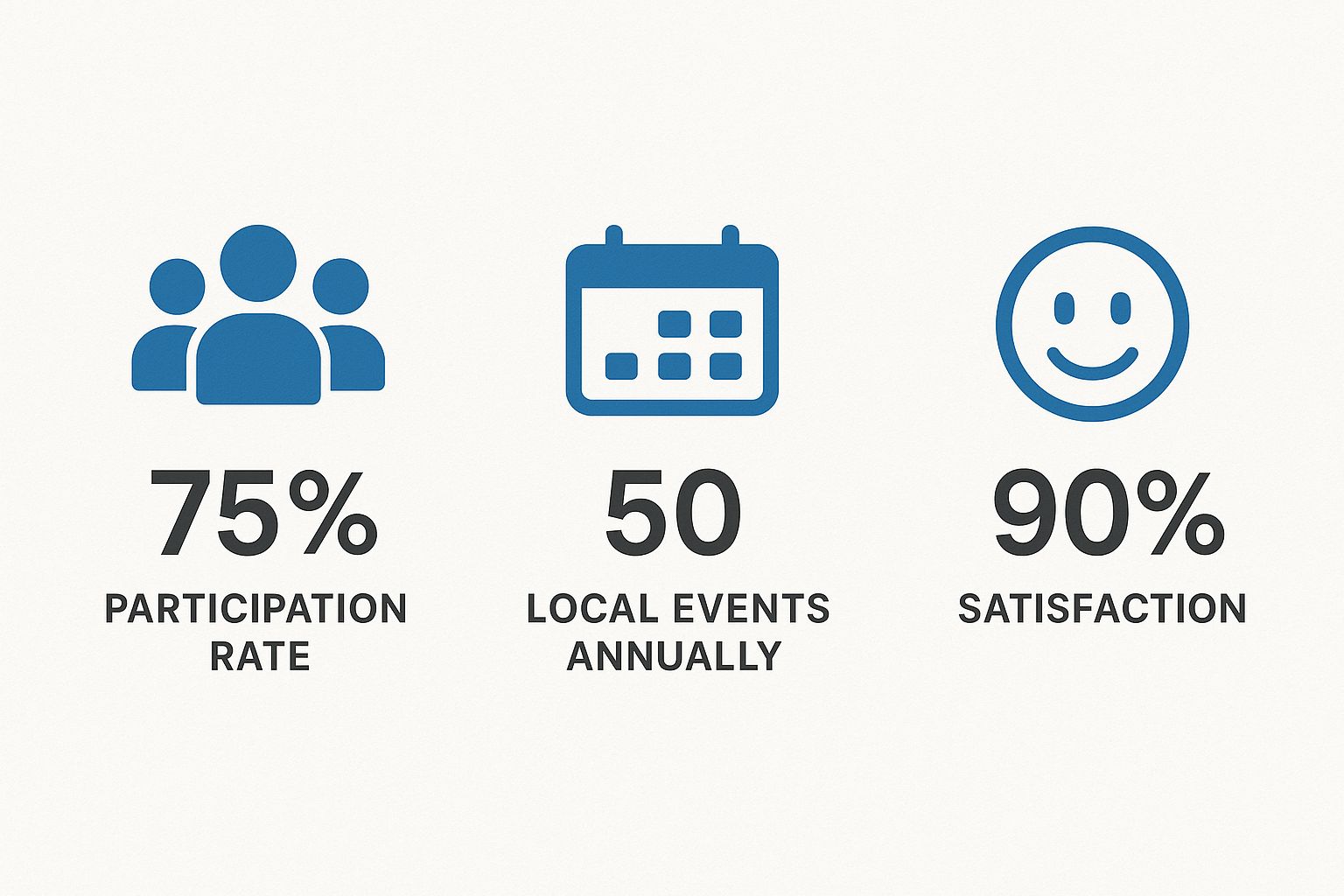
Financial inclusion isn't just about access to services; it's about building financial resilience. This empowers individuals and families to weather economic storms. This section explores strategies for fostering financial strength, using COMMUNITYWIDE FCU as a case study. The stats display above visualizes COMMUNITYWIDE FCU's key performance indicators. As you can see, the credit union demonstrates a commitment to both financial stability and community investment.
Key Statistics Highlighted in the Infographic:
Net Worth Ratio: 13.03%: This strong capital position signifies COMMUNITYWIDE FCU’s financial stability and ability to navigate economic uncertainty.
Loan Growth: -4.25%: This figure offers context for the current lending climate and encourages further analysis of community borrowing behaviors.
Asset Growth: 5.38%: This demonstrates COMMUNITYWIDE FCU’s continued growth and capacity to invest in member resources.
Loans-to-Assets Ratio: 78.63%: This high ratio underscores COMMUNITYWIDE FCU's commitment to lending and investing locally, supporting businesses and individuals.
These numbers offer valuable insights into COMMUNITYWIDE FCU's financial health and community impact. A healthy net worth ratio coupled with a high loans-to-assets ratio suggests a balanced approach. The significance lies in their reflection of COMMUNITYWIDE FCU's commitment to members and fostering growth in South Bend. For a deeper understanding of financial institutions, you can explore resources like Understanding Bank Assets and Liabilities.
To further illustrate COMMUNITYWIDE FCU's financial standing and its impact on the community, let's take a closer look at the following table:
Financial Performance Indicators of COMMUNITYWIDE FCU
This table presents the key financial performance metrics of COMMUNITYWIDE FCU and their significance for community impact.
| Performance Metric | Value | Community Impact Significance |
|---|---|---|
| Net Worth Ratio | 13.03% | Demonstrates strong financial health and stability, enabling the credit union to better serve its members and withstand economic downturns. |
| Loan Growth | -4.25% | Reflects current lending market conditions and provides insights into borrowing trends within the community. |
| Asset Growth | 5.38% | Shows continued expansion and the ability to invest in new services and resources for members. |
| Loans-to-Assets Ratio | 78.63% | Highlights the credit union's commitment to lending and investing within the local community, supporting local businesses and individuals. |
These metrics collectively showcase COMMUNITYWIDE FCU's dedication to maintaining a strong financial foundation while actively contributing to the economic well-being of its community. The high Loans-to-Assets ratio, in particular, underscores its focus on reinvesting in the local area.
Targeted Financial Literacy Initiatives
Financial literacy programs are crucial for building resilience. COMMUNITYWIDE FCU's commitment to financial education empowers informed decisions about budgeting, saving, and borrowing. These initiatives can benefit families for generations to come.
Reimagining Financial Products for Underserved Communities
Many institutions are developing innovative products to reach underserved communities. These might include microloans for small businesses or flexible savings accounts for those with inconsistent income. This expands access to vital tools and promotes greater economic inclusion.
Expanding Access with Technology
Technology is key to bridging the gap in financial access. Online banking, mobile apps, and other digital tools simplify financial management, especially for those unable to access traditional banking during business hours.
Measuring Financial Resilience Beyond Basic Metrics
While traditional metrics are important, understanding community financial health requires a broader perspective. This includes assessing access to affordable housing, job availability, and economic mobility. These factors offer a more complete picture of financial well-being.
COMMUNITYWIDE FCU’s commitment to its 70,999 members across 11 branches shines through in its community focus and financial stability. By prioritizing financial education, expanding access, and maintaining a robust foundation, COMMUNITYWIDE FCU contributes significantly to the financial resilience of the South Bend community. Their approach demonstrates how a community-based financial institution can create positive change beyond transactions.
Sustainable Frameworks for Community Wide Prosperity
Creating lasting positive change requires a broader approach than isolated projects. It requires sustainable frameworks that balance immediate needs with long-term community goals. This section explores how successful community-wide initiatives cultivate enduring prosperity.
Building Coalitions for Lasting Change
Sustaining momentum beyond the initial excitement requires building diverse coalitions. Bringing together residents, businesses, local government, and non-profits creates a shared sense of ownership. This shared commitment is essential for long-term success, ensuring initiatives remain a priority even as community leadership evolves. Just as COMMUNITYWIDE FCU connects its diverse membership, effective community development requires diverse stakeholder engagement for a sustained impact.
Funding Models for Long-Term Stability
Depending too much on a single funding source can threaten long-term sustainability. Diversifying funding streams creates greater resilience. This includes exploring grants, public-private partnerships, and community investments. This approach protects initiatives from the uncertainties of relying on only one funding source and ensures consistent support for vital programs.
Governance Structures for Community Ownership
Governance structures are key to preserving community ownership, especially during leadership transitions. Establishing clear roles, responsibilities, and decision-making processes ensures consistent leadership. This also safeguards community values throughout inevitable changes. It makes sure the community retains control of its own development trajectory, keeping initiatives aligned with local priorities.
Organizational Sustainability: The COMMUNITYWIDE FCU Example
Organizational sustainability directly affects a community’s prosperity. COMMUNITYWIDE FCU's 24.38% efficiency ratio demonstrates its operational effectiveness. This efficiency allows them to maximize their resources, directing more support back into the community. A financially sound institution like COMMUNITYWIDE FCU, with its "well capitalized" status and $837 million in assets, is better positioned to serve its members and invest in community-focused initiatives.
A Roadmap for Sustainable Community Development
Organizations at different stages of community development can benefit from a roadmap with clear benchmarks and potential pitfalls to avoid:
Initial Stage: Focus on building relationships, identifying community needs, and setting clear goals. Avoid spreading resources too thin.
Growth Stage: Diversify funding, establish strong governance, and develop robust evaluation methods. Guard against mission creep.
Maturity Stage: Focus on continuous improvement, adapt to evolving community needs, and build leadership capacity. Avoid complacency and stagnation.
Indicators of success in sustainable community-wide development go beyond individual program metrics. Increased civic engagement, improved quality of life, and stronger social connections are all signs of positive community transformation.
For banking executives, financial analysts, and other finance professionals, Visbanking offers a powerful platform for data-driven decisions. Its Bank Intelligence and Action System (BIAS) provides actionable insights to navigate the complexities of the financial landscape. Visbanking provides institutions with a comprehensive understanding of market trends, financial performance, and regulatory insights, empowering informed decisions that drive growth and enhance community impact.
Latest Articles

Brian's Banking Blog
Apollo.io Review 2026: An Executive Analysis for Financial Institutions

Brian's Banking Blog
New York's Open Banking Bill Will Force Every Bank's Hand on Data Sharing

Brian's Banking Blog
A Bank Executive's Guide to Series B Funding

Brian's Banking Blog
M&A Velocity Rising: What $300M in Deal Flow Tells Us About 2026

Brian's Banking Blog
The Executive's Guide to the Dun and Bradstreet Credit Score

Brian's Banking Blog