
Banking Strategic Planning: Proven Frameworks & Insights
Brian's Banking Blog
The Evolution of Banking Strategic Planning

The banking industry is constantly changing. Technological advancements, evolving customer behaviors, and regulations all contribute to this dynamic environment. This means that banking strategic planning needs to be more agile and adaptable. Traditional annual planning cycles are no longer sufficient.
Instead, banks must embrace continuous planning and real-time adjustments to stay effective. The old way of infrequent adjustments to long-term projections simply won't work in today's financial world. A more dynamic approach is essential for success.
From Static to Dynamic: Adapting to Change
Traditional banking strategic planning was often a static, yearly snapshot, rarely revisited. This approach is no longer adequate in today's disruptive environment. The rise of Fintech companies has increased competition, forcing traditional banks to innovate.
Customer expectations are also evolving. There's a growing demand for personalized, digital-first experiences. Banks need to react to these changes swiftly and effectively.
This means adopting a dynamic approach to banking strategic planning. This involves continuous monitoring, analysis, and adjustments. To learn more about effective organizational strategies, check out this helpful resource: Strategic Planning. This adaptable model allows institutions to remain competitive and take advantage of new opportunities.
Embracing Technology in Strategic Planning
Technology is essential for dynamic strategic planning. Modern banking utilizes data analytics, artificial intelligence, and machine learning to gain deeper insights into market trends and customer behavior.
For example, predictive analytics helps banks anticipate future demand. This allows for proactive resource allocation and product development. Real-time data dashboards provide instant visibility into key performance indicators (KPIs).
This enhanced visibility enables faster, data-driven decision-making. By 2025, 87.2% of 39 surveyed central banks had incorporated digital transformation and payment systems into their strategic plans. You can find more information here: Learn more about digital transformation in central banks. This highlights the importance of technology for future banking success. Ultimately, technology empowers banks to create more agile, data-driven strategic plans.
Core Components of High-Impact Banking Strategies
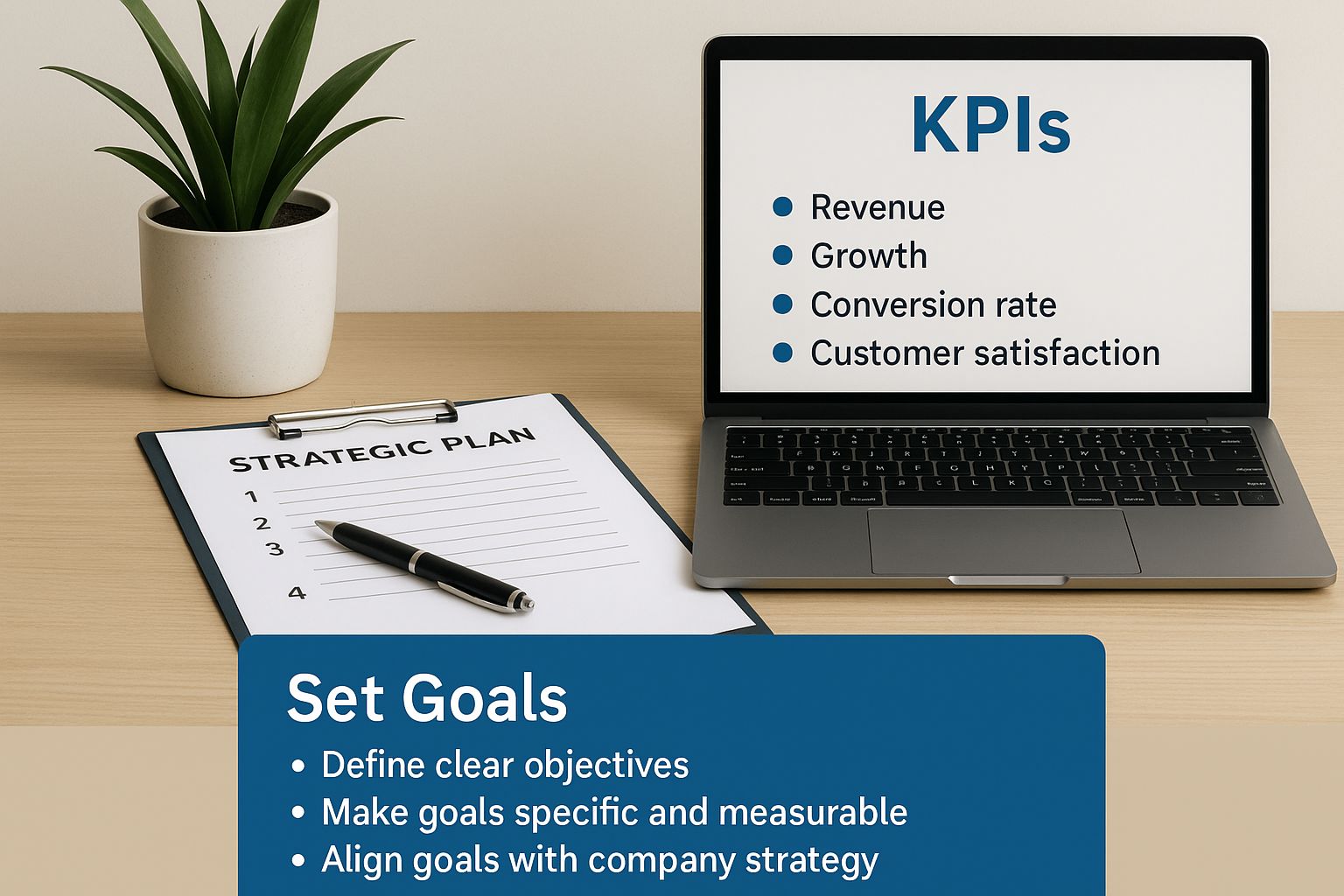
The infographic shows a workspace set up for strategic goal setting, complete with KPIs and plans. This highlights how important clear objectives are in banking strategic planning. A good strategy needs actionable goals. Banks must define specific, measurable targets, not just general aspirations.
Defining a Compelling Vision and Mission
Effective banking strategic planning starts with a well-defined vision and mission. The vision describes the bank's long-term aspirations. It paints a picture of its desired future, acting as a guiding star for strategic decisions. The mission defines the bank's core purpose and how it will achieve its vision.
For example, a bank might envision becoming the top digital financial services provider in its region. Its mission could then be to deliver innovative, customer-focused solutions using advanced technology. This shared purpose ensures everyone works towards the same goal.
Conducting a Thorough Internal and External Analysis
After defining the vision and mission, a thorough internal and external analysis is essential. Internally, this means assessing the bank's strengths and weaknesses, including resources, capabilities, and competitive advantages. This honest self-assessment helps identify areas for improvement and potential risks.
Externally, the analysis should pinpoint market opportunities and threats. This includes studying competitor activities, new technologies, regulatory changes, and economic trends. Understanding the competitive landscape lets the bank anticipate challenges and seize opportunities.
Setting Measurable Strategic Objectives
Next, it's time to set specific, measurable, achievable, relevant, and time-bound (SMART) strategic objectives. These objectives should support the bank's vision and address the key opportunities and challenges identified in the analysis. This means turning broad goals into concrete actions with clear timelines and measurable outcomes.
For instance, an objective could be to boost market share in a specific segment by 10% in two years. Another might be to cut operational costs by 5% through process automation within the next year. Measurable objectives provide a clear roadmap.
Developing Actionable Strategies and Initiatives
With clear objectives, the focus shifts to developing actionable strategies and initiatives. Strategies outline the bank's overall approach, while initiatives detail the specific actions. This stage requires careful consideration of the bank's resources, capabilities, and risk tolerance.
For example, a strategy to increase customer engagement might involve creating a personalized mobile banking app. Supporting initiatives would include designing the app interface, developing features, and launching a marketing campaign.
Establishing Key Performance Indicators (KPIs) and Monitoring Progress
Finally, establish key performance indicators (KPIs) to track progress. These KPIs should be quantifiable and aligned with overall goals. Regularly monitoring KPIs provides valuable insights into strategy effectiveness and allows for necessary adjustments.
Examples of KPIs include customer satisfaction scores, loan growth rates, or the cost-to-income ratio. Regularly reviewing these metrics helps ensure the banking strategic planning process stays aligned with the vision and delivers results. This ongoing monitoring is vital for success.
To further illustrate the core components discussed above, the following table provides a comparative view of traditional and modern approaches to banking strategic planning:
Key Components of Banking Strategic Plans A structured breakdown of essential elements in modern banking strategic plans, comparing traditional approaches with contemporary best practices
| Component | Traditional Approach | Modern Best Practice | Implementation Considerations |
|---|---|---|---|
| Vision & Mission | Often static and broadly defined | Dynamic, regularly reviewed, and specific | Ensure alignment with evolving market conditions and stakeholder needs |
| Internal & External Analysis | Primarily focused on financial metrics | Holistic view encompassing financial, operational, customer, and competitive data | Utilize data analytics tools for comprehensive insights |
| Strategic Objectives | General and long-term focused | Specific, measurable, achievable, relevant, and time-bound (SMART) | Cascade objectives throughout the organization for clear direction |
| Strategies & Initiatives | Top-down approach with limited flexibility | Agile and adaptable strategies with iterative implementation | Foster a culture of innovation and experimentation |
| KPIs & Monitoring | Limited metrics and infrequent reporting | Real-time data tracking and continuous monitoring | Invest in robust reporting and analytics platforms |
This table highlights the shift towards a more dynamic and data-driven approach in modern banking strategic planning. By adopting these best practices, banks can enhance their ability to adapt to change, achieve strategic goals, and thrive in the competitive financial landscape.
Technology Investment as Your Competitive Edge

Technology has become the driving force behind banking strategic planning. It's no longer just a support system; it's essential for success. Forward-thinking institutions understand that strategic technology investments are crucial for thriving in today's financial world. This means going beyond simply digitizing existing processes. It means using technology to fundamentally change how they operate.
Balancing "Run-the-Business" and Transformative Spending
Successful banks carefully balance investments in technology for maintaining current operations ("run-the-business") and investments in future-shaping innovation. Keeping existing systems running smoothly is crucial for daily operations. However, allocating resources to transformative technologies creates a real competitive advantage.
For example, investing in strong cybersecurity infrastructure is a "run-the-business" expense. This protects sensitive data and maintains customer trust. However, investing in AI-powered customer service platforms is a transformative initiative. This can personalize customer experiences and improve efficiency. This dual nature of technology spending requires careful banking strategic planning.
Evaluating Technology Investments
Evaluating potential technology investments requires a structured approach. Banks need practical frameworks to assess not only the potential return on investment (ROI) but also the risks of new technologies. This includes understanding potential integration challenges, security vulnerabilities, and regulatory compliance issues.
Furthermore, ROI calculations must consider both tangible and intangible benefits. Tangible benefits include cost savings, while intangible benefits might include improved customer satisfaction. For instance, a new loan origination system can reduce processing time (tangible) and improve the customer experience (intangible). Both are important factors in banking strategic planning. The global banking industry understands this, with IT spending predicted to reach US$176 billion in 2025, up from US$147 billion in 2022. Learn more: Explore this topic further.
Structuring Technology Budgets for the Future
Leading financial institutions structure their technology budgets strategically. They aim to support both immediate needs and long-term goals. This requires careful prioritization and a willingness to invest boldly in high-growth areas.
This might mean dedicating a portion of the budget to exploring emerging technologies, even if the immediate payoff isn't clear. It also means avoiding common technology investment traps, such as blindly following trends or neglecting staff training and development. For further insights: How Technology is impacting U.S. Financial Institutions. This forward-thinking approach to banking strategic planning ensures technology spending aligns with the overall vision and creates lasting value. This proactive budgeting is critical for lasting success in the changing financial world.
Governance Models That Enable Rather Than Obstruct
Effective banking strategic planning relies heavily on establishing the right governance. A well-structured governance model empowers banks to execute their strategies efficiently. Conversely, a poorly designed model can hinder progress and lead to missed opportunities. This section explores how leading banks are structuring their governance to achieve strategic success.
Balancing Oversight and Agility
Successful governance models strike a balance between necessary oversight and the agility required in today's rapidly changing financial landscape. This involves establishing clear lines of accountability while avoiding bureaucratic obstacles that can slow down decision-making. Think of it as driving a car: you need a steering wheel (oversight) and an engine (agility). Both are essential for reaching your destination (strategic goals).
Redefining Roles for Strategic Alignment
Many banks are redefining the roles of board members, executive leadership, and department heads to improve strategic alignment. Board members are increasingly concentrating on long-term strategic direction, moving away from daily operational involvement. Executive leadership translates these broad strategic objectives into actionable plans. Department heads then ensure their teams effectively execute these plans. This clear division of responsibilities promotes alignment and encourages initiative.
Cascading Objectives and Maintaining Consistency
Effective governance also involves cascading strategic objectives throughout the organization. This ensures everyone, from tellers to senior managers, understands how their individual contributions support the bank's overall strategy. Maintaining consistency across different business units and support functions is also critical, especially for larger banks with diverse operations.
Building Implementation Frameworks
A successful implementation framework balances accountability and flexibility. This means holding individuals and teams responsible for their performance while also enabling them to adapt to changing market conditions. Technology investments play a vital role in banking, aligning with a clearly defined digital transformation roadmap. This adaptability is crucial for navigating today's unpredictable financial markets. You might also find this relevant: Regulators Urge Banks to Address Crypto Liquidity Risks. This dynamic approach allows banks to respond effectively to market shifts while maintaining strategic focus and adhering to regulatory requirements.
Strategic Planning Governance Models in Banking
The following table provides a comparison of different governance approaches for banking strategic planning, highlighting their strengths, weaknesses, and ideal application contexts.
Strategic Planning Governance Models in Banking
| Governance Model | Key Features | Best For | Potential Challenges | Success Metrics |
|---|---|---|---|---|
| Centralized | Decisions made by top management | Banks with a clear hierarchy and standardized operations | Can stifle innovation and slow down decision-making | Consistent strategy execution across all branches |
| Decentralized | Decisions delegated to business units | Banks with diverse product lines or geographic reach | Can lead to inconsistencies and lack of overall coordination | Performance of individual business units against specific objectives |
| Hybrid | Combines centralized and decentralized elements | Banks seeking to balance control and flexibility | Requires clear communication and coordination mechanisms | Overall bank performance and alignment of business unit strategies with the overall strategic direction |
This table summarizes key characteristics of each governance model to aid in selecting the best fit.
By carefully evaluating these different models, banks can choose a governance structure that best aligns with their specific needs and bolsters their banking strategic planning initiatives. This decision is crucial for long-term success in today’s complex and evolving financial industry.
Measuring What Actually Matters in Banking Strategy
Measuring the success of banking strategic planning involves more than just looking at profits. While profitability is still key, a truly effective strategy considers a broader set of metrics that reflect long-term value creation. This means implementing comprehensive frameworks that accurately measure real strategic progress.
Beyond Traditional Financial Metrics
Traditional financial metrics like return on assets (ROA) and net interest margin (NIM) provide a snapshot of current performance. However, they don't tell the whole story of modern banking. Focusing only on these can lead to short-term decisions that sacrifice future value for immediate gains. A broader perspective is essential for sustainable success. Consider learning more about how interest rates affect profitability: How Interest Rates Impact Bank Profitability.
For example, a bank might increase short-term profits by reducing customer service staff. However, this could damage customer relationships and decrease retention in the long run. This highlights the need for a more comprehensive approach to measurement.
Embracing the Balanced Scorecard
Many leading financial institutions are adopting the balanced scorecard approach. This framework looks at multiple perspectives:
- Financial
- Customer
- Internal Processes
- Learning & Growth
By measuring performance across these four areas, banks gain a more complete understanding of their progress. This involves tracking metrics such as customer satisfaction, employee engagement, and innovation, alongside traditional financial measures.
Establishing Meaningful KPIs
Establishing meaningful key performance indicators (KPIs) is essential. These KPIs should be directly tied to the bank's strategic objectives. They should also be quantifiable and easy to track, enabling consistent monitoring and adjustments.
For example, if a strategic objective is to improve customer experience, relevant KPIs might include:
- Customer satisfaction scores
- Online banking adoption rates
- Resolution times for customer inquiries
These KPIs provide solid data to track progress toward the objective.
Communicating Strategic Progress
Communicating strategic progress to stakeholders is vital. This includes:
- Board members
- Regulators
- Employees
- Shareholders
Each group has different needs. Tailoring communication to their interests ensures clarity and promotes understanding. This could involve creating customized dashboards that clearly display key metrics. These dashboards can present data in a way that is easy to interpret and act upon.
Building a Multidimensional Measurement System
Building a multidimensional measurement system requires careful planning based on the bank's unique situation. There's no single perfect solution. The chosen metrics and reporting methods should align with the bank's specific strategic goals and operating environment. This means including stakeholders from different departments in the process. Their input ensures the metrics are relevant and support the bank's overall strategy. This collaborative approach builds a shared vision of success. By implementing such a comprehensive measurement system, banks can look beyond short-term financial gains and focus on building long-term, sustainable value. This strategic approach is essential for success in today's competitive financial market.
Creating a Culture That Embraces Strategic Change
A brilliant banking strategic planning process is useless without the right organizational culture. Even the most meticulously crafted strategies will fail if employees don't embrace the necessary changes. This section explores how successful financial institutions cultivate a culture that actively supports strategic objectives.
Aligning Culture With Strategic Objectives
Successful banks understand that culture and strategy must go hand-in-hand. This means ensuring that employee behaviors, values, and working practices actively contribute to strategic priorities. For example, if a bank prioritizes digital innovation, the culture should encourage experimentation and embrace new technologies. This alignment ensures everyone works towards the same goals.
Change Management in Banking
Change is constant in finance, but managing it effectively is challenging. Banks need robust change management processes tailored to their specific needs. By studying successful and unsuccessful transformations, we can identify practical approaches.
This might involve using established frameworks like Kotter's 8-Step Change Model to guide the process. It also means addressing the human element, acknowledging employee concerns, and providing support.
Communication That Drives Engagement
Effective communication is vital for driving engagement during strategic change. Banks must communicate clearly and frequently about the reasons for changes, the expected benefits, and how employees will be affected. This transparency builds trust and reduces resistance.
For instance, town hall meetings, regular newsletters, and online forums can keep employees informed and involved. This two-way communication allows for feedback and proactively addresses concerns.
Training and Leadership Development
Training programs are essential for building the capabilities needed to execute new strategies. If a bank invests in new technology, employees must be trained to use it effectively. Simultaneously, leadership development creates change champions throughout the organization.
These leaders can then support their teams through the change process. Mentorship programs and leadership training build the necessary skills and confidence, empowering employees to embrace change.
Remuneration and Incentives
Forward-thinking banks redesign their reward systems to reinforce strategic priorities. This means aligning employee incentives with strategic goals. For example, to improve customer service, a bank might reward employees based on customer satisfaction scores.
However, these incentive programs must be carefully designed to maintain regulatory compliance and avoid unintended consequences. This requires balancing performance-based rewards with ethical considerations and risk management principles. This ensures the reward system reinforces, rather than undermines, the bank’s goals. A carefully designed incentive program is a powerful tool in banking strategic planning. It motivates employees and drives successful strategy execution. By focusing on these key elements, banks can create a culture that not only embraces change but actively contributes to achieving strategic objectives. This cultural shift is essential for thriving in today's dynamic financial environment.
Future-Proofing Your Banking Strategic Planning
The financial world is constantly changing. Successful banking strategic planning requires more than just understanding the present; it demands anticipating the future. This section explores emerging trends reshaping how financial institutions approach strategy and provides practical guidance on building resilience in an uncertain world.
The Rise of AI and Advanced Analytics
Artificial intelligence (AI) and advanced analytics are quickly becoming essential tools in banking strategic planning. These technologies are transforming the planning process, enabling:
- Dynamic Scenario Planning: AI can process massive amounts of data to model various scenarios. This helps banks anticipate potential market shifts and develop robust contingency plans.
- Real-Time Strategy Adjustments: Real-time data analysis allows for continuous monitoring of Key Performance Indicators (KPIs) and faster adjustments to strategic initiatives. This agility is crucial in today’s dynamic environment.
For example, AI can analyze customer data to predict loan defaults with greater accuracy, enabling banks to refine their risk management strategies proactively.
Integrating Sustainability and ESG Considerations
Environmental, Social, and Governance (ESG) factors are increasingly influencing banking strategic planning. Stakeholders, including investors and customers, are demanding greater transparency and accountability. Leading banks are incorporating ESG considerations into their strategic frameworks by:
- Developing sustainable finance products and services
- Reducing their carbon footprint
- Promoting diversity and inclusion
This shift toward sustainable banking not only meets stakeholder expectations but also creates new value opportunities. For example, green lending can open new markets and attract environmentally conscious customers.
Navigating Open Banking and Platform Business Models
Open Banking, driven by the rise of APIs and platform ecosystems, is creating both opportunities and challenges. This interconnected financial landscape necessitates new strategic approaches focused on:
- Partnership Strategies: Banks can leverage partnerships with Fintech companies and other third-party providers to enhance their capabilities.
- Developing Platform Business Models: Some banks are transforming into platform providers themselves, offering financial services through APIs to other businesses.
These evolving business models require banks to rethink their competitive positioning and develop new strategies for collaboration and innovation.
Building Strategic Resilience in Uncertain Times
Geopolitical uncertainty and evolving regulatory landscapes add further complexity to banking strategic planning. Building strategic resilience is now more critical than ever. This involves:
- Stress Testing and Scenario Analysis: Banks need to regularly assess their vulnerability to various shocks, such as economic downturns or cyberattacks. They also need to develop appropriate responses.
- Agile Governance Structures: Decision-making processes need to be flexible and adaptable to allow for quick responses to changing circumstances.
By incorporating these practices, banks can better prepare for unexpected events and ensure their long-term sustainability.
Looking to gain a competitive edge? Visbanking offers a Bank Intelligence and Action System (BIAS) that empowers financial institutions with data-driven insights for strategic planning and execution. Learn more about how Visbanking can help you navigate the future of finance: Explore Visbanking.
Latest Articles
Brian's Banking Blog
First Contact Resolution for Banks: A Practical Playbook
Brian's Banking Blog
Bank Cash Flow Analysis: A Practical Executive Playbook
Brian's Banking Blog
API Security Solutions for Regulated Banks
Brian's Banking Blog
Operational Risk Indicators for Banks
Brian's Banking Blog
Loss Given Default Calculation for Bank Executives
Brian's Banking Blog