
Digital Transformation in Finance A Modern Playbook
Brian's Banking Blog
When people talk about digital transformation in finance, what do they really mean? It’s more than just slapping a fresh coat of tech paint on old systems. It’s about a complete and fundamental rewiring of how a financial institution works, serves its customers, and ultimately, creates value.
This isn't about minor upgrades. It’s a core overhaul of processes, company culture, and the entire business model to become more efficient, customer-centric, and driven by data.
What Is Digital Transformation in Finance Really?

Think of it like restoring a classic muscle car. You wouldn't just give it a new paint job and call it a day, right? Of course not. You'd drop in a modern engine, upgrade the chassis, and install a state-of-the-art navigation system. That's digital transformation in a nutshell—rebuilding the institution from the inside out to handle the roads ahead.
It’s a response to very real pressures and opportunities in the industry. The goals are no longer just "nice-to-haves"; they are absolutely essential for any bank that wants to compete, let alone grow.
Core Goals of Financial Transformation
This entire journey really boils down to three critical pillars:
- Creating Frictionless Customer Experiences: We live in an on-demand world. Customers expect their banking to be as easy and intuitive as ordering from Amazon. That means 24/7 access, simple mobile apps, and personalized service that feels like the bank actually knows them.
- Achieving Radical Operational Efficiency: Let's be honest, manual processes, clunky legacy systems, and siloed data are expensive, slow, and frustrating. Transformation is about automating the repetitive stuff, connecting workflows, and freeing up your people to focus on high-value strategic work instead of soul-crushing admin tasks.
- Making Smarter, Faster Decisions with Data: By finally bringing all your data together and applying smart analytics, you get a crystal-clear picture of what's happening. You can manage risk more effectively, spot growth opportunities you were blind to before, and make decisions with confidence.
"Instead of launching it like a great big bang and running the risk of a huge failure, you take it more step by step... That allows the organization to much more readily absorb the change."
This is a key insight. True transformation isn't a single, massive, disruptive event. It’s a steady, continuous process of improvement and adaptation. It’s a marathon, not a sprint.
And this methodical evolution is driving enormous economic activity. The global market for this shift in the banking, financial services, and insurance (BFSI) sector was estimated at USD 93.04 billion in 2024. But it’s not stopping there. It's expected to jump to USD 108.51 billion in 2025 and is projected to explode to roughly USD 419.45 billion by 2034. That’s a staggering compound annual growth rate of 16.25%. You can dive deeper into these figures and the trends behind them over at Precedence Research.
Ultimately, it’s all about changing an organization's DNA to be more agile, intelligent, and tough enough to thrive in a financial world that’s moving faster every single day.
The Technologies Powering Financial Modernization
Let's get real for a moment. All this talk about "digital transformation" is just noise without the right engine under the hood. It’s not about small tweaks; it’s about a complete rebuild of how financial institutions work, think, and serve their customers. A specific set of powerful technologies, working together, is what makes this massive shift possible.
This image gives you a bird's-eye view of the foundational tech that makes a modern financial ecosystem tick.
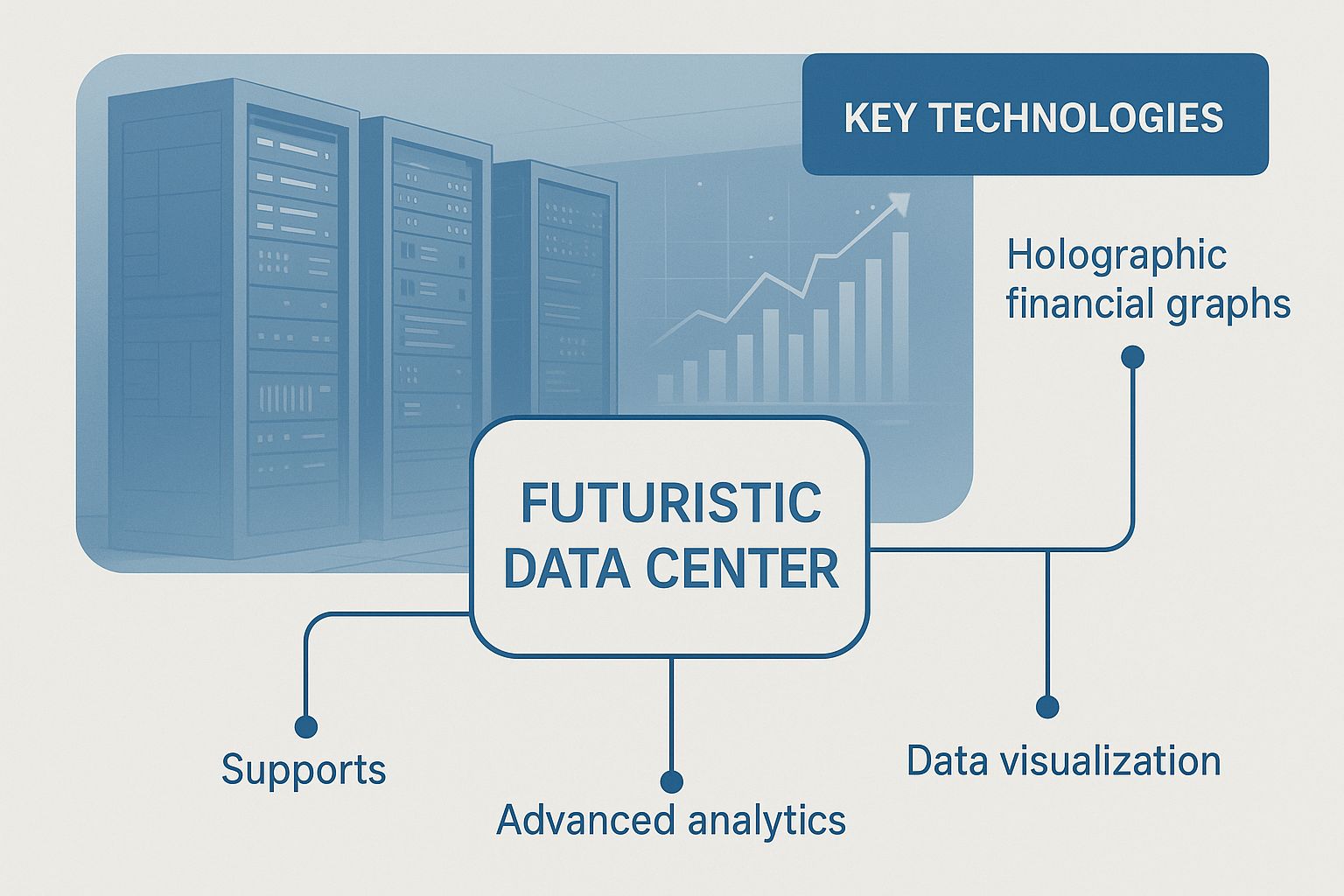
As you can see, tools like AI, Cloud Computing, and Big Data aren't just isolated pieces of a puzzle. They're interconnected, each one amplifying the power of the others to create real, comprehensive change.
To get a clearer picture, let's look at how these key technologies are shaking things up in the financial world.
Key Technologies and Their Financial Impact
| Technology | Primary Function in Finance | Key Benefit |
|---|---|---|
| Artificial Intelligence (AI) | Powers real-time fraud detection, predictive analytics, and personalized customer recommendations. | Shifts security from reactive to proactive, enhances customer engagement, and improves decision accuracy. |
| Cloud Computing | Provides on-demand access to computing resources, data storage, and software applications over the internet. | Eliminates massive upfront hardware costs, enables rapid scalability, and ensures 24/7 service accessibility. |
| Big Data Analytics | Gathers and processes huge volumes of data from various sources to uncover hidden patterns and insights. | Turns raw data into strategic intelligence, enabling precise risk modeling and informed business strategies. |
| Robotic Process Automation (RPA) | Deploys software "bots" to automate repetitive, rules-based back-office tasks like data entry and reconciliation. | Slashes operational costs, minimizes human error, and frees up employees for higher-value strategic work. |
This combination isn't just theory; it’s a powerhouse that's fundamentally altering how financial services are delivered. Let's dig a bit deeper into each one.
Artificial Intelligence and Machine Learning
Remember the old days of fraud detection? It was a slow, painful process. Teams would sift through transaction logs long after a breach, trying to piece together what happened. The damage was already done.
Now, with AI and Machine Learning (ML), algorithms can analyze millions of transactions as they happen. They spot weird patterns and can freeze a fraudulent purchase before you even know your card was compromised. It’s a complete game-changer.
But it’s not just about defense. AI is also the brains behind hyper-personalized banking. It can look at your spending habits and financial goals to suggest products or offer advice that’s actually relevant to you. To really get a handle on this, you need to understand the core concepts of artificial intelligence, machine learning, and deep learning.
Cloud Computing and Scalability
Not long ago, launching a new banking service was a nightmare. It meant buying and setting up expensive physical servers—a project that could drag on for months. This slow, costly process killed innovation and made it impossible to adapt to customer demand.
Cloud Computing completely demolished that barrier. Now, a financial institution can spin up new applications in hours, paying only for the computer power it actually uses. This agility means they can test ideas, react to market shifts instantly, and give customers reliable, around-the-clock access from anywhere.
Big Data Analytics
Banks have always been sitting on mountains of data. The problem was that it was stuck in clunky, disconnected old systems. Trying to get a complete picture was next to impossible, so big decisions often came down to gut feelings and old reports.
Big Data Analytics flips that script. By pulling in and crunching massive amounts of information—from transactions and market trends to customer support chats—institutions can finally see what's really going on. This leads to far more accurate risk models, razor-sharp customer segmentation, and predictive forecasts that guide the entire business strategy.
Robotic Process Automation
Think about all the mind-numbing back-office work: data entry, generating reports, reconciling accounts. These manual jobs aren't just boring; they're breeding grounds for human error, which can lead to compliance headaches and operational gridlock.
Robotic Process Automation (RPA) is the perfect fix. You can configure software "bots" to handle these repetitive, rules-based tasks automatically. They work 24/7 with perfect accuracy, cutting costs and, more importantly, freeing up your team to focus on things that require a human touch, like building customer relationships. We cover this in more detail in our guide on automation in banking.
The Tangible Benefits of Digital Finance Adoption

Moving your financial institution into the modern era isn't just a technical upgrade; it's a strategic overhaul that delivers real, measurable wins. When you swap out those clunky, manual processes for a sleek, integrated digital model, you unlock a whole new level of performance that hits both the bottom line and your customer relationships. These aren't just abstract ideas—they're concrete results that change what's possible.
These advantages don't just stay in one department. They ripple out across the entire organization, from the front-line staff interacting with customers to the back-office teams and the C-suite making high-stakes decisions.
Let's break down the four biggest benefits you'll see from getting digital transformation in finance right.
Radically Improved Customer Experience
Your customers aren't comparing you to other banks anymore. They're comparing you to Amazon, Netflix, and every other seamless digital service they use daily. Going digital is how you finally meet—and beat—those expectations.
This starts with providing 24/7 access to banking services through intuitive apps and online portals, making the old 9-to-5 branch hours feel like a relic of the past. It also unlocks true personalization. Imagine AI analyzing spending habits to offer up genuinely useful financial advice or product suggestions that feel like they were made just for that customer. That's how you make people feel seen and valued.
Even better, a connected digital system means every interaction is smooth. A customer can start a loan application on their laptop, ask a quick question on a chatbot, and finalize the details with a real person, all without ever having to repeat themselves. It’s that kind of frictionless experience that builds serious trust and loyalty.
Streamlined Operational Efficiency
For years, back offices have been swimming in a sea of repetitive, manual work—data entry, reconciliations, report building. These tasks are more than just slow; they're expensive, and they’re a breeding ground for human error, which creates compliance headaches and bottlenecks.
Digital transformation hits this problem head-on. Technologies like Robotic Process Automation (RPA) can take over these tedious, rules-based tasks, letting software "bots" handle the grunt work with perfect accuracy, 24/7. This move drastically cuts operational costs and slashes error rates, making your institution fundamentally stronger.
But here's the real win: it frees up your people. Instead of being buried in spreadsheets, your team can now focus on what humans do best—strategic analysis, solving complex problems, and forging deeper relationships with clients. That's the work that actually pushes the business forward.
When you automate key processes, you’re not just saving time and money. You’re turning your finance function from a reactive cost center into a proactive, strategic partner that helps guide the entire organization.
Superior Data-Driven Decision Making
Not too long ago, big financial decisions were often made with a mix of old reports and gut feelings from the corner office. Data was locked away in separate, aging systems, making a real-time view of the business a complete pipe dream. This left institutions exposed to market shifts and hidden risks they never saw coming.
Going digital flips that script entirely. By bringing all your data together onto one accessible platform, leaders can finally see the whole picture. From there, advanced analytics and AI can sift through it all to spot deep insights and predictive trends that were invisible before.
This leads to much smarter risk management, as algorithms can flag potential problems before they blow up. It also means you can get shockingly accurate forecasts on everything from loan defaults to customer churn. With real-time dashboards and powerful analytics, every big decision is backed by hard data, not just a hunch. Many firms now depend on specialized tools for financial reporting automation to make sure their insights are both fast and spot-on.
Enhanced Market Agility
In today's market, speed is a massive competitive advantage. Traditional banks, held back by rigid structures and slow decision-making, often find themselves playing catch-up to nimble fintech startups that can turn on a dime.
A digital-first operational model is the antidote. With cloud infrastructure and automated workflows, you can design, test, and launch new products in a fraction of the time it used to take. This gives you the power to react almost instantly to a new market opportunity or a competitor's move.
When a new regulation drops or customer behavior shifts overnight, a digitally agile organization can pivot its strategy without a massive, time-sucking overhaul. This kind of adaptability isn't a "nice-to-have" anymore; it's absolutely essential for survival and growth.
Overcoming the Hurdles of Financial Modernization
Embarking on a true digital transformation in finance is a journey packed with opportunity, but let's be honest—it's not a walk in the park. A successful shift demands a clear-eyed look at the hurdles that can slow you down. Ignoring them is a recipe for disaster; facing them head-on is how the best institutions win.
Three major challenges pop up time and time again for organizations on this path. Each one requires a smart mix of strategy, tech, and a serious commitment to change.
Integrating Clunky Legacy Systems
Many financial institutions are running on IT systems that are, to put it mildly, ancient. These platforms, often decades old, are the digital equivalent of trying to hook up a Tesla battery to a horse-drawn carriage. They're rigid, a nightmare to maintain, and were never built for the real-time, interconnected world we live in today.
The main headaches here include:
- High Costs and Complexity: Upgrading or replacing these core systems is a monumental task that can easily run into the millions. It’s not just installing new software; you're talking about massive data migrations, rethinking entire processes, and endless testing.
- Risk of Disruption: The biggest fear? Causing a service outage. Banks have to perform this digital "open-heart surgery" while making sure millions of customers can still use ATMs and online banking without a hitch. One slip-up can be catastrophic for your reputation.
A common myth is that you have to rip everything out and start from scratch all at once. A much smarter play is often a gradual modernization. Use middleware and APIs to build new, nimble services on top of your legacy systems while you strategically phase out the old stuff over time. This keeps risk low and delivers value much faster.
Navigating Data Security and Compliance
As finance goes digital, the number of ways criminals can attack skyrockets. Every new mobile app, cloud service, or third-party tool creates another potential door for hackers. This puts immense pressure on institutions to lock down sensitive customer data.
On top of that, you have a constantly growing web of regulations. Following rules like the General Data Protection Regulation (GDPR) isn't just a good idea—it's the law, with huge penalties for getting it wrong. Financial firms must defend against sophisticated cyberattacks and prove they're handling data ethically. This often involves tackling complex issues like overcoming global payment challenges, which come with their own security and regulatory baggage.
Closing the Talent and Culture Gap
This might be the biggest hurdle of all, and it has almost nothing to do with technology. It’s all about people. Digital transformation in finance requires a whole new skillset—experts in data science, AI, and cybersecurity are in high demand and short supply. Banks often find themselves competing for talent with the biggest names in tech.
But even more than skills, there’s the deep-rooted problem of cultural resistance. Banking has always been a conservative, risk-averse industry. Shifting that mindset to one that embraces agility, experimentation, and constant learning is a massive undertaking. Without buy-in from the top all the way to the front lines, the best technology in the world won't make a difference. Getting past the "we've always done it this way" mentality is the only way for any modernization effort to truly stick.
A Strategic Roadmap for a Smooth Transformation
Knowing the hurdles is one thing; actually clearing them is another game entirely. Real digital transformation in finance isn't some happy accident. It’s the result of a clear, actionable playbook that gets your tech, people, and processes all marching to the same beat. Forget the high-risk, "big bang" overhauls. Think of it as a steady, deliberate push forward.
Trying to navigate this journey without a map is a surefire way to burn through cash and end up right where you started. The banks that get this right follow a proven path, starting with a shared vision and ending with a much more nimble, modern way of working.
Build a Unified Vision and Strategy
First things first: you have to get everyone on the same page. This is non-negotiable. Transformation can't just be an "IT thing" or a "finance thing." The entire leadership team needs to be championing it, all aligned on what winning looks like and why it’s so critical.
This means setting crystal-clear, measurable goals. Are you trying to slash operational costs by 25%? Or maybe you want to take customer onboarding from a multi-day headache to a process that takes minutes. When everyone shares the same vision, you stop different departments from pulling in opposite directions—a classic project-killer. This kind of unified vision is the bedrock of any successful plan, a concept we dive deeper into in our guide on strategic planning for banks.
Put the Customer at the Center of Everything
Once your internal vision is locked in, you immediately need to pivot your focus outward. Look at every single decision, every process change, and every technology investment through one simple lens: how does this make the customer’s life better? This customer-first mindset is what separates the winners from the losers.
Instead of asking, “How can we automate this back-office task?” you start asking, “How can we make applying for a loan ridiculously fast and easy for our clients?” That mental shift ensures your transformation delivers real, tangible value where it matters most. It’s how you build loyalty and grow your business.
Invest in the Right Tech and the Right People
You can’t build a modern bank on a foundation of crumbling, outdated technology and skills. This demands a two-pronged investment. First, you absolutely need a flexible, scalable tech stack. This usually means embracing cloud platforms and using APIs to stitch your systems together, letting you add new features without having to rip out and replace everything.
Second, you have to invest in your people. This means actively training your current team on things like data analytics and digital tools while also bringing in new talent for new roles. A shiny, new platform is completely useless if you don't have a team that knows how to drive it.
It's a classic mistake to treat technology and talent as separate problems. They are two sides of the same coin. Your tech strategy is dead in the water without a solid people strategy to back it up.
Embrace an Agile, Step-by-Step Approach
The days of those massive, multi-year projects that deliver nothing until the very end are over. Thank goodness. The modern way to tackle digital transformation in finance is to be agile and iterative. Start small. Test an idea. Learn from the results. Then, scale up what works.
This approach has some huge advantages:
- Lower Risk: A small project failing is a bump in the road, not a catastrophe.
- Faster Wins: You start delivering real value to the business in weeks or months, not years. This builds crucial momentum.
- Constant Learning: Every small step gives you feedback that makes the next one smarter and more effective.
This keeps everyone engaged and proves that the transformation is actually delivering results, making it much easier to maintain support from across the bank.
Adopt a Modern Hybrid Operating Model
Finally, a true transformation means rethinking how your bank actually operates. A major trend, backed by recent CFO surveys, is the shift to hybrid models. A 2025 global survey of CFOs showed that blending third-party service providers with in-house teams is a top strategy. This lets you tap into outside expertise and flexibility while keeping your core functions and control in-house. In fact, as the findings point out, companies using these hybrid models report better innovation and service quality. You can discover more about these strategic F&A delivery insights on Everest Group's site. This mix of internal control and external innovation is quickly becoming the new blueprint for an agile finance function.
The Next Wave of Digital Finance Innovation
Think the digital transformation in finance is winding down? Think again. What we’ve seen so far is just the opening act. As today’s “innovations” become everyday tools, a whole new wave is building on the horizon, ready to reshape finance in ways we're just beginning to grasp.
We're moving past just making old services digital. The real game-changer is weaving finance so seamlessly into our lives that it becomes almost invisible—an intelligent utility that just works. This next chapter is about creating financial experiences that aren't just convenient, but predictive, personal, and deeply connected to what we value.
The Rise of Embedded Finance
Ever bought something online and seen a "pay-in-four" option pop up right at checkout? No new tabs, no lengthy loan applications—just instant approval. That’s Embedded Finance, and it's a huge deal.
This is all about tucking financial services like loans, payments, or insurance directly into non-financial apps and websites. It’s not about banks launching another app. It’s about them providing the behind-the-scenes financial engine that lets a retail store or a travel site offer these services under their own brand. For the customer, it’s frictionless. For the business, it's a powerful new way to earn revenue and keep customers coming back.
The Dawn of Hyper-Personalization
For too long, "personalization" in banking just meant getting an email with your name on it. We can do better. The next step is Hyper-Personalization, which uses smart AI and real-time data to offer advice and products tailored to your exact situation, right now.
Imagine your banking app doing more than just showing your balance. What if it saw you had extra cash and nudged you to put it in a high-yield account to hit that savings goal you set? Or noticed you’re about to travel and offered a better travel insurance deal on the spot.
This is where the bank stops being a passive scorekeeper and becomes a proactive financial partner. It anticipates what you need and offers a solution before you even realize you need one, building a level of trust that’s simply unmatched.
Exploring the DeFi Frontier and ESG Imperatives
Looking even further out, two other forces are gathering serious steam. Decentralized Finance (DeFi), which runs on blockchain, questions the need for traditional banks and brokers altogether. It’s still early days, but it paints a picture of a future where people lend, borrow, and trade directly with each other on a secure, open network.
At the same time, customers and investors are demanding more than just profits. They want Sustainable Finance, focusing on a company's Environmental, Social, and Governance (ESG) impact. Digital tools are essential here, providing the data and analytics needed to track and report on a company's real-world footprint. This allows financial firms to create products that align with people's values—a must-have for the next generation of customers.
Your Burning Questions on Financial Transformation, Answered
Jumping into the world of digital transformation in finance can feel like trying to drink from a firehose. There's a lot of noise and hype. Let's cut through it and tackle the questions I hear most often from financial leaders.
How Can a Small Bank or Credit Union Even Start This Journey?
If you're at a smaller institution, the thought of a complete digital overhaul can be absolutely paralyzing. The secret is to stop trying to boil the ocean. You need to think smaller, smarter.
Focus on a project that gives you a quick, visible win. Start where it matters most: the customer. Launching a clean, modern mobile banking app or putting a simple CRM in place to actually know your clients is a fantastic first step. You could also look inward and automate a clunky process, like digitizing loan applications. Think of the time you’d save for both your team and your customers.
These smaller wins do more than just improve one area. They prove the concept, build excitement internally, and teach you lessons you can apply to the next, bigger project.
Does Going Digital Make Our Data Less Secure?
This is a big one. It’s easy to think that more digital channels automatically mean more risk, but that’s a dangerous misconception. In reality, sticking with old, legacy systems is the far riskier move. Modern platforms bring security tools to the table that your old infrastructure could only dream of.
Think about it: new systems leverage AI and machine learning for real-time fraud detection. They can spot weird patterns and shut down a fraudulent transaction before the money is even gone. That's light-years ahead of the old way of discovering fraud days later.
A solid strategy has cybersecurity baked in from the very beginning, not bolted on as an afterthought. We're talking about heavy-duty encryption, multi-factor authentication, and constant monitoring. This is how you protect your customers' sensitive data and build the kind of trust that lasts.
So, This Is All Just About Buying New Tech, Right?
Not a chance. And honestly, this is the single biggest mistake I see institutions make. Technology is the tool, not the solution.
True digital transformation in finance is about your people, your culture, and your processes. It’s a fundamental shift in mindset, from the C-suite all the way to the teller line. You have to build a culture that isn't afraid to try new things and is obsessed with making the customer's life easier.
If you just buy some flashy new software but keep all your outdated workflows and siloed departments, you’ll get nowhere fast. The technology only works when your people are empowered to use it to collaborate better and create real value. The magic happens when people and processes change, not just the platform.
Ready to stop guessing and start executing with confidence? The Visbanking BIAS system gives your institution the hard data it needs to see how you stack up, find your next big opportunity, and make strategic moves that work. See how Visbanking can fuel your transformation.
Latest Articles

Brian's Banking Blog
How to Analyze Market Trends in Banking

Brian's Banking Blog
Marketing and Sales Funnel for Banks That Converts
Brian's Banking Blog
Bank Business Development Playbook That Drives Growth
Brian's Banking Blog
Data Integration Example for Banks That Drives Decisions
Brian's Banking Blog
Regulatory Risk Banking
Brian's Banking Blog