
Call Report Mastery: Banking's Financial Transparency Guide
Brian's Banking Blog
Understanding Call Reports: Banking's Financial Pulse Check
Think of trying to grasp a company's financial health without peeking at its balance sheet or income statement. It's like wandering in a dark room. Call reports, officially known as Reports of Condition and Income, shine a light for banking regulators. These detailed quarterly reports provide a crucial glimpse into the financial well-being of banking institutions.
They offer key insights into a bank's lending practices, investment strategies, and overall risk management. This information helps regulators assess not just the stability of individual banks, but the entire financial system.
Our exploration of call reports goes beyond a simple definition. We'll delve into their history, their significance, and how they act as a vital communication channel between banks and their stakeholders. Imagine a doctor trying to gauge a patient's overall health. A single blood pressure reading isn't enough; they need a complete picture. Similarly, call reports provide a multifaceted view of a bank's financial condition.
Bank Call Reports have been a cornerstone of U.S. banking regulation and supervision for over 100 years. Since their inception, they've provided a detailed, quarterly snapshot of the financial health of FDIC-insured institutions. This allows regulators to assess risk, liquidity, and capital adequacy. Discover more insights.

This screenshot shows a portion of the FFIEC's Central Data Repository (CDR) website. The CDR offers public access to call report data, making it a valuable resource for researchers, analysts, and the public. This transparency promotes accountability and informed decision-making in the financial sector. For ways to improve call report workflows, check out strategies like business process automation examples.
The importance of call reports goes beyond simply checking a regulatory box. They are crucial tools for investors, analysts, and the banks themselves.
- Investors: Use this data to evaluate the financial strength of potential investments.
- Analysts: Leverage call reports to understand industry trends and assess market risks.
- Banks: Use these reports for self-assessment and strategic planning, identifying areas for improvement and charting their future course.
For a more detailed guide, see our resource on bank call reports. This information can be a game-changer in helping banks make sound financial decisions.
Navigating The Call Report Regulatory Landscape
Think of banking regulation as a carefully choreographed dance. The call report sets the rhythm, providing the essential steps everyone needs to follow. This report offers a snapshot of a bank's financial health and activities, allowing regulators to keep a close eye on the industry. Understanding this regulatory landscape, from the Federal Financial Institutions Examination Council (FFIEC) to state-level regulators, is key to keeping your bank in step and avoiding missteps.
Who Files and When?
Just as every dance has different levels of complexity, so too do call report requirements. A small community bank, focused on local lending and deposits, won't have the same reporting demands as a large, multinational institution with complex investment portfolios. This tiered approach recognizes the unique characteristics of each institution.
The timing of these reports is crucial. Imagine trying to learn a dance by only watching snippets out of order. It wouldn't make much sense! Similarly, timely filing allows regulators to spot trends and potential risks, ensuring the financial system's stability. Delays can lead to extra scrutiny or even penalties – think of it as missing a step and tripping up.
For example, a community bank primarily serving local businesses will focus its call report on loans within its community and its deposit base. In contrast, a global institution's report will be far more intricate, reflecting the scope of its diverse activities. For more on navigating these complexities, check out our guide on regulatory compliance for banks.
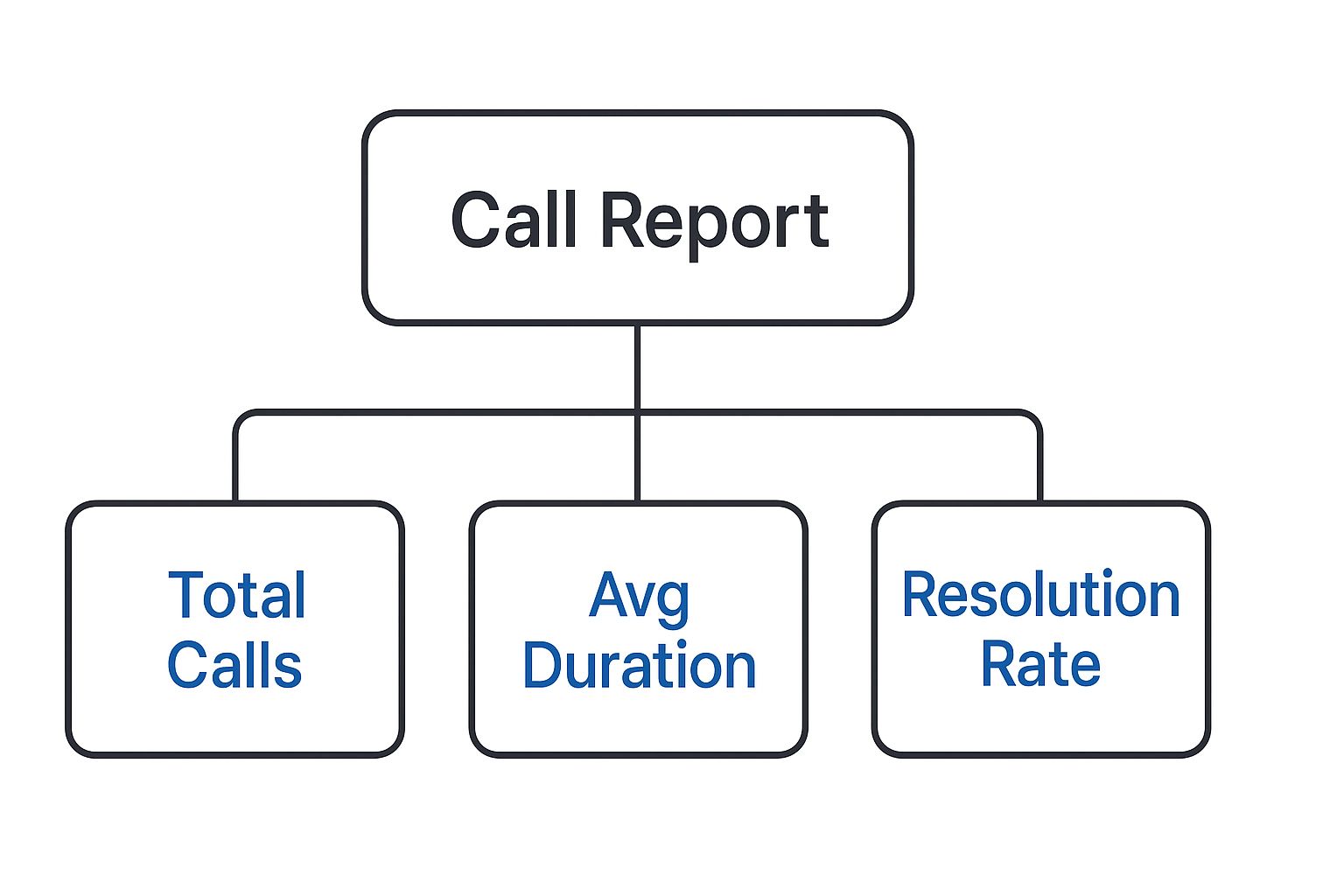
This infographic provides a visual representation of key call report data. Think of it as a quick glance at the dance floor, showing total calls, average duration, and resolution rate. Seeing these metrics together helps us understand how each contributes to the overall picture of call report effectiveness.
To further clarify the different reporting requirements, let's take a look at the table below:
Call Report Filing Requirements by Institution Type
Comparison of reporting requirements, deadlines, and regulatory oversight for different types of financial institutions
| Institution Type | Filing Deadline | Regulatory Body | Report Complexity |
|---|---|---|---|
| Small Community Bank | Quarterly | FFIEC, State Regulators | Simplified |
| Large Regional Bank | Quarterly | FFIEC, Federal Reserve | Moderate |
| National Bank | Quarterly | FFIEC, Office of the Comptroller of the Currency (OCC) | Complex |
| International Bank | Quarterly | FFIEC, Federal Reserve, Multiple International Regulators | Very Complex |
As you can see, the complexity of the reporting requirements and the regulatory bodies involved varies depending on the type of institution. Smaller institutions generally face simpler requirements while larger, more complex institutions face more stringent and detailed reporting.
Why This Matters
The call report system has evolved to accommodate a wide range of institutions, from small local banks to global giants. Consistent and accurate reporting allows regulators to effectively oversee the financial system, much like a conductor guides an orchestra. It fosters public trust by promoting transparency and accountability. Meeting regulatory deadlines helps institutions avoid penalties and maintain a positive relationship with regulatory bodies.
Staying informed about regulatory changes and proactively adapting reporting processes is a hallmark of successful institutions. This proactive approach allows them to focus on their core business objectives rather than constantly reacting to new requirements. Understanding the nuances of call report regulations is vital for any financial institution aiming for long-term success and stability.
Decoding Call Report Components That Matter Most
Think of a financial detective meticulously piecing together clues to solve a case. That's what banking professionals do with call reports, uncovering the story behind an institution's financial health. These reports are more than just regulatory requirements; they offer a detailed narrative of a bank's performance. Each section, from the balance sheet to the income statement, adds a crucial piece to the puzzle.
Balance Sheet Basics: Assets, Liabilities, and Equity
The balance sheet is the cornerstone of a call report. It shows what a bank owns (its assets), what it owes (its liabilities), and the difference between the two (equity, representing the owners' stake). It's a snapshot of the bank's financial position at a specific point in time.
Assets might include things like loans, securities, and cash. Liabilities include deposits and borrowings. The balance between these elements reflects the bank's financial stability.
Income Statement Insights: Revenue and Expenses
While the balance sheet offers a static snapshot, the income statement reveals the flow of money over a period. This section details the bank’s revenue (like interest income and fees) and its expenses (such as salaries and operating costs). The result? Net income or loss – the bank’s bottom line.
Think of this as the bank’s profit and loss statement. It shows how effectively the institution generates earnings, providing a dynamic view that complements the balance sheet’s snapshot.
Schedule RC-C: Loans and Leases
Let's zoom in further. Schedule RC-C focuses specifically on loans and leases, providing a granular look at credit risk. It breaks down loan types, risk ratings, and past-due amounts. This offers valuable insights into the quality of the bank's loan portfolio, helping analysts assess potential vulnerabilities.
And here's a cool fact: as of 2023, you can actually explore these reports yourself! The Federal Financial Institutions Examination Council (FFIEC) maintains a public database of Call Reports for most FDIC-insured banks. You can find granular data points like total assets, loan balances, and more. Discover more insights.
Other Key Schedules: A Holistic View
Beyond the core components, call reports contain several other schedules covering areas like investments, securities, and off-balance sheet items. Each schedule offers a unique perspective, allowing for a comprehensive understanding of the institution’s financial standing.
By exploring these interconnected schedules, analysts can identify trends, assess risks, and gain a holistic view of the bank’s financial health. This detailed information empowers informed decision-making by regulators, investors, and the bank itself, promoting greater transparency and stability within the financial system.

Call Report Metrics That Reveal Hidden Financial Stories
Think of a call report like a giant recipe book for a bank's financial health. It's full of raw ingredients – numbers, tables, and figures. But just like a list of ingredients doesn't tell you how to bake a cake, raw data from a call report doesn't tell the whole story. We need to know how to combine and interpret those numbers to understand what’s really going on. That’s where understanding key metrics comes in.
Understanding Key Ratios: The Bank's Vital Signs
Imagine you're a doctor checking a patient's vital signs. You rely on pulse, blood pressure, and temperature to get a quick snapshot of their health. Similarly, financial analysts use key ratios to gauge a bank's financial well-being. These ratios, derived from call report data, provide crucial insights into an institution's performance and stability.
Capital adequacy ratios, for example, show how well a bank can weather financial storms. A strong capital position acts as a financial cushion, protecting both depositors and the bank itself. Just like a healthy immune system, strong capital helps a bank withstand unexpected losses and economic downturns.
Another essential metric is the asset quality ratio. This ratio reveals the percentage of loans that are considered "problem loans" – loans that might not be repaid in full. A high ratio suggests potential future losses, much like a high temperature might indicate an infection. It's a warning sign that deserves further investigation.
For instance, the Texas Ratio compares a bank's troubled assets to its tangible equity capital and loan loss reserves. Think of it as a stress test for the bank. A Texas Ratio above 100% is generally a red flag, suggesting the bank might be headed for trouble.
Benchmarking Against Peers: Keeping Up With the Joneses
Knowing how your bank stacks up against the competition is critical. Benchmarking against peer institutions provides valuable context, highlighting areas where your bank excels and where it needs to catch up. It's like comparing your test scores to the class average – it helps you see where you stand and identify opportunities for improvement.
If your bank's Return on Assets (ROA) is lower than the industry average, it might point to inefficiencies or strategic missteps. This comparative analysis helps identify areas where you can fine-tune your operations and boost performance.
As a reference point, the global banking sector performed well in 2023, generating $7 trillion in revenue with a net income of $1.1 trillion. This resulted in a return on tangible equity (ROTE) of 11.7%, and banks maintained robust regulatory capital buffers with a common equity tier one capital ratio of 12.8%. Discover more insights.
Early Warning Signs: Spotting Trouble Before It Strikes
Call report metrics can also act as an early warning system, alerting you to potential problems before they escalate. A sudden jump in non-performing loans, for instance, could signal deteriorating credit quality within the loan portfolio – like a canary in a coal mine. Similarly, a shrinking net interest margin might indicate increased competition or pressure on profitability. By recognizing these trends early, institutions can take corrective action and prevent small issues from becoming major headaches.
Critical Call Report Ratios and Benchmarks
To illustrate these concepts, let's take a look at some key ratios, how they're calculated, typical industry benchmarks, and any relevant regulatory thresholds. This table provides a handy snapshot of important metrics to watch.
Key financial ratios derived from call report data with industry benchmarks and regulatory thresholds
| Financial Ratio | Calculation Method | Industry Benchmark | Regulatory Threshold |
|---|---|---|---|
| Return on Assets (ROA) | Net Income / Average Total Assets | 1.0% - 1.5% | No specific threshold |
| Capital Adequacy Ratio | Tier 1 Capital / Risk-Weighted Assets | 8.0% - 10.0% | Minimum 8.0% |
| Non-Performing Loan Ratio | Non-Performing Loans / Total Loans | 1.0% - 2.0% | Varies depending on regulatory guidance |
By understanding these ratios and how they relate to industry benchmarks and regulatory requirements, you can gain a deeper understanding of your bank's financial health.
By mastering these analytical techniques, you can unlock the hidden stories within your call report data. Instead of just seeing numbers, you'll see actionable insights that can drive better decision-making and improve your bank's financial performance. These metrics are powerful tools for navigating the financial world, allowing institutions to effectively manage risks and capitalize on opportunities.
Call Report Preparation That Actually Works
Preparing call reports doesn't have to be a dreaded chore. Think of it like brewing the perfect cup of coffee. With the right beans, grinder, and process, you can consistently achieve a delicious result. Similarly, with the right strategies and tools, call report preparation can become a smooth, manageable process. Let's explore how successful institutions transform this potential headache into a routine task.
Data Quality: The Foundation of Accurate Reporting
Imagine trying to build a house on a shaky foundation. It's not going to stand for long! Similarly, accurate call reports depend entirely on reliable data. Establishing strong data quality controls is like laying a solid foundation for your reporting process. This involves regular checks and balances, ensuring data accuracy right from the source.
Think of regular data checks as routine maintenance for your data "house"—preventing cracks and ensuring stability.
Review Processes: Catching Errors Before They Set
Even the best builders need inspectors. That's where thorough review processes come in. These processes are designed to catch errors before they solidify in the final call report. Multiple layers of review, involving different team members, provide a safety net, minimizing the risk of overlooking crucial mistakes.
It’s like having a second set of eyes on your blueprints, ensuring everything is aligned and structurally sound.
Building Internal Systems: Streamlining the Reporting Process
Efficient call report preparation hinges on well-defined internal systems. These systems should streamline data collection, validation, and reporting, creating a seamless workflow. Think of it as setting up an efficient assembly line. Each step contributes to the final product, smoothly and predictably.
Automating manual tasks, like data entry, is like adding a robotic arm to your assembly line—boosting speed and precision.
For further insight into automating financial reporting, check out: Financial Reporting Automation.
Common Mistakes to Avoid: Learning From Others' Missteps
Even experienced cooks sometimes burn the toast. Understanding common reporting pitfalls can prevent you from making the same mistakes. One frequent error is inconsistent data definitions. It's like using different measuring cups for each ingredient—your recipe won’t turn out as expected. Similarly, inconsistent definitions across departments lead to inaccurate data and faulty reports.
Another common pitfall is relying solely on manual processes, which increases the risk of errors and eats up valuable time.
Time-Saving Techniques: Working Smarter, Not Harder
Several time-saving strategies can boost efficiency without compromising accuracy. Standardized templates and checklists ensure consistency and reduce time spent on repetitive tasks. Think of them as pre-made spice blends—saving you time and ensuring consistent flavor.

Building a Scalable Process: Adapting to Growth
As institutions grow, their reporting processes need to keep pace. A system that worked for a small credit union might not be suitable for a larger, more complex bank. Building a scalable reporting process allows the system to grow with the institution, handling increasing data volume and complexity without sacrificing efficiency or accuracy.
Think of it like expanding your kitchen as your culinary ambitions grow. You need equipment and space that can handle larger and more complex meals. By implementing these best practices, institutions create a call report preparation process that’s not only efficient and accurate but also adaptable for the future. This ensures long-term compliance and contributes to the institution's overall financial health.
Call Report Principles Beyond Traditional Banking
Think of call reports as a financial checkup, not just for traditional banks, but also for credit unions and other financial cooperatives. These institutions adapt the core principles of call reports to their own unique situations, highlighting the flexibility of these reports. It's like using the same basic medical exam, but tailoring it to different patients' specific needs.
Credit Unions: A Cooperative Approach to Call Reports
Credit unions, owned by their members, operate differently than banks. Their call reports reflect this, focusing on community impact and member service rather than shareholder profits. It's a subtle shift in emphasis, like a doctor focusing on preventative care rather than just treating illness. The underlying principle of transparency remains the same – it's all about open communication about financial health.
For example, credit union call reports highlight loan growth within their membership and community development programs. This reflects their core mission of serving their members and promoting local economic well-being. Think of it like a local business reinvesting in its own neighborhood.
Federally insured credit unions file quarterly call reports compiled by the National Credit Union Administration (NCUA). These reports provide a snapshot of over 5,000 credit unions, managing more than $2 trillion in assets, with loan growth generally between 4-6% annually.
Similarities and Differences Across Institutional Models
Despite their differences, credit unions and banks share common ground in their call reporting. Both report key metrics like asset quality, capital adequacy, and earnings performance. These shared indicators ensure a baseline level of transparency, making it possible to compare apples to oranges (or, in this case, credit unions to banks).
However, the specific rules and reporting requirements differ. Credit unions answer to the NCUA, while banks are overseen by agencies like the FDIC, Federal Reserve, and OCC. These different regulatory bodies have unique requirements, reflecting the varied nature and risks of each type of institution. Think of it like different sports having distinct rules, even though they all involve competition.
Financial Transparency: A Universal Language
The way call reports are used across different financial institutions shows one fundamental principle: the vital importance of financial transparency. Whether it's a bank, credit union, or another type of financial cooperative, clear communication about financial health builds trust, ensures stability, and informs better decision-making. It's like having a clear window into the inner workings of an organization.
The call report, in its various forms, is a key tool for achieving this transparency. It provides a standardized way to share complex financial information and enables oversight across the entire financial services industry. It's like a common language that allows everyone to understand and communicate effectively. This shared understanding promotes accountability and responsible financial practices, benefiting the whole financial system.
Technology Solutions That Transform Call Report Workflows
Think of preparing call reports like building a house. The old way, with spreadsheets and calculators, is like building brick by brick with hand tools. Slow, tiring, and prone to mistakes. Modern technology is like bringing in the heavy machinery: cranes, excavators, and power tools. Suddenly, things move faster, smoother, and with greater precision.
This shift isn't just about speed; it’s about building a better, stronger institution.
Automating Data Entry and Validation: Eliminating Manual Errors
Imagine a librarian meticulously copying every book by hand. Tedious, right? And prone to errors. Now, imagine a digital scanner instantly capturing every word perfectly. That’s the difference between manual data entry and automated systems. Modern reporting platforms pull information directly from your core systems, like a digital scanner for your financial data. No more manual copying, no more typos, just clean, accurate data.
These platforms often use artificial intelligence (AI) for data validation. Think of AI as a super-powered proofreader, catching even the smallest inconsistencies that a human eye might miss. This automated validation helps ensure accuracy and reduces the chance of regulatory headaches.
Real-Time Insights: Beyond Basic Compliance
Traditional call report prep is often just about checking boxes for regulators. But what if you could use that same data to gain valuable insights into your business? Think of it like this: old-school reporting is like looking in the rearview mirror. You see where you’ve been but have limited visibility of what’s ahead. Modern technology is like having a GPS. It tells you where you are, where you're going, and the best way to get there.
These platforms provide dashboards and visuals that turn raw data into useful information. This allows you to track key performance indicators (KPIs), spot trends, and make smart decisions. It's about using data not just for compliance, but for strategy.
Modernizing Reporting Infrastructure: Practical Steps
Upgrading your reporting doesn't have to be a daunting task. It’s not about tearing down the whole house, but rather making smart renovations. Here’s how to get started:
- Assess Current Processes: Where are the bottlenecks? Where can technology make things better?
- Explore Reporting Platforms: Research different vendors and find the right fit for your institution’s needs. Consider how well the platform integrates with your existing systems.
- Prioritize Data Quality: Implement data governance rules to ensure consistent, accurate data across your institution. Think of this as laying a strong foundation for your data house.
- Train Staff: Give your team the tools and knowledge to use these new reporting platforms effectively. Empower them to interpret the insights and use them to drive better decisions.
Leveraging Technology for Strategic Advantage
By adopting these technologies, you can go beyond mere compliance. You can:
- Reduce Reporting Costs: Automation frees up staff to focus on more strategic tasks. Less time on manual tasks means more time for high-value work.
- Improve Decision-Making: Real-time insights lead to proactive strategies and better resource allocation. You're not just reacting; you're anticipating and planning.
- Enhance Regulatory Relationships: Accurate, timely reporting builds trust with regulators. It shows you're on top of things and committed to sound financial practices.
Technology is transforming the call report landscape. It's about moving from simply meeting requirements to using data for a strategic advantage. It’s about building a stronger, more resilient institution.
Ready to transform your call report workflows and unlock the power of data-driven insights? Explore how Visbanking can help.
Latest Articles
Brian's Banking Blog
What Is Repricing Risk: A Bank Executive's Guide

Brian's Banking Blog
How to Manage Vendor Relationships in Banking
Brian's Banking Blog
ISO 20022 Migration Strategy for Bank Leaders
Brian's Banking Blog
Lead Tracking Software for Banks: An Executive Guide
Brian's Banking Blog
What Are Key Metrics for Banks? a Decision Guide
Brian's Banking Blog